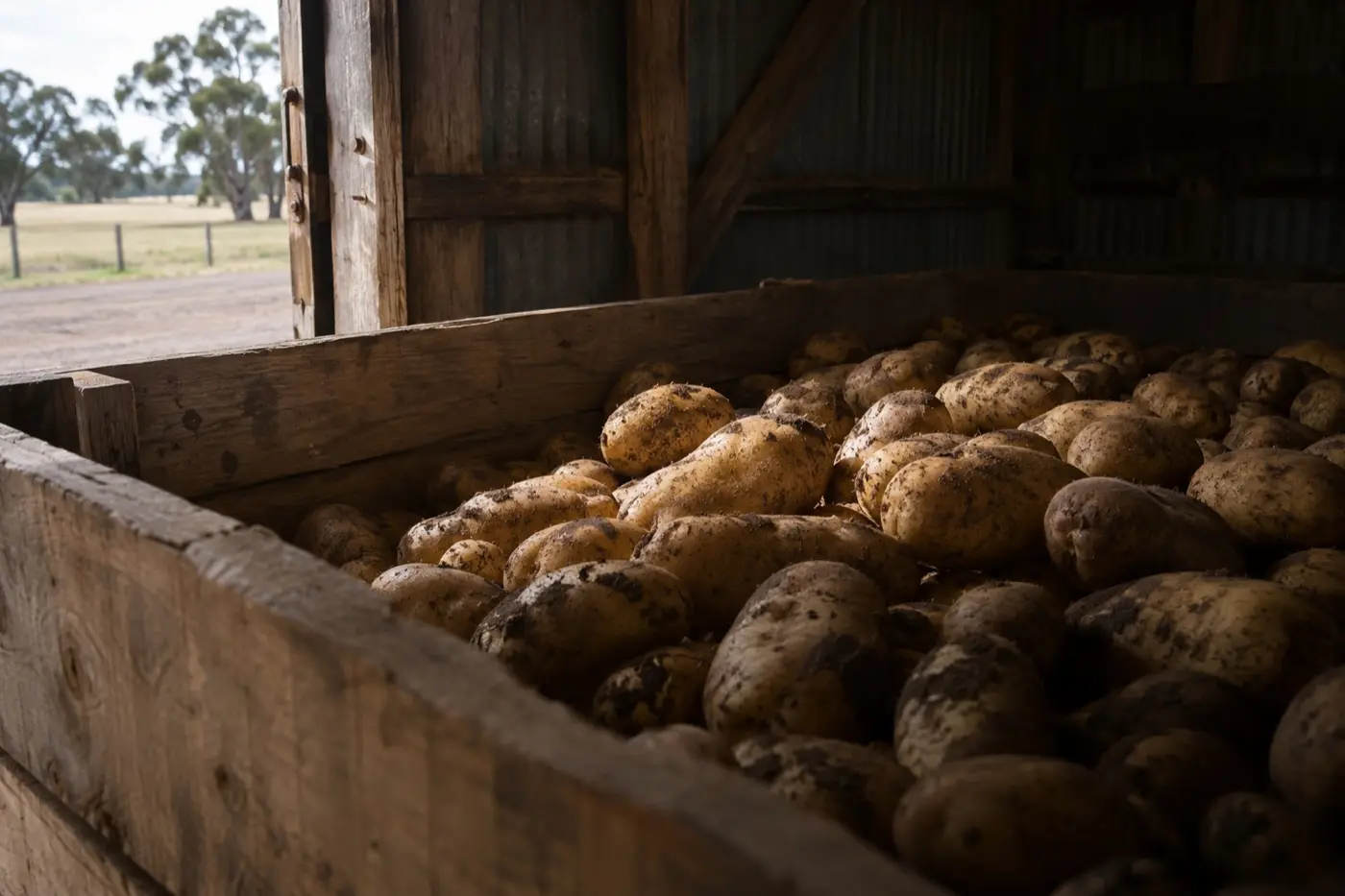
Can a pallet of broccoli spend the night in the apple coolroom?
• Hari Yellina
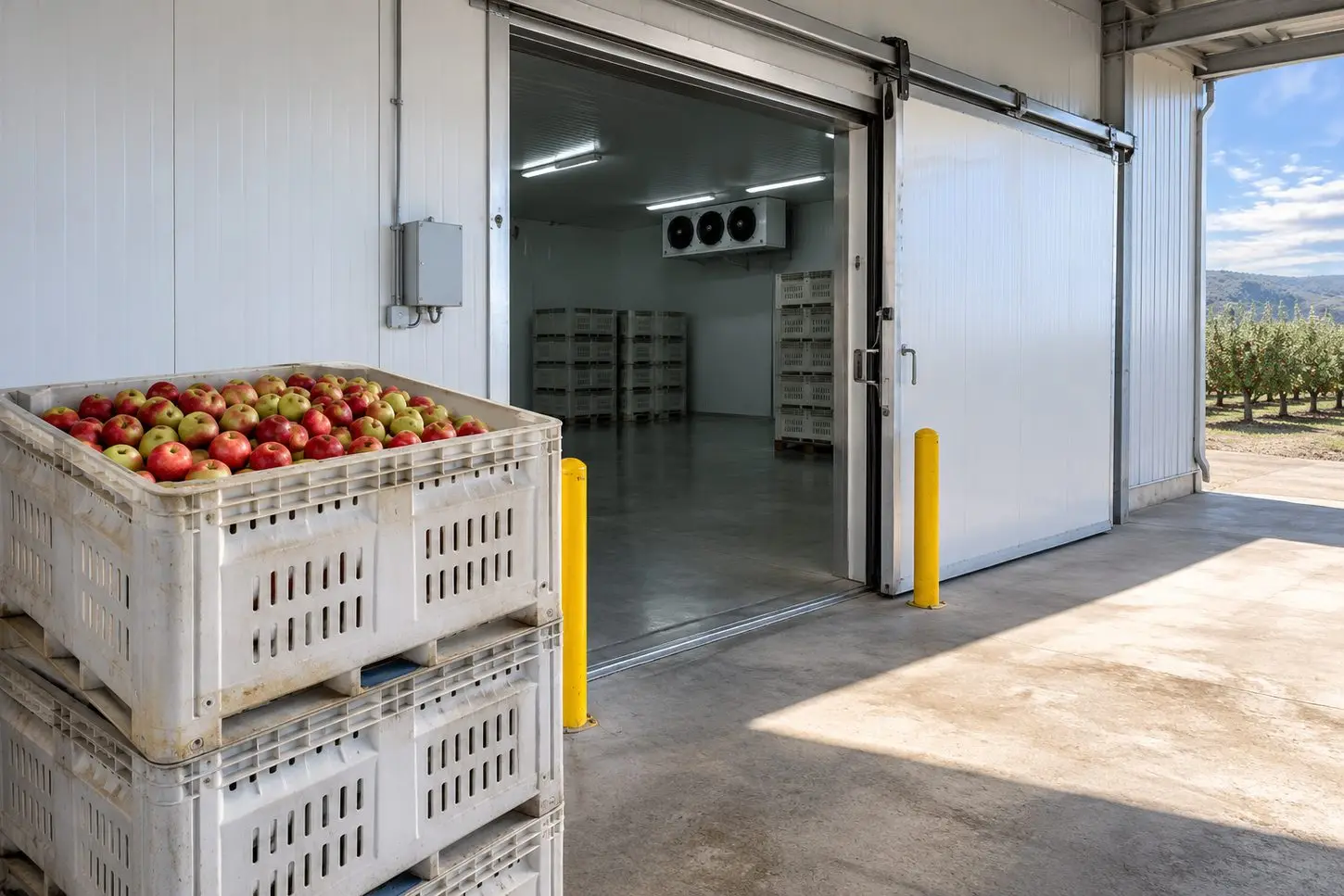
Ripening apples release ethylene into the air around the bins. Images are AI-generated illustrations.
The broccoli truck arrives an afternoon early. The vegetable room is full, but the apple room has a spare pallet space and its thermometer shows a suitable temperature. To the person unloading, that looks like a solved problem. Before the pallet crosses the threshold, the store supervisor needs to check what else is in the room and what the crops release into the air.
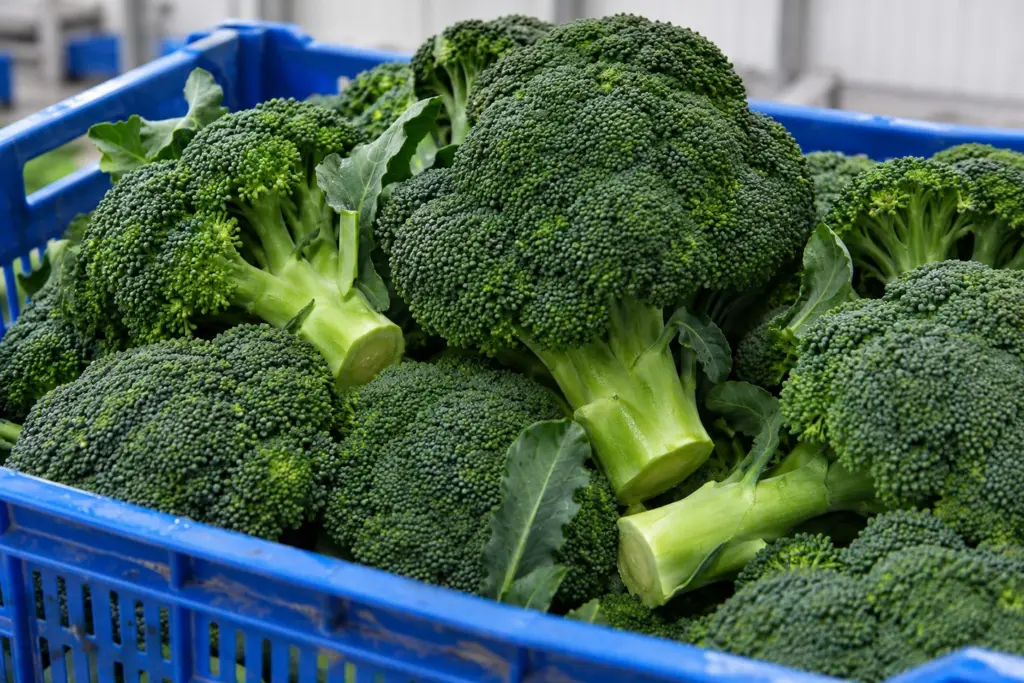
The broccoli head is a cluster of flower buds
The tightly packed green beads on a head of broccoli are immature flower buds. Ethylene exposure can speed up their yellowing. Apples give off ethylene as they ripen, so a shared airspace can bring the gas from one crop into contact with the other. A pallet at the far end of the same room still shares that air.
The Queensland brassica grower guide identifies apples among the products to keep separate from broccoli during cooling, storage and transport. Hort Innovation’s broccoli guidance also emphasises rapid cooling and keeping broccoli cold. These measures work together. A display showing cold room air cannot confirm how quickly heat has been removed from inside a newly delivered load.
Settle the overnight allocation at receival
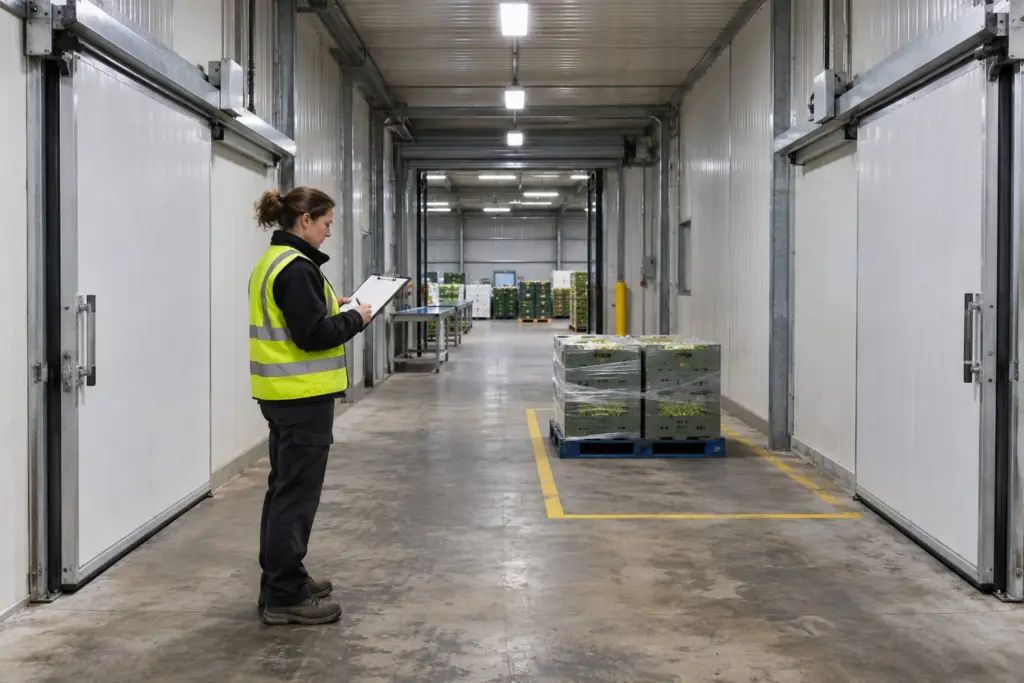
Ask which room is available for the whole holding period, which produce is already there, and what is scheduled to arrive before the broccoli leaves. Check the room against the broccoli storage specification and the site’s temperature-monitoring procedure. If the usual room is full, contact the store or dispatch manager for an appropriate alternative. Depending on the operation, that might mean an independently cooled bay or changing the collection time.
Mark the agreed location on the receiving record and tell the next shift where the pallet belongs. Include the outgoing vehicle in the conversation. Two crops kept separate in the shed can end up sharing an enclosed load during transport.
If the florets start turning yellow
Record the lot, arrival condition, cooling history, time in storage and the crops that shared the space. UC Davis identifies several possible causes of yellow beads, including advanced maturity at harvest, heat, long storage and exposure to ethylene. A photograph of a yellow head is useful evidence of its condition, but it cannot identify the cause by itself.
Give the observations to the person responsible for grading and customer specifications. That allows the business to make a decision about the affected lot and to correct the room booking if that was the issue. It also gives the next receival worker a clear answer when another supplier arrives early.