
Harvest
Sweeping almonds in tree rows
Your host will tell you which sweeper to use and which rows to sweep. Only if you are trained and authorised. Operate a sweeper only after your host has trained you, checked that you can operate it safely and authorised you for that sweeper. A licence alone does not show you can operate it safely. Get training for each new sweeper model.
English available · Latest paired English–Tongan companion is awaiting website review.
Your paired-language preference is saved. This job is currently available in English only. Get language help.
Know the limits
What this job does not include
This sheet describes typical almond sweeping work and conditions. Your actual duties depend on the farm and what you are trained and authorised to do. Reading this sheet does not authorise you to operate a sweeper, use other machinery or repair equipment.
End of shift. Follow your host's shutdown and isolation procedure before cleaning or checking the sweeper, and let hot parts cool. You may then clean leaves and nuts off the sweeper and check it for oil leaks and other problems. Do only the cleaning and checks you are trained and authorised to do. Your host will tell you whether refilling is part of your duties and train and authorise you for it.
Only if you are trained and authorised. Operate a sweeper only after your host has trained you, checked that you can operate it safely and authorised you for that sweeper. A licence alone does not show you can operate it safely. Get training for each new sweeper model.
This sheet covers operating a sweeper in tree rows. Do not change the sweeper's settings: your supervisor and the maintenance team do that. These tasks need their own instructions, training and authorisation: V sweeping with a tractor and attachment (it has its own sheet, A020), using a sweeper pulled by a tractor, other harvest machines, blowing the machine down with compressed air, opening the bonnet, adjustments and repairs, spraying chemicals, electrical work, working at heights and entering confined spaces, dams, tanks or channels.
Daily checks: do the daily checks your host trains you in, with the sweeper shut down and isolated (made safe so it cannot start or move), following your host's procedure. Your host will show you which guards and cab protection to check. Record your checks as your host requires. Adjust the seat and controls so you can reach them safely. Check that the radio is on the right channel and works. Report faults. If a fault could make the sweeper unsafe, do not use it. Tag it out as your host shows you and tell your supervisor.
In the cab: wear your seat belt every time. Keep the main safety door closed and latched while you operate, as your host shows you. Keep the windows clean. Carry a passenger only if your host allows it and the sweeper has a passenger seat and seat belt approved by its maker. The passenger must wear the seat belt. Never let anyone ride on the outside of the sweeper.
Blower chute: dust, sticks and other objects can be blown out of the chute and hurt people. If someone enters the area where the blower throws material, stop sweeping and stop the blower using your host's procedure. Do not restart until they are clear.
Dust: sweeping makes a lot of dust. Dust can hide people, machines, trees and holes. If you cannot see clearly, stop in a safe place. Do not move until you can see that the way is clear. Follow your host's instructions for dust. If dust makes it hard to breathe, stop in a safe place and tell your supervisor.
Power lines: ask your host where the overhead power lines are on your routes. If the sweeper touches a power line, or electricity jumps to it, stay in the cab. Call 000 or ask someone to call 000. Warn others to keep away. Stay in the cab unless fire or another immediate danger makes it unsafe. Your host must teach you the electrical emergency procedure before you start.
Blockages: if the sweeper is blocked, or you need to reach the parts inside the sweeping head, the blower or its chute, stop and tell your supervisor. Before anyone goes near, the sweeper must be shut down and isolated, using your host's procedure. Wait until all moving parts have stopped. Clear a blockage only if you are trained and authorised. Never restart with a loose or missing guard.
Leaving the seat and parking: your host will teach you the safe-stop procedure for the sweeper. Follow it every time before you leave the seat. Tell nearby workers when you get off. On foot, use walking routes and keep clear of moving machinery. At the end of the shift, park where your host shows you, isolate the sweeper as you were trained, and remove the key.
A picture guide
See the work at a glance
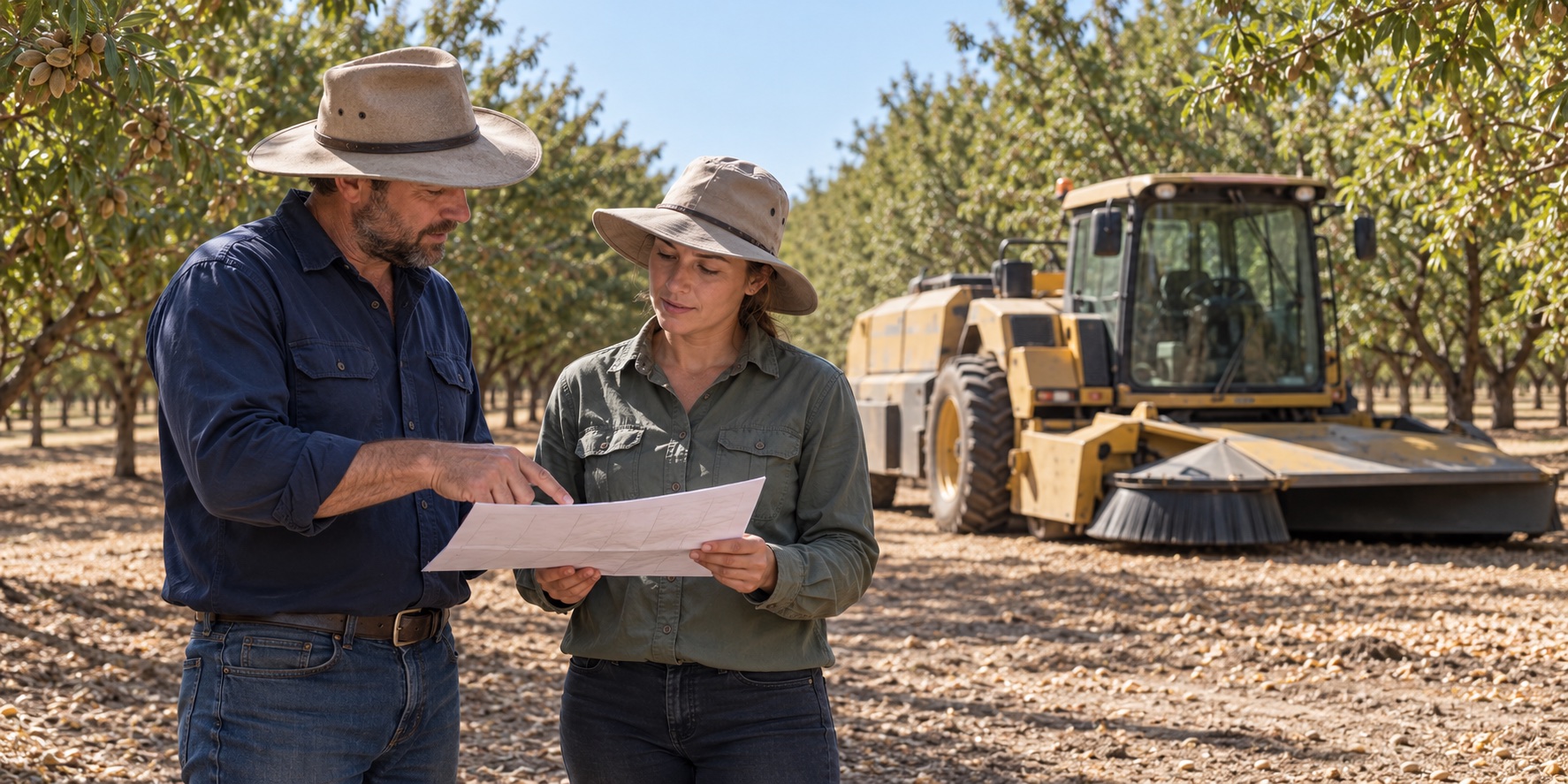
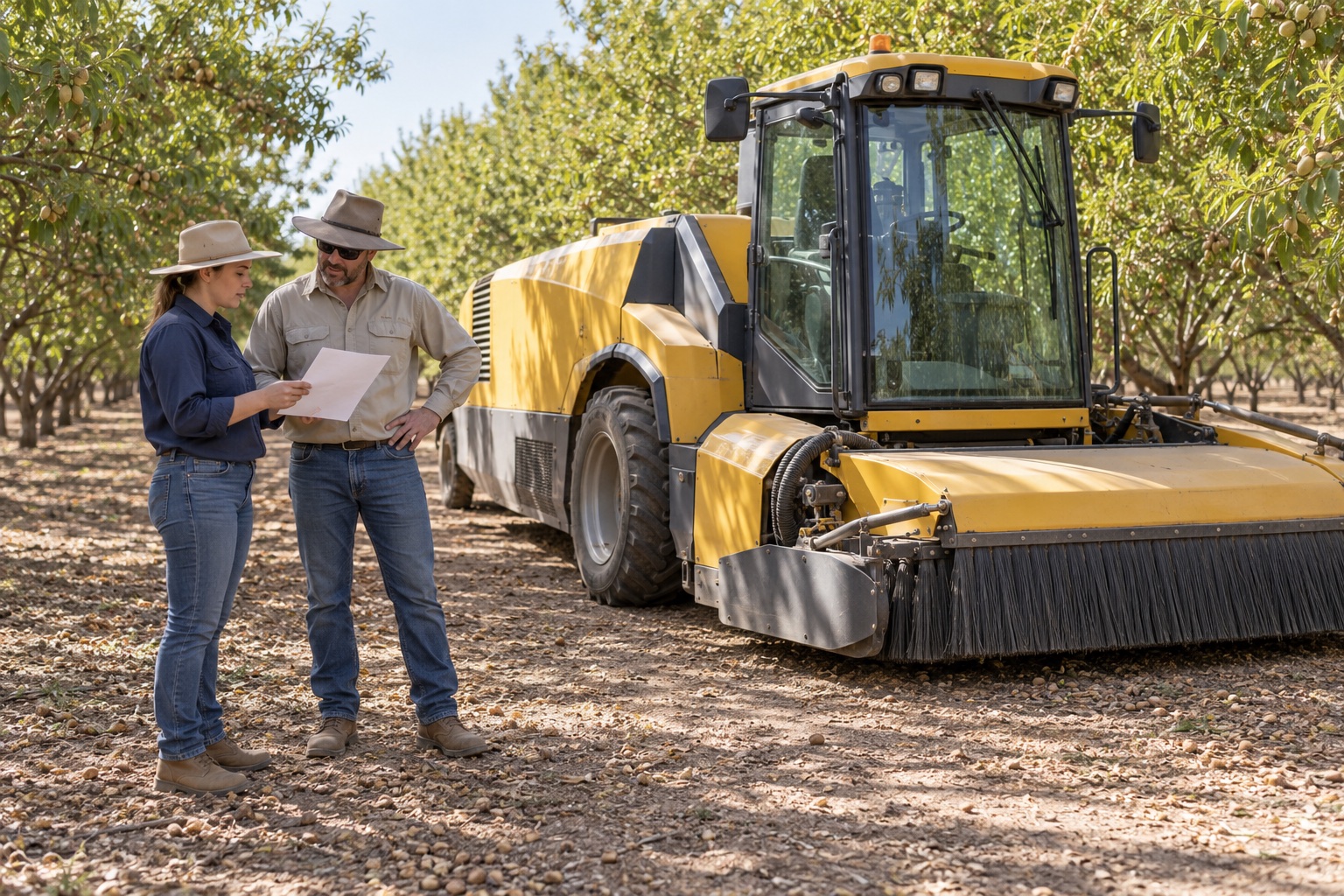
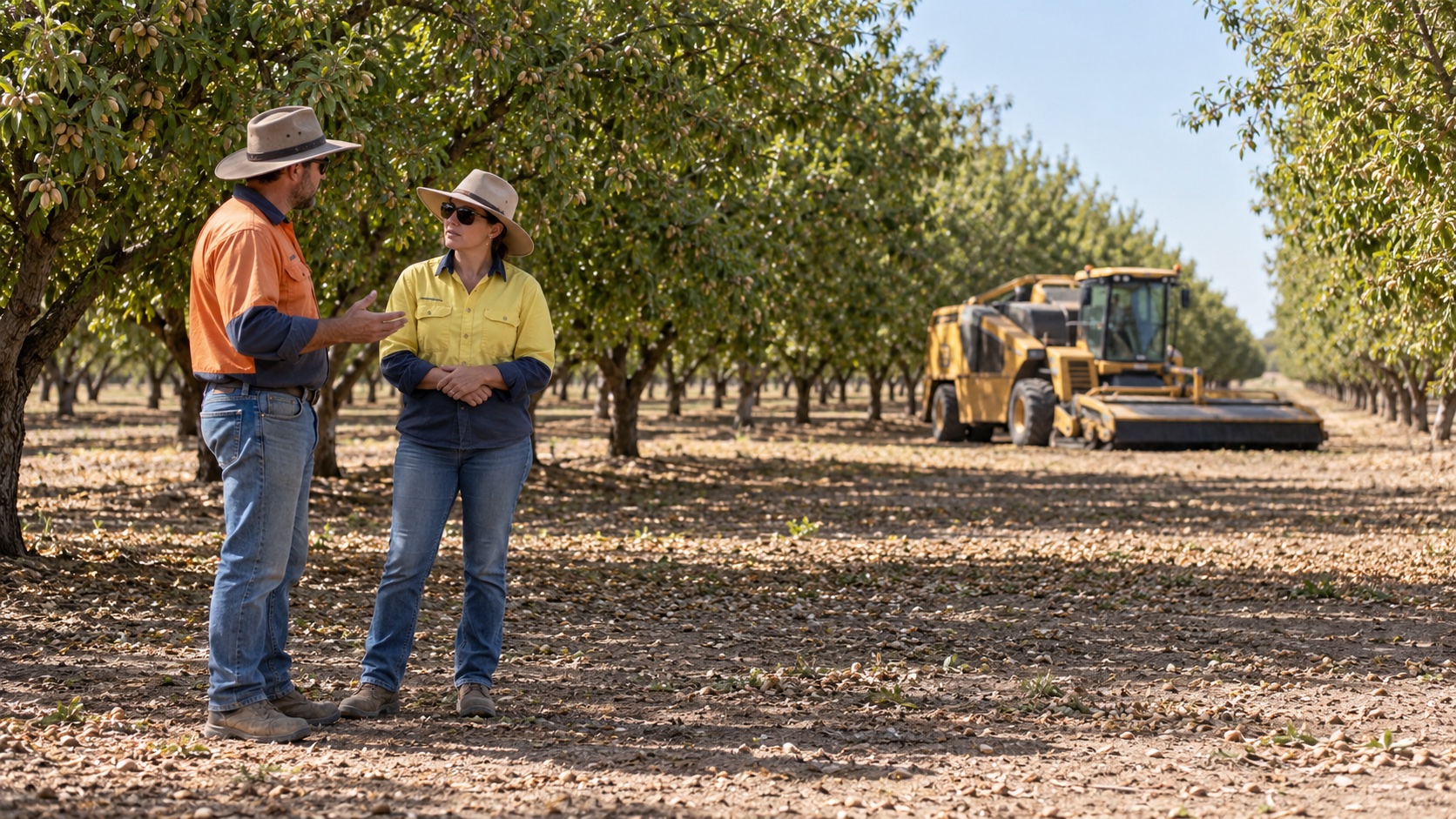
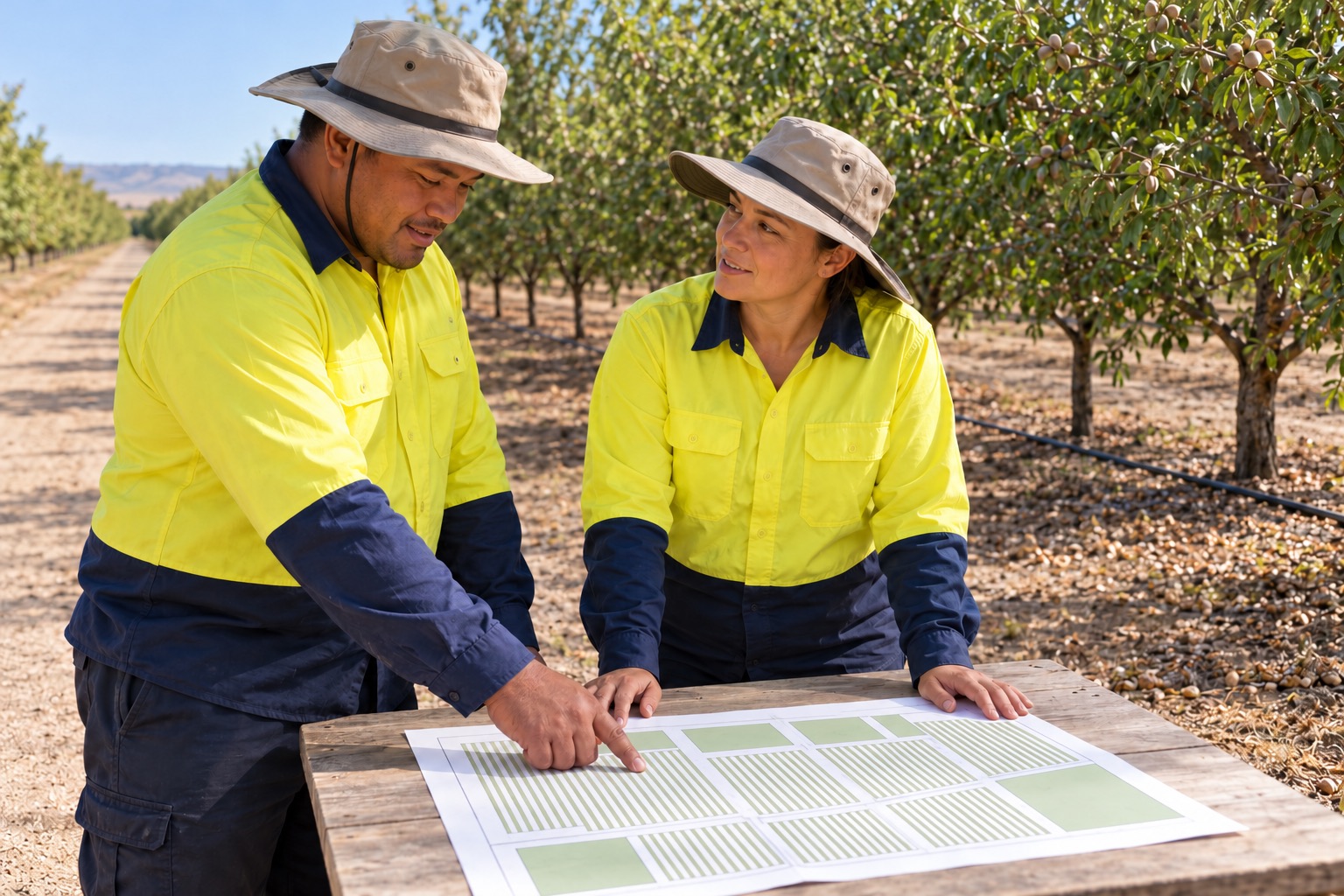
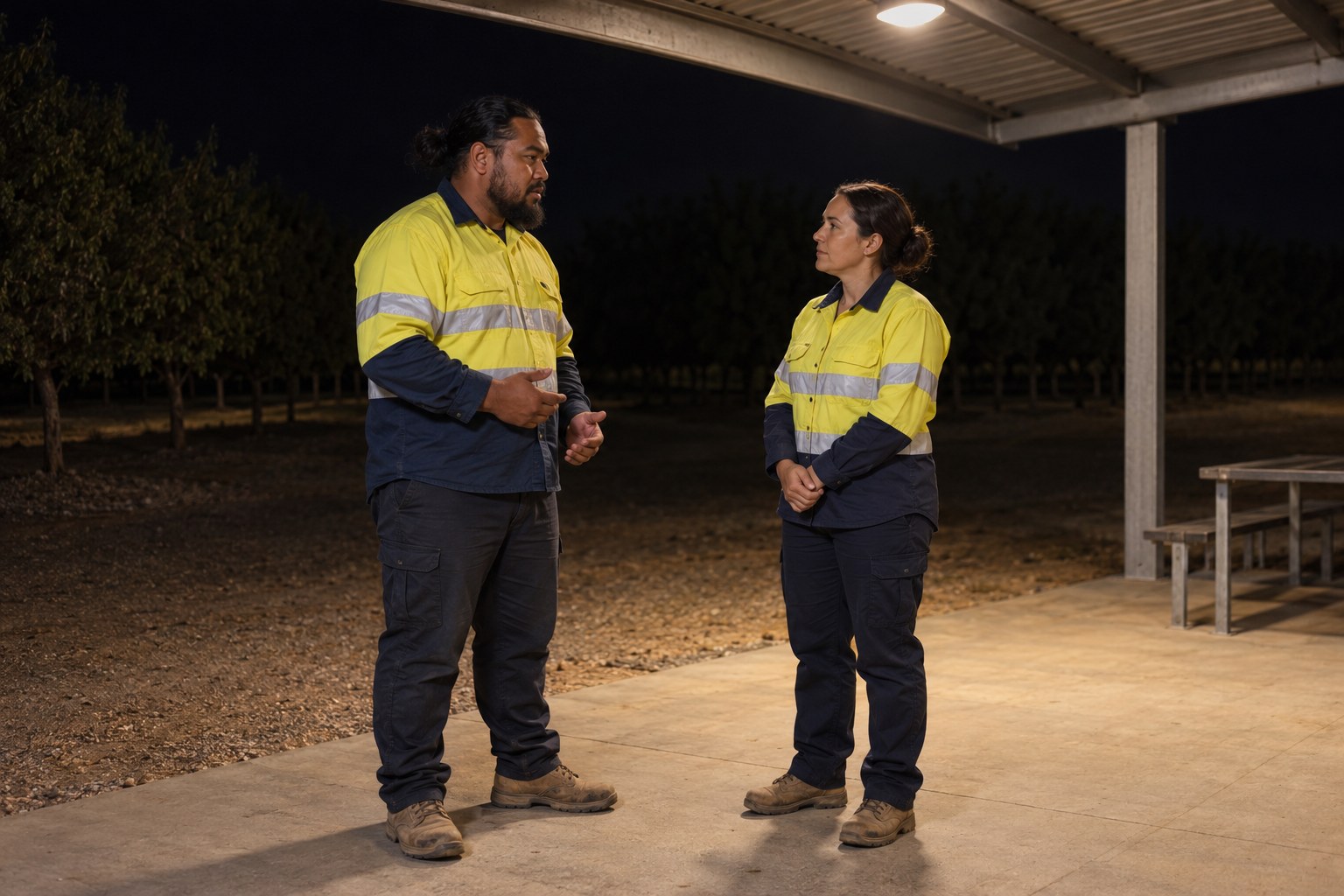
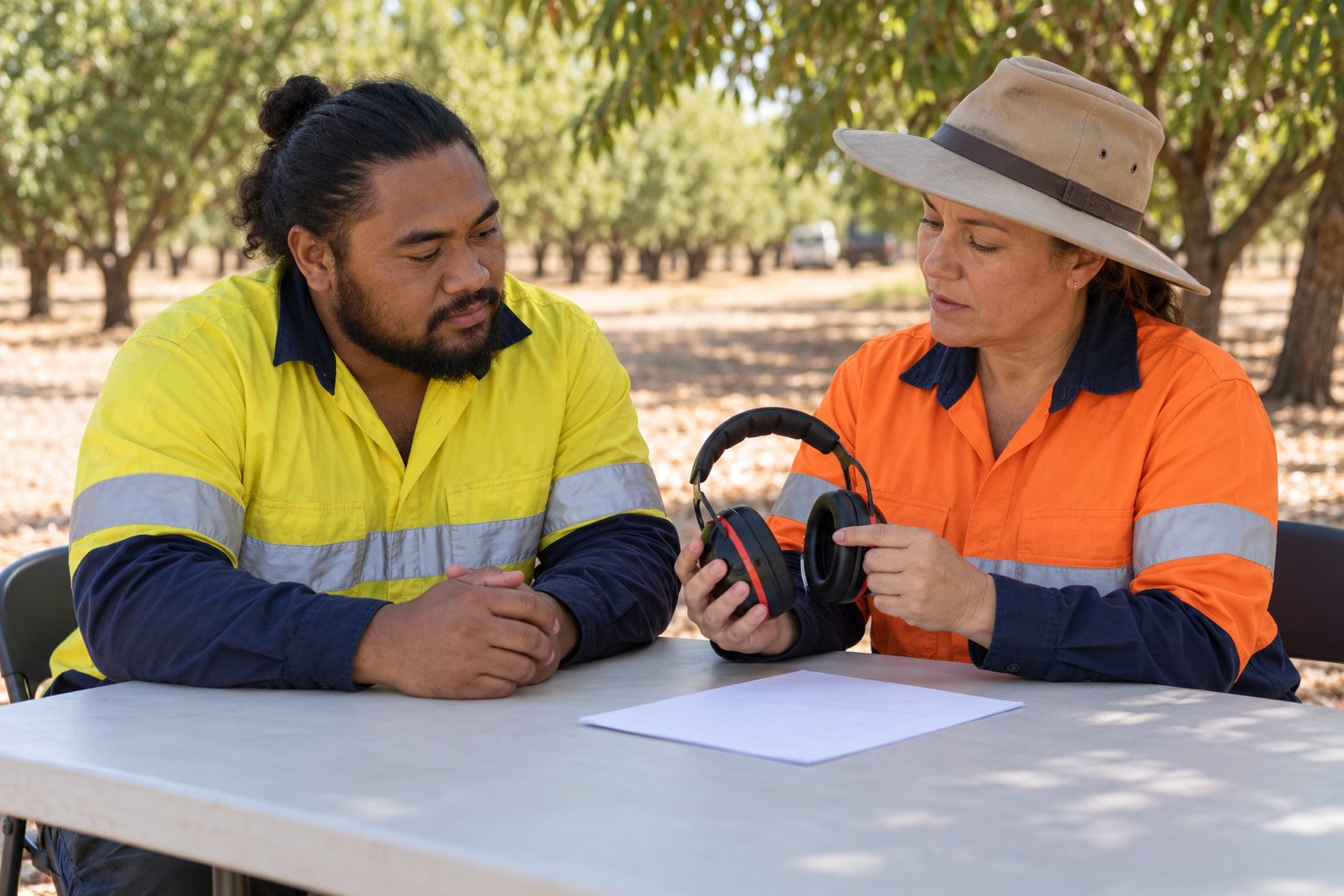
These AI-generated illustrations do not depict actual Orchard Tech employees. They introduce the approved source sheet below and do not replace induction, training or host instructions.

Read before you start
Full English source
Sweeping almonds in tree rows
What to expect before you start
Version 1.0 | Date of review: 18 October 2026 | Date of next review: 18 October 2028
This sheet describes typical almond sweeping work and conditions. Your actual duties depend on the farm and what you are trained and authorised to do. Reading this sheet does not authorise you to operate a sweeper, use other machinery or repair equipment.
Who you work for
Orchard Tech is your employer. Your host farm (your host) directs your daily work. Both are responsible for your health and safety. Raise questions or safety concerns with your supervisor or Orchard Tech: Hari Yellina, 0439 32 32 32, or Soana Fanua, 0400 174 471.
Your working hours
Your confirmed roster sets your days, hours and breaks. Ask your supervisor if you are unsure. Harvest sweeping may include night shifts.
The work you may do
Sweeping almonds. At harvest, shakers shake the trees and the nuts fall to the ground. You may drive a sweeper along the tree rows. It sweeps the fallen nuts into a windrow (a long line of nuts along the row). The sweeper in the farm guidance has its own engine and a cab, a sweeping head and a blower with a chute. Your host will tell you which sweeper to use and which rows to sweep. The farm may also ask you to do other sweeping, such as back sweeping. Your host will explain each type.
Checking your work. Check the quality of the sweeping as you were trained. If the sweeper leaves too many nuts behind or picks up too much sand or dirt, stop and tell your supervisor. Also report unusual sounds, smells or anything that looks different.
End of shift. Follow your host's shutdown and isolation procedure before cleaning or checking the sweeper, and let hot parts cool. You may then clean leaves and nuts off the sweeper and check it for oil leaks and other problems. Do only the cleaning and checks you are trained and authorised to do. Your host will tell you whether refilling is part of your duties and train and authorise you for it.
Only if you are trained and authorised. Operate a sweeper only after your host has trained you, checked that you can operate it safely and authorised you for that sweeper. A licence alone does not show you can operate it safely. Get training for each new sweeper model.
This sheet covers operating a sweeper in tree rows. Do not change the sweeper's settings: your supervisor and the maintenance team do that. These tasks need their own instructions, training and authorisation: V sweeping with a tractor and attachment (it has its own sheet, A020), using a sweeper pulled by a tractor, other harvest machines, blowing the machine down with compressed air, opening the bonnet, adjustments and repairs, spraying chemicals, electrical work, working at heights and entering confined spaces, dams, tanks or channels.
Before you start
- Pre-start meeting: go to the pre-start meeting (the safety meeting before work) at the start of each shift. Learn the day's traffic plan: who is working in which blocks, and which routes to use. If the plan changes during the day, your supervisor will tell you. If you do not understand the plan, ask for language help or an interpreter.
- Daily checks: do the daily checks your host trains you in, with the sweeper shut down and isolated (made safe so it cannot start or move), following your host's procedure. Your host will show you which guards and cab protection to check. Record your checks as your host requires. Adjust the seat and controls so you can reach them safely. Check that the radio is on the right channel and works. Report faults. If a fault could make the sweeper unsafe, do not use it. Tag it out as your host shows you and tell your supervisor.
- Getting on and off: keep the steps free of mud. Use three points of contact (two hands and one foot, or one hand and two feet). Never get on or off a moving machine. Start the sweeper only from the operator's seat, as your host shows you.
- In the cab: wear your seat belt every time. Keep the main safety door closed and latched while you operate, as your host shows you. Keep the windows clean. Carry a passenger only if your host allows it and the sweeper has a passenger seat and seat belt approved by its maker. The passenger must wear the seat belt. Never let anyone ride on the outside of the sweeper.
Travelling to the rows
- Public roads: never drive on or across a public road unless your host has confirmed that the sweeper, your licence and the route are approved.
- Follow the traffic plan: use only the routes your host gives you. Never take shortcuts through headlands (the turning areas at the ends of the rows). Obey signs and speed limits, and slow down for turns, people, dust, poor visibility and rough ground.
- Ground and roll-overs: watch for wash outs (where water has washed the ground away), bog holes (soft, wet ground) and uneven ground. Drive to suit the conditions so the sweeper head does not bounce. A sweeper can tip or roll over, especially on slopes and banks, on rough or wet ground, and near dams and channels. Keep away from steep slopes, banks and water. Your seat belt helps keep you inside the cab if the machine rolls.
- Machines in front: leave space between your sweeper and the machine in front, because it may stop suddenly. Your host will tell you how far back to stay.
Sweeping in the rows
- The right row: check row numbers carefully. Driving down the wrong row can put you in another sweeper's path. Line up in the row your host gives you.
- Before you move: warn people nearby before you move off, for example with the horn, as your host shows you. Wait until they are clear. There are places around a sweeper that the operator cannot see. These are called blind spots. Look in all directions and use your mirrors. If you cannot see that the way is clear, stop and ask for help.
- People on foot: other workers may be in or near the rows. Keep people away from the sweeper while it moves or runs. If someone comes close, stop and wait until they are clear.
- Blower chute: dust, sticks and other objects can be blown out of the chute and hurt people. If someone enters the area where the blower throws material, stop sweeping and stop the blower using your host's procedure. Do not restart until they are clear.
- Objects in the row: watch for trees, branches, drip lines, stakes and other objects. Hitting them can damage the sweeper, the trees or the irrigation. Sticks can also be thrown up and hit the windows or enter the cab, so keep the door and windows closed. Drive around an object, or stop and ask your supervisor. If you need to get off to move it, follow the safe-stop procedure first.
- Headlands and radio: check for traffic before you cross a headland. Watch for other machines, trucks and people. Your host will teach you any radio calls and replies needed before you enter a headland. Do not enter until you get the reply your host's procedure requires.
- Dust: sweeping makes a lot of dust. Dust can hide people, machines, trees and holes. If you cannot see clearly, stop in a safe place. Do not move until you can see that the way is clear. Follow your host's instructions for dust. If dust makes it hard to breathe, stop in a safe place and tell your supervisor.
- Night work: in the dark it is harder to see people, machines, trees and the ground. Before night work, your host will show you the lights, routes and how to stay in contact.
- Power lines: ask your host where the overhead power lines are on your routes. If the sweeper touches a power line, or electricity jumps to it, stay in the cab. Call 000 or ask someone to call 000. Warn others to keep away. Stay in the cab unless fire or another immediate danger makes it unsafe. Your host must teach you the electrical emergency procedure before you start.
Moving parts, blockages and stopping
- Moving parts: the turning parts in the sweeping head and blower can catch clothing, hair or a hand and pull a person in. This can cause very serious injury or death. Keep yourself and others clear while they turn. Do not wear loose clothing, cords or jewellery, and tie back long hair.
- Blockages: if the sweeper is blocked, or you need to reach the parts inside the sweeping head, the blower or its chute, stop and tell your supervisor. Before anyone goes near, the sweeper must be shut down and isolated, using your host's procedure. Wait until all moving parts have stopped. Clear a blockage only if you are trained and authorised. Never restart with a loose or missing guard.
- Leaving the seat and parking: your host will teach you the safe-stop procedure for the sweeper. Follow it every time before you leave the seat. Tell nearby workers when you get off. On foot, use walking routes and keep clear of moving machinery. At the end of the shift, park where your host shows you, isolate the sweeper as you were trained, and remove the key.
- Hot parts, pinch points and spiders: the engine and other parts get hot. Let them cool before you clean or check the machine. Keep your hands away from pinch points (places where parts close together and can trap fingers). Spiders can hide on the machine. Wear the gloves and eye protection your host provides.
Weather and the outdoors
Most work is outdoors in heat, cold, wind, rain and dust. Watch for holes, pipes, slippery ground and snakes. Work may change or stop in heat, storms or smoke: follow your host's instructions. Use sun protection all year (broad-brim hat, long sleeves, sunglasses, sunscreen), drink water often, take shade breaks and dress for the weather. Tell your supervisor straight away if you or a co-worker feel sick, dizzy or very hot.
- Do not enter a block that is being sprayed or has a no-entry sign. Do not drink irrigation water: it may contain fertiliser or chemicals.
Noise and long hours in the seat
You may sit for long periods and climb on and off the sweeper many times. Use your breaks and report pain or discomfort early. If you feel too tired or unwell to operate the sweeper safely, stop in a safe place and tell your supervisor.
- Noise: sweepers can be loud. Wear the hearing protection your host provides, as you are instructed.
PPE and help on the farm
Your host will provide the personal protective equipment (PPE) for your tasks and show you how to wear, check and look after it. This may include safety boots, high-visibility clothing, gloves, eye or hearing protection, sun protection and a dust mask. Report missing, damaged or poorly fitting PPE before you start. PPE does not replace training, instructions or other safety controls.
At induction, learn who your supervisor is, where water, toilets and first aid are, the emergency plan, how to get help where there is no phone coverage, and the check-in arrangements when you work alone.
- In a life-threatening emergency, call Triple Zero (000), then tell your supervisor. If you see a snake, keep clear and never try to catch or kill it. If a snake bites you, or you think you have been bitten, keep as still as possible and call 000 or ask someone to call.
- Report every injury, near miss or unsafe situation to your supervisor and Orchard Tech as soon as possible, even if it seems small.
- Ask for a demonstration, an explanation or language help whenever you do not understand.
Important note before starting any jobThis sheet describes typical almond sweeping work. Before you start, your host will give you the job description and safe work instructions for your actual duties, the PPE you need, a farm induction and training for your tasks. Follow those instructions. Do not do any work without the required PPE, training and authorisation. Complete the induction at every new farm, and get the instructions and training for every new task. If anything is missing, unsafe or unclear, stop and ask your supervisor. You can also contact Orchard Tech. |