
Irrigation
Irrigation repairs and maintenance
This sheet covers repairs and maintenance with hand tools only. Do only the repairs your host has trained and authorised you to do. Your host will tell you how completed repairs are checked.
English available · Paired English–Tongan source issued with an exception.LANGUAGE-QA FAIL - blocking control failed: B5, G5

Know the limits
What this job does not include
Specialist work is a separate task. This includes work on pumps, filters, valves and controllers, and any repair beyond basic drip lines and fittings. It also includes fertiliser or chemicals in the water. Do this work only if it is part of your confirmed job and your host has trained and authorised you. Only a qualified electrician may do electrical work. Never work on electrical equipment.
This sheet covers repairs and maintenance with hand tools only. Driving, operating machinery (including digging machines), using power tools, chemical work, working at heights, and entering dams, tanks, channels or confined spaces are separate tasks. They need their own instructions, training and authorisation.
Never cut or disconnect a pipe while water is running or the line is under pressure. An authorised person must first make the system safe using the host's procedure. Start only when your supervisor says it is safe.
Before you start, ask your supervisor whether fertiliser or chemicals are in the water. If this is unclear, do not start. Wear the eye protection and gloves your host provides.
Ask your host before you dig. Start only after your host confirms that underground pipes and cables have been located and shows you where it is safe to dig. Dig only in the way your host shows you, and use only the tools your host provides.
Entering a trench is a separate task. It needs its own safe work instructions, training and authorisation.
Power lines: a long pipe or pole can touch an overhead power line. Electricity can also jump to it when it comes close to a line, even if it does not touch. Before you start, ask your host where the power lines are and where you must not use or carry long items. Never lift a long item towards a power line. If you are not sure, stop and ask your supervisor.
A picture guide
See the work at a glance
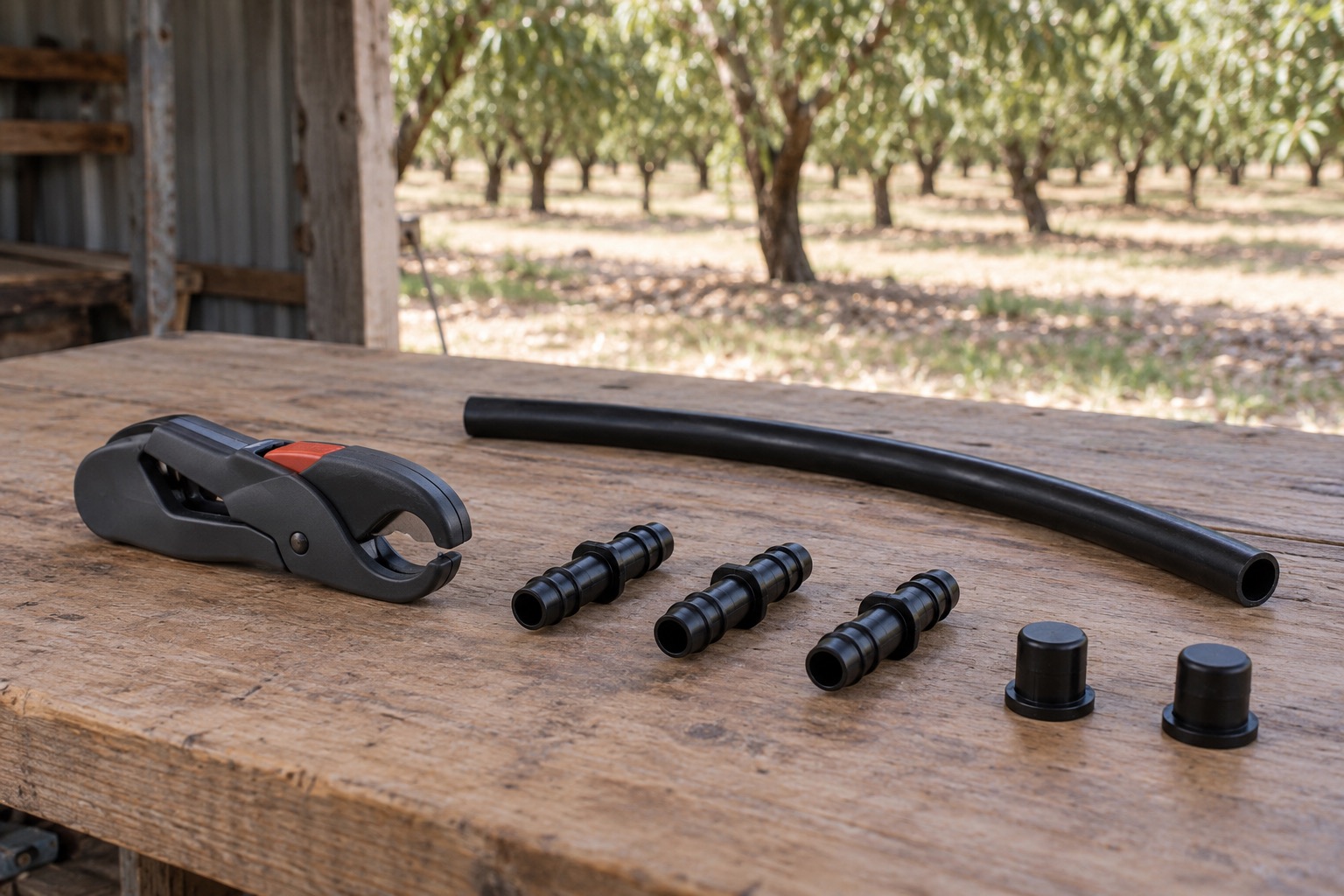
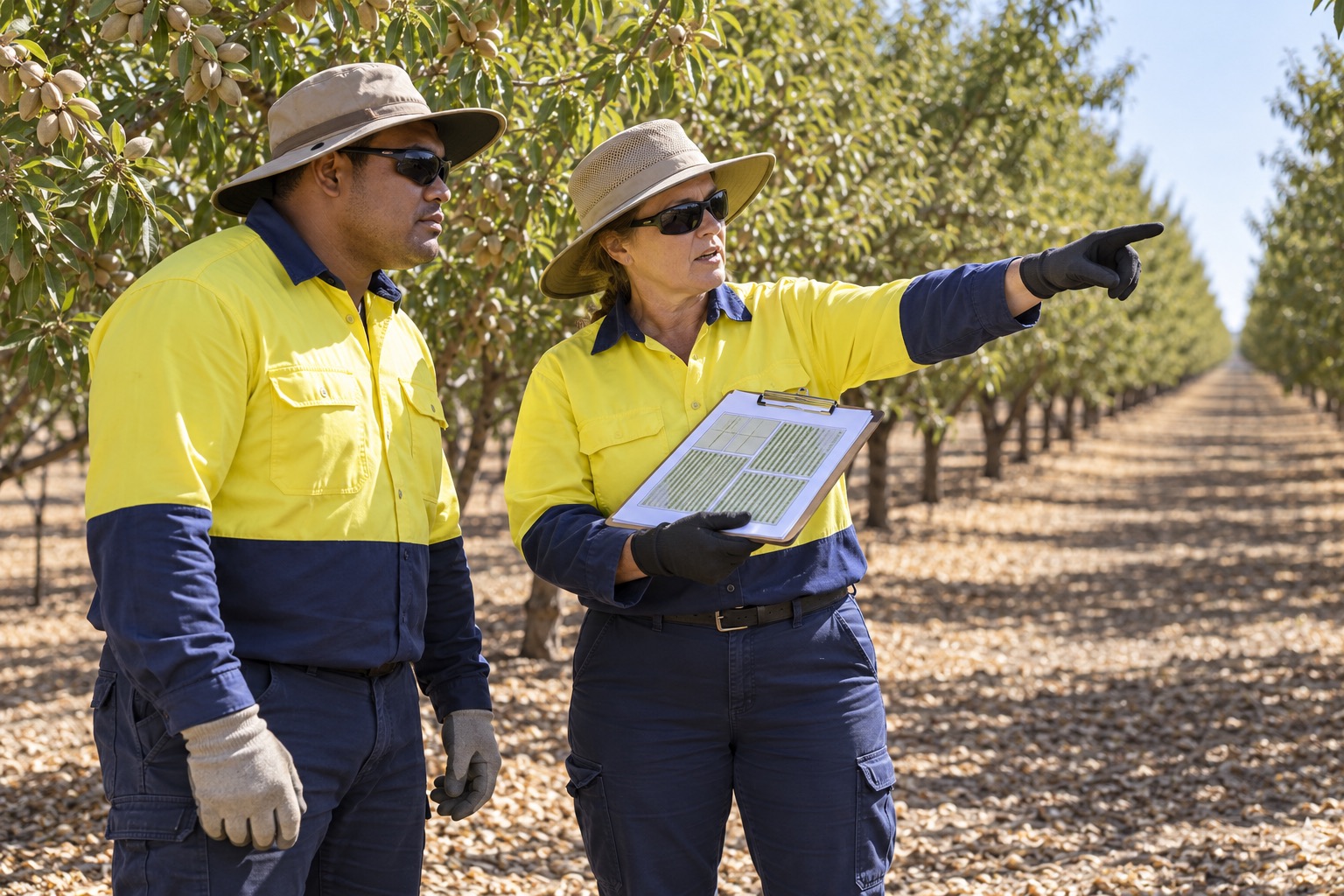
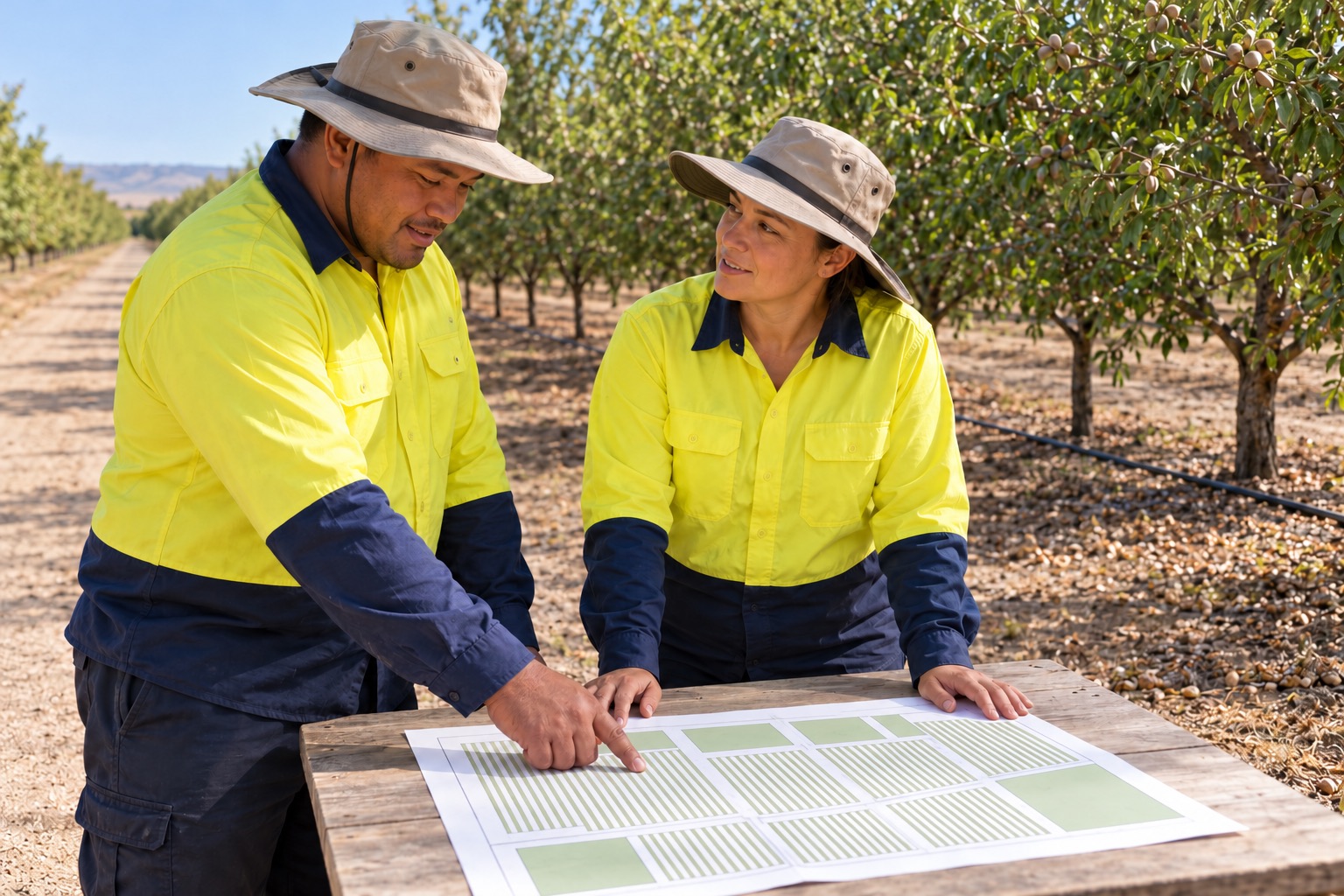
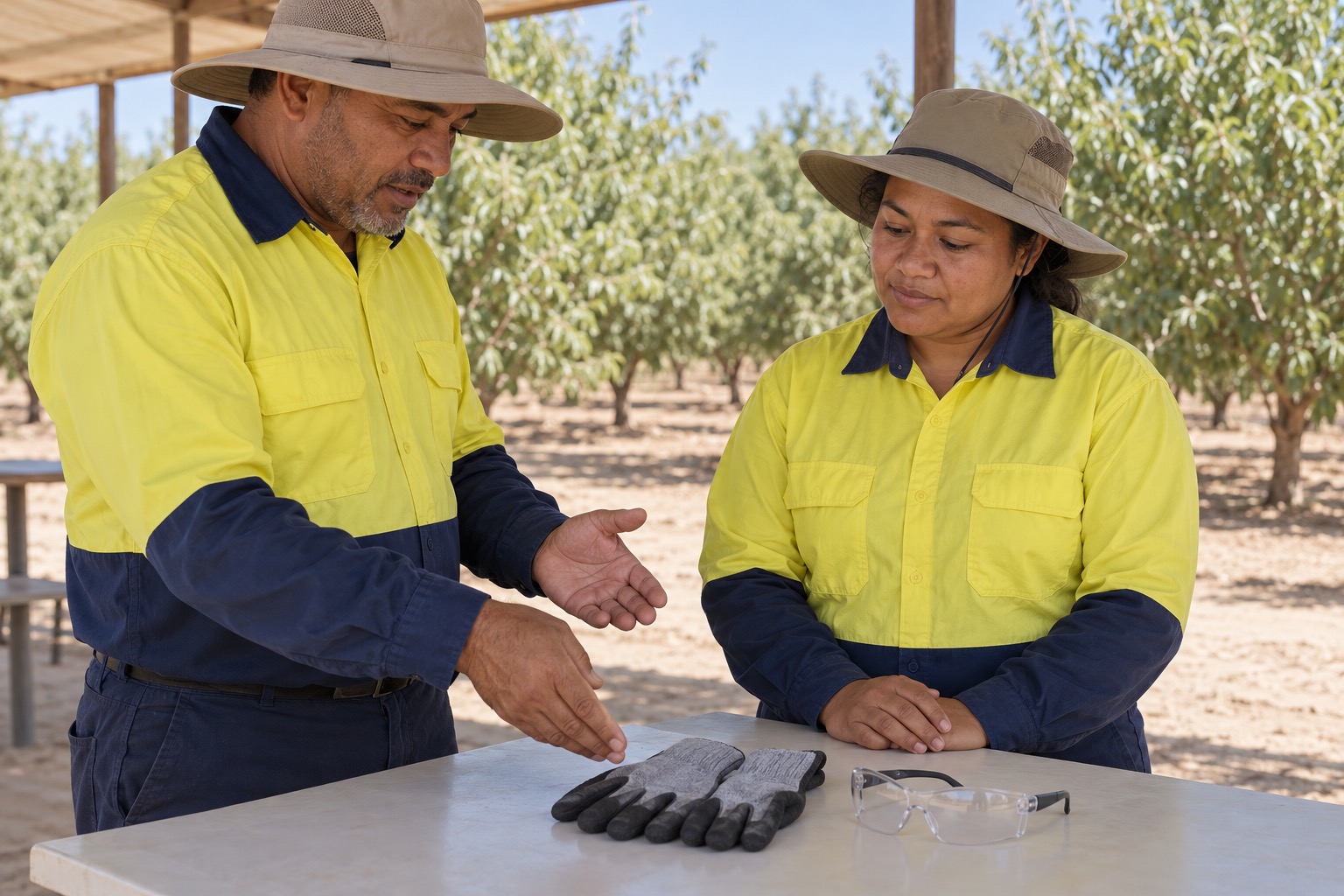
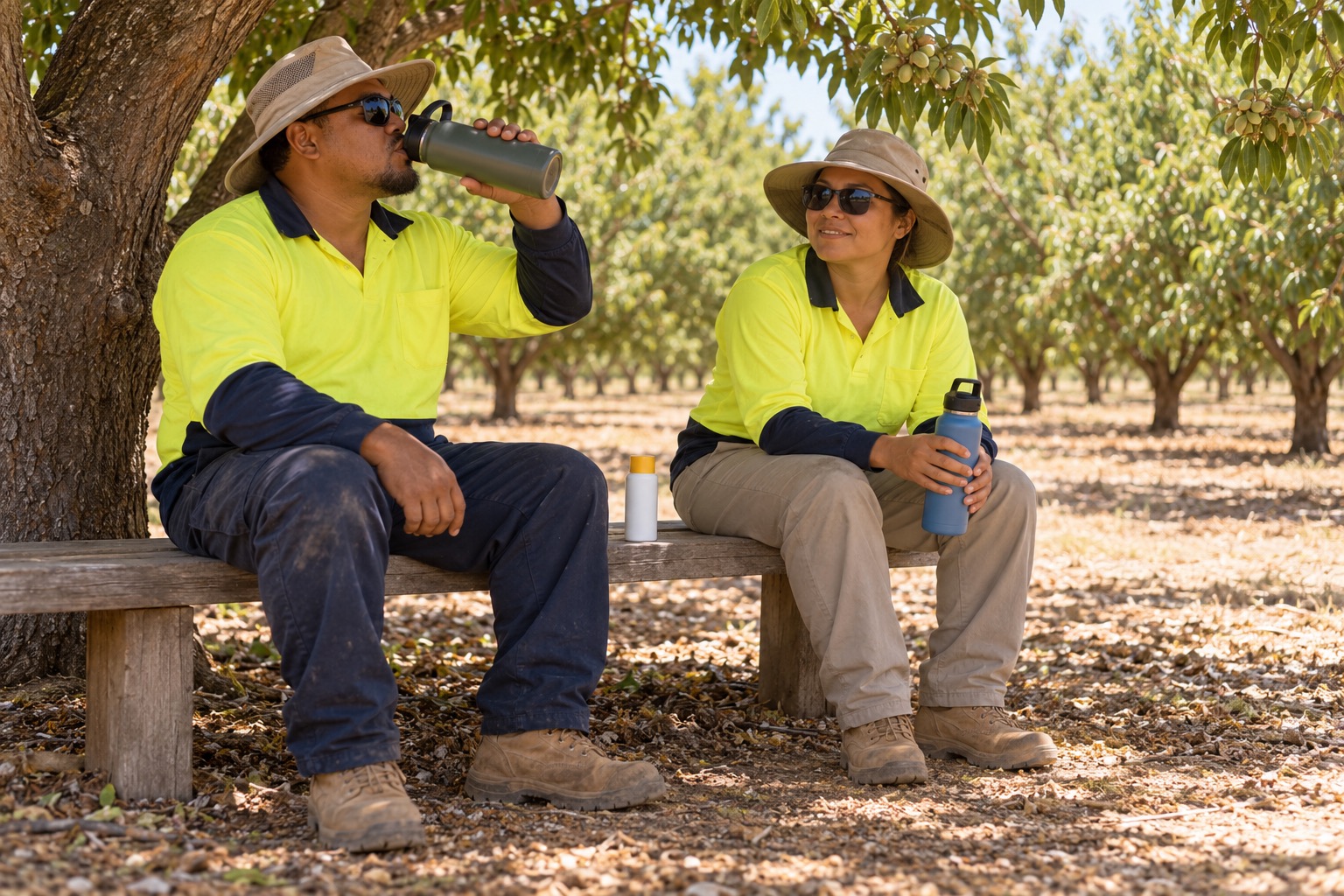
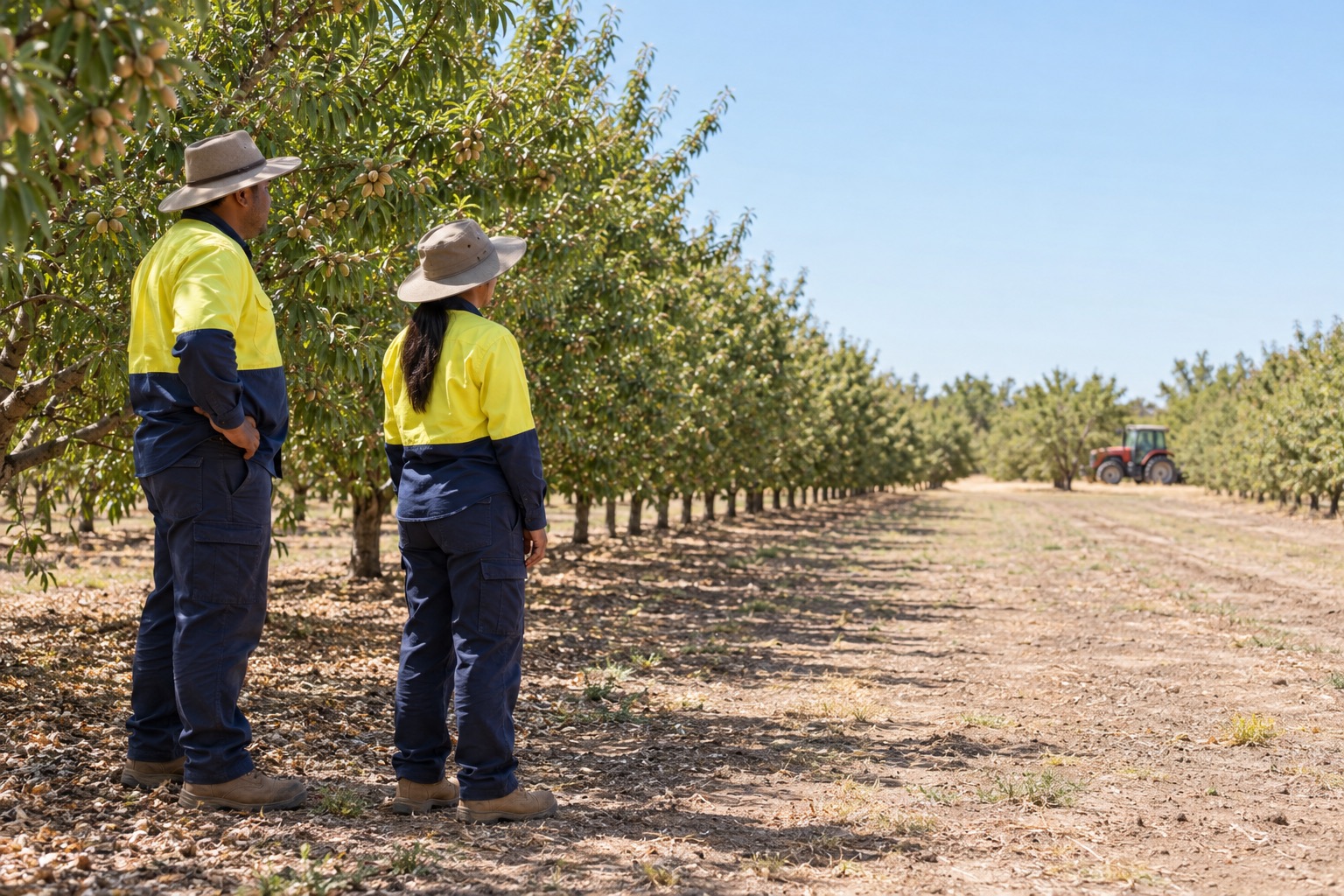
These AI-generated illustrations do not depict actual Orchard Tech employees. They introduce the approved source sheet below and do not replace induction, training or host instructions.
Read before you start
The paired view always keeps English with the existing Tongan. There is no Tongan-only view.
Full English source
Irrigation repairs and maintenance on an almond farm
What to expect before you start
Version 1.0 | Date of review: 18 October 2026 | Date of next review: 18 October 2028
This sheet describes typical irrigation repairs and maintenance work and conditions. Your actual duties depend on the farm and what you are trained and authorised to do. Reading this sheet does not authorise you to repair equipment, drive a farm vehicle, operate machinery or handle chemicals.
Who you work for
Orchard Tech is your employer. Your host farm (your host) directs your daily work. Both are responsible for your health and safety. Raise questions or safety concerns with your supervisor or Orchard Tech: Hari Yellina, 0439 32 32 32, or Soana Fanua, 0400 174 471.
Your working hours
Your confirmed roster sets your days, hours and breaks. Ask your supervisor if you are unsure.
The work you may do
Checking and reporting. You may walk assigned rows looking for leaks, very wet or dry patches, blocked drippers, and drip line that is cut, chewed, kinked or disconnected. Report what you saw, where (block and row) and when, including anything not fixed by the end of your shift.
Repairs, as your host trains you. You may repair drip lines, fittings and leaks. For example, you may join damaged drip line, fit an end plug or replace a dripper. Your host will show you which fittings you may repair. Do only the repairs your host has trained and authorised you to do. Your host will tell you how completed repairs are checked.
Maintenance. You may also help clean irrigation equipment, do seasonal maintenance and keep irrigation areas clear of weeds and rubbish, as your host shows you.
Specialist work is a separate task. This includes work on pumps, filters, valves and controllers, and any repair beyond basic drip lines and fittings. It also includes fertiliser or chemicals in the water. Do this work only if it is part of your confirmed job and your host has trained and authorised you. Only a qualified electrician may do electrical work. Never work on electrical equipment.
This sheet covers repairs and maintenance with hand tools only. Driving, operating machinery (including digging machines), using power tools, chemical work, working at heights, and entering dams, tanks, channels or confined spaces are separate tasks. They need their own instructions, training and authorisation.
Tools and materials
For checking: a radio or phone, a farm map or block list, and a notebook or approved app.
For authorised repairs: a tubing cutter or irrigation shears, joiners, connectors, end plugs and spare drip line; on some systems, a hole punch, insertion tool and replacement drippers.
On many farms the drippers are built inside the drip line, so a damaged section is cut out and joined with new line. On other systems, drippers pushed into the pipe can be replaced or the hole plugged. Parts do not always fit together: use only the parts and cutting tool your host provides, as you were shown.
- Sharp tools: cutters and shears are sharp. Keep your hands away from the cutting edges. Check your tools before you use them. Do not use a damaged tool: report it to your supervisor.
Water under pressure
The water in irrigation pipes is under pressure. When a pipe or fitting is damaged or opened, water and dirt can spray out with force. The water may also contain fertiliser or chemicals.
- Never cut or disconnect a pipe while water is running or the line is under pressure. An authorised person must first make the system safe using the host's procedure. Start only when your supervisor says it is safe.
- Before you start, ask your supervisor whether fertiliser or chemicals are in the water. If this is unclear, do not start. Wear the eye protection and gloves your host provides.
- Keep yourself and others out of the path of the water. Keep your face away from leaks and open pipes. If water splashes into your eyes or onto your skin, stop and get first aid straight away. Tell your supervisor. Wash your hands before you eat or drink.
- Stop and tell your supervisor if a pipe bursts, a fitting comes off, water sprays where it should not, or a repair still leaks when the water is back on. Do not force a fitting.
Digging, cables and power lines
Some repairs may need digging to reach a buried pipe. Underground pipes and electrical cables can be hard to find. Hitting a cable can cause an electric shock.
- Ask your host before you dig. Start only after your host confirms that underground pipes and cables have been located and shows you where it is safe to dig. Dig only in the way your host shows you, and use only the tools your host provides.
- If you find a cable, or a pipe you were not told about, stop digging. Do not touch it. Keep clear and tell your supervisor.
- Open holes can make people trip or fall. Ask your supervisor what to do before you leave a hole open. Entering a trench is a separate task. It needs its own safe work instructions, training and authorisation.
- Electrical equipment: if you see a damaged cable or exposed wiring, do not touch it. Keep clear and tell your supervisor.
- Power lines: a long pipe or pole can touch an overhead power line. Electricity can also jump to it when it comes close to a line, even if it does not touch. Before you start, ask your host where the power lines are and where you must not use or carry long items. Never lift a long item towards a power line. If you are not sure, stop and ask your supervisor.
Working near machines
Tractors and other vehicles may be working in or near your block.
- Keep separate from machines. Before you start, ask your host to show you where to work and how workers are kept away from machinery. If a machine comes into your work area, stop work, keep clear and tell your supervisor.
- Never approach a working machine until the operator has stopped and clearly signalled you to come closer. Eye contact alone is not enough.
- Be seen: wear the high-visibility clothing your host provides, and watch for vehicles coming out of rows and turning at the headlands (the turning areas at the ends of the rows).
Weather and the outdoors
Most work is outdoors in heat, cold, wind, rain and dust. Watch for holes, pipes, slippery ground and snakes. Work may change or stop in heat, storms or smoke: follow your host's instructions. Use sun protection all year (broad-brim hat, long sleeves, sunglasses, sunscreen), drink water often, take shade breaks and dress for the weather. Tell your supervisor straight away if you or a co-worker feel sick, dizzy or very hot.
- Do not enter a block that is being sprayed or has a no-entry sign. Do not drink irrigation water: it may contain fertiliser or chemicals.
- Look before you reach. Snakes and spiders can hide in long grass, near pipes and in holes. Look carefully before you put your hand near a pipe or into a hole.
Movement and lifting
You may walk for long periods on uneven ground. You may need to bend, kneel or dig, and to grip and cut again and again. Leaks can leave the ground wet or muddy. Watch your footing. Pipe coils and tool bags can be heavy or awkward: if a lift feels unsafe, ask for help or use the equipment provided. Report pain or discomfort early.
Moving around the farm safely
Mule or similar farm vehicle
Some farms use a side-by-side vehicle, such as a Kawasaki MULE, to carry workers and materials.
- Driving is not covered by this sheet. If driving is part of your confirmed job, get the safe work instructions, training and authorisation for that vehicle first. A licence alone does not show you can drive it safely.
- Driver and passengers: wear your seat belt every time, and the helmet and eye protection your host provides (your host will tell you what to wear). Keep doors or nets closed and arms and legs inside. Sit only in a seat with a seat belt. Never ride in the tray or bypass a safety device.
Farm traffic rules
- Follow the farm traffic plan: use set routes, obey signs and speed limits, and keep away from steep slopes, banks and water.
- On foot: use walking routes and keep clear of moving machinery. Stop in a safe place before using a phone.
PPE and help on the farm
Your host will provide the personal protective equipment (PPE) for your tasks and show you how to wear, check and look after it. This may include safety boots, high-visibility clothing, gloves, eye or hearing protection, sun protection and a vehicle helmet. Report missing, damaged or poorly fitting PPE before you start. PPE does not replace training, instructions or other safety controls.
At induction, learn who your supervisor is, where water, toilets and first aid are, the emergency plan, how to get help where there is no phone coverage, and the check-in arrangements when you work alone.
- In a life-threatening emergency, call Triple Zero (000), then tell your supervisor. If you see a snake, keep clear and never try to catch or kill it. If a snake bites you, or you think you have been bitten, keep as still as possible and call 000 or ask someone to call.
- Report every injury, near miss or unsafe situation to your supervisor and Orchard Tech as soon as possible, even if it seems small.
- Ask for a demonstration, an explanation or language help whenever you do not understand.
Important note before starting any jobThis sheet describes typical irrigation repairs and maintenance work. Before you start, your host will give you the job description and safe work instructions for your actual duties, the PPE you need, a farm induction and training for your tasks. Follow those instructions. Do not do any work without the required PPE, training and authorisation. Complete the induction at every new farm, and get the instructions and training for every new task. If anything is missing, unsafe or unclear, stop and ask your supervisor. You can also contact Orchard Tech. |
Paired English + Lea Fakatonga
The paired English–Tongan source was issued under an owner exception. The source records 8 blocking issues and 143 composed Tongan rows. Eight safety instructions and the English-authority policy remain in exact English. This is not a passed or certified translation.
BILINGUAL AID - ENGLISH IS THE AUTHORITATIVE VERSION - NOT AUTHORISED FOR TONGAN-ALONE DISPLAY
LANGUAGE-QA FAIL - blocking control failed: B5, G5
BILINGUAL AID - ENGLISH IS THE AUTHORITATIVE VERSION - NOT AUTHORISED FOR TONGAN-ALONE DISPLAY
Irrigation repairs and maintenance on an almond farm
Ngaahi fakaleleiʻi mo e tokangaʻi ʻo e ngaahi naunau fuʻifuʻi ngoue ʻi ha faama almond °
What to expect before you start
Meʻa ke ke ʻamanaki ki ai kimuʻa pea ke kamata °
English and Tongan version 1.3, based on English version 1.0 | Date of review: 18 October 2026 | Date of next review: 18 October 2028
Version fakapalangi mo Fakatonga 1.3, makatuʻunga ʻi he Version fakapalangi 1.0 | ʻAho ʻo e toe vakaiʻi: 18 October 2026 | ʻAho ʻo e toe vakaiʻi hoko: 18 October 2028 °
Each Tongan line is printed under its English. Lines marked ° were written by Orchard Tech. See About this Tongan version at the end.
ʻOku paaki ʻa e laine Fakatonga takitaha ʻi lalo ʻi heʻene lea fakapalangi. Ko e ngaahi laine ʻoku fakaʻilongaʻi ʻaki ʻa e ° naʻe faʻu ʻe Orchard Tech. Vakai ki he konga Fekauʻaki mo e Version Fakatonga ni ʻi he ngataʻanga. °
This sheet describes typical irrigation repairs and maintenance work and conditions. Your actual duties depend on the farm and what you are trained and authorised to do. Reading this sheet does not authorise you to repair equipment, drive a farm vehicle, operate machinery or handle chemicals.
ʻOku fakamatala ʻa e laʻipepa ni ki he ngaahi ngāue fakaleleiʻi mo tokangaʻi ʻo e ngaahi naunau fuʻifuʻi ngoue ʻoku faʻa fai mo e ngaahi tuʻunga ʻoku fai ai. ʻOku makatuʻunga ho ngaahi fatongia moʻoni ʻi he faama mo e ngaahi ngāue kuo akoʻi koe ke fai pea kuo fakangofua koe ke fai. ʻOku ʻikai ʻoatu ʻe hoʻo lau ʻa e laʻipepa ni ha ngofua ke ke fakaleleiʻi ha meʻangāue, fakaʻuli ha meʻalele ʻa e faama, ngāueʻaki ha mīsini pe ngāue mo e ngaahi kemikale (handle chemicals). °
Who you work for
Tokotaha ʻoku ke ngāue ki ai °
Orchard Tech is your employer. Your host farm (your host) directs your daily work. Both are responsible for your health and safety. Raise questions or safety concerns with your supervisor or Orchard Tech: Hari Yellina, 0439 32 32 32, or Soana Fanua, 0400 174 471.
Ko Orchard Tech ʻa hoʻo pule ngāue. Ko e faama ʻoku ke ngāue ai (hoʻo host) ʻoku ne fakahinohino hoʻo ngāue fakaʻaho. ʻOku na fakatou fatongiaʻaki hoʻo moʻui lelei mo hoʻo malu. Tala ki hoʻo supavaisa pe Orchard Tech hoʻo ngaahi fehuʻi pe ngaahi meʻa ʻoku ke hohaʻa ki ai fekauʻaki mo e malu: Hari Yellina, 0439 32 32 32, pe Soana Fanua, 0400 174 471. °
Your working hours
Ho ngaahi houa ngāue °
Your confirmed roster sets your days, hours and breaks. Ask your supervisor if you are unsure.
Ko hoʻo fokotuʻutuʻu ngāue (roster) kuo fakapapauʻi ʻoku ne fokotuʻu ho ngaahi ʻaho, houa ngāue mo e taimi mālōlō. ʻEke ki hoʻo supavaisa kapau ʻoku ke veiveiua. °
The work you may do
Ngaahi ngāue te ke ala fai °
Checking and reporting. You may walk assigned rows looking for leaks, very wet or dry patches, blocked drippers, and drip line that is cut, chewed, kinked or disconnected. Report what you saw, where (block and row) and when, including anything not fixed by the end of your shift.
Vakaiʻi mo lipooti. Te ke ala lue ʻi he ngaahi ʻotu kuo ʻoatu ke ke vakaiʻi, ʻo kumi ʻa e ngaahi mama ʻa e vai, ngaahi feituʻu ʻoku viviku ʻaupito pe mōmoa, ngaahi meʻa tuku vai tulutulu (drippers) kuo punitia, mo ha laine paipa vai tulutulu (drip line) kuo tuʻusi, kuo maumau ʻi hono ngau (chewed), kuo peluki ʻo piko lahi (kinked), pe kuo mavahe hono hokoʻanga. Lipooti ʻa e meʻa naʻa ke sio ki ai, ʻa e feituʻu (poloka mo e ʻotu) mo e taimi, ʻo kau ai ha meʻa ʻoku teʻeki fakaleleiʻi ʻi he taimi ʻoku ʻosi ai hoʻo sifi. °
Repairs, as your host trains you. You may repair drip lines, fittings and leaks. For example, you may join damaged drip line, fit an end plug or replace a dripper. Your host will show you which fittings you may repair. Do only the repairs your host has trained and authorised you to do. Your host will tell you how completed repairs are checked.
Ngaahi fakaleleiʻi, ʻo fakatatau ki he founga ʻoku akoʻi ai koe ʻe he faama ʻoku ke ngāue ai. Te ke ala fakaleleiʻi ʻa e ngaahi laine paipa vai tulutulu, ngaahi meʻa hoko paipa (fittings), mo e ngaahi mama ʻa e vai. Hangē ko ʻeni, te ke ala hokoʻi ha laine paipa vai tulutulu kuo maumau, ʻai ha meʻa tāpuni ki he muiʻi paipa (end plug), pe fetongi ha meʻa tuku vai tulutulu (dripper). ʻE fakaʻaliʻali atu ʻe he faama ʻoku ke ngāue ai ʻa e ngaahi meʻa hoko paipa (fittings) ʻoku ngofua ke ke fakaleleiʻi. Fai pē ʻa e ngaahi fakaleleiʻi kuo akoʻi koe ʻe he faama ʻoku ke ngāue ai ke fai pea kuo ne fakangofua koe ke fai. ʻE tala atu ʻe he faama ʻoku ke ngāue ai ʻa e founga ʻoku vakaiʻi ai ʻa e ngaahi fakaleleiʻi kuo ʻosi fai. °
Maintenance. You may also help clean irrigation equipment, do seasonal maintenance and keep irrigation areas clear of weeds and rubbish, as your host shows you.
Tokangaʻi. Te ke ala tokoni foki ki hono fakamaʻa ʻo e ngaahi naunau fuʻifuʻi ngoue, fai ʻa e tokangaʻi ʻi he ngaahi faʻahitaʻu (seasonal maintenance), mo tauhi ʻa e ngaahi feituʻu fuʻifuʻi ngoue ke ʻoua ʻe ʻi ai ha vao (weeds) mo e veve, ʻo fakatatau ki he founga ʻoku fakaʻaliʻali atu ʻe he faama ʻoku ke ngāue ai. °
Specialist work is a separate task. This includes work on pumps, filters, valves and controllers, and any repair beyond basic drip lines and fittings. It also includes fertiliser or chemicals in the water. Do this work only if it is part of your confirmed job and your host has trained and authorised you. Only a qualified electrician may do electrical work. Never work on electrical equipment.
Ko e ngāue ʻoku fiemaʻu ki ai ha poto makehe ko ha ngāue makehe (separate task). ʻOku kau heni ʻa e ngāue ki he ngaahi mīsini teke vai (pumps), meʻa sivi vai (filters), meʻa tāpuni mo fakaava vai (valves) mo e meʻa puleʻi (controllers), mo ha fakaleleiʻi pē ʻoku fakalaka atu ʻi he fakaleleiʻi faingofua ʻo e ngaahi laine paipa vai tulutulu mo e ngaahi meʻa hoko paipa (fittings). ʻOku kau foki heni ʻa e meʻa fafanga ʻakau (fertiliser) pe kemikale ʻi he vai. Fai ʻa e ngāue ni ʻo kapau pē ʻoku kau ʻi hoʻo ngāue kuo fakapapauʻi pea kuo akoʻi koe mo fakangofua koe ʻe he faama ʻoku ke ngāue ai. Ko ha tokotaha ngāue ʻuhila kuo maʻu hono qualification pē ʻoku ngofua ke ne fai ha ngāue ʻuhila. ʻOua ʻaupito naʻa ke ngāue ʻi ha meʻangāue ʻuhila. °
This sheet covers repairs and maintenance with hand tools only. Driving, operating machinery (including digging machines), using power tools, chemical work, working at heights, and entering dams, tanks, channels or confined spaces are separate tasks. They need their own instructions, training and authorisation.
ʻOku kau ʻi he laʻipepa ni ʻa e fakaleleiʻi mo e tokangaʻi ʻoku fai ʻaki pē ʻa e ngaahi meʻangāue nima (hand tools). Ko e fakaʻuli, ngāueʻaki ʻo e ngaahi mīsini (ʻo kau ai ʻa e ngaahi mīsini keli), ngāueʻaki ʻo e ngaahi meʻangāue ʻoku fakalele ʻaki ha ivi (power tools), ngāue mo e kemikale, ngāue ʻi he ngaahi feituʻu maʻolunga, mo e hū ki he ngaahi feituʻu tauhi vai (dams), ngaahi ʻaiʻanga (tanks), ngaahi halanga vai (channels) pe ngaahi feituʻu mapuni (confined spaces), ko e ngaahi ngāue makehe (separate tasks). ʻOku fiemaʻu ki he ngāue taki taha ʻa ʻene ngaahi fakahinohino pē ʻaʻana, ʻene akoʻi pē ʻaʻana mo ʻene ngofua pē ʻaʻana. °
Tools and materials
Ngaahi meʻangāue mo e ngaahi meʻa ke ngāueʻaki °
For checking: a radio or phone, a farm map or block list, and a notebook or approved app.
Ki he vakaiʻi: ha radio pe telefoni, ha mape ʻo e faama pe lisi ʻo e ngaahi poloka, mo ha kiʻi tohi (notebook) pe ha app kuo fakangofua. °
For authorised repairs: a tubing cutter or irrigation shears, joiners, connectors, end plugs and spare drip line; on some systems, a hole punch, insertion tool and replacement drippers.
Ki he ngaahi fakaleleiʻi kuo fakangofua: ha meʻangāue tutuʻu paipa (tubing cutter) pe meʻangāue tutuʻu ki he fuʻifuʻi ngoue (irrigation shears), ngaahi meʻa hoko paipa (joiners), ngaahi meʻa fakahoko paipa (connectors), ngaahi meʻa tāpuni ki he muiʻi paipa (end plugs) mo e laine paipa vai tulutulu talifaki; ʻi he ngaahi founga (systems) ʻe niʻihi, ha meʻa ngaohi ava (hole punch), meʻangāue fakahū (insertion tool) mo e ngaahi meʻa tuku vai tulutulu fetongi (replacement drippers). °
On many farms the drippers are built inside the drip line, so a damaged section is cut out and joined with new line. On other systems, drippers pushed into the pipe can be replaced or the hole plugged. Parts do not always fit together: use only the parts and cutting tool your host provides, as you were shown.
ʻI he ngaahi faama lahi, ʻoku ʻosi faʻu ʻa e ngaahi meʻa tuku vai tulutulu ʻi loto ʻi he laine paipa vai tulutulu. Ko ia ai, ʻoku tuʻusi ʻo toʻo ʻa e konga kuo maumau pea hokoʻi ha laine paipa foʻou ke fetongi ʻa e konga kuo toʻo. ʻI he ngaahi founga (systems) kehe, ʻe lava ke fetongi ʻa e ngaahi meʻa tuku vai tulutulu ʻoku teke ki loto ʻi he paipa, pe tāpuni ʻa e ava. ʻOku ʻikai ke fehokotaki lelei maʻu pē ʻa e ngaahi kongokonga: ngāueʻaki pē ʻa e ngaahi kongokonga mo e meʻangāue tutuʻu ʻoku ʻoatu ʻe he faama ʻoku ke ngāue ai, ʻo fakatatau ki he founga naʻe fakaʻaliʻali atu. °
- English
Sharp tools: cutters and shears are sharp. Keep your hands away from the cutting edges. Check your tools before you use them. Do not use a damaged tool: report it to your supervisor.
Lea FakatongaNgaahi meʻangāue masila: ʻoku masila ʻa e ngaahi meʻangāue tutuʻu (cutters) mo e ngaahi meʻangāue kosi (shears). Tauhi ho nima ke mamaʻo mei he ngaahi mata tutuʻu (cutting edges). Vakaiʻi hoʻo ngaahi meʻangāue kimuʻa pea ke ngāueʻaki ʻa e ngaahi meʻangāue ko ia. ʻOua naʻa ke ngāueʻaki ha meʻangāue kuo maumau: lipooti ia ki hoʻo supavaisa. °
Water under pressure
Vai ʻoku ʻi ai ha teke (under pressure) °
The water in irrigation pipes is under pressure. When a pipe or fitting is damaged or opened, water and dirt can spray out with force. The water may also contain fertiliser or chemicals.
ʻOku ʻi ai ha teke ʻi he vai ʻi loto ʻi he ngaahi paipa fuʻifuʻi ngoue. ʻI he taimi ʻoku maumau ai pe fakaava ai ha paipa pe meʻa hoko paipa (fitting), ʻe lava ke puna mālohi ki tuʻa ʻa e vai mo e ʻuli. ʻE ala ʻi ai foki ha meʻa fafanga ʻakau (fertiliser) pe kemikale ʻi he vai. °
- English
Never cut or disconnect a pipe while water is running or the line is under pressure. An authorised person must first make the system safe using the host's procedure. Start only when your supervisor says it is safe.
Lea FakatongaʻOua ʻaupito naʻa ke tuʻusi pe fakamavahe ʻa e hoko ʻo ha paipa lolotonga ʻoku tafe ʻa e vai pe ʻoku kei ʻi ai ha teke ʻi loto ʻi he laine paipa (under pressure). Kuo pau ke tomuʻa ʻai ʻe ha tokotaha kuo fakangofua ʻa e ngaahi naunau fuʻifuʻi ngoue (system) ke malu, ʻo ngāueʻaki ʻa e founga ngāue ʻa e faama ʻoku ke ngāue ai. Kamata pē ʻi he taimi ʻoku tala atu ai ʻe hoʻo supavaisa ʻoku malu. °
- English
Before you start, ask your supervisor whether fertiliser or chemicals are in the water. If this is unclear, do not start. Wear the eye protection and gloves your host provides.
Lea FakatongaKimuʻa pea ke kamata, ʻeke ki hoʻo supavaisa pe ʻoku ʻi he vai ha meʻa fafanga ʻakau (fertiliser) pe kemikale. Kapau ʻoku ʻikai mahino ʻeni, ʻoua naʻa ke kamata. Tui ʻa e meʻa maluʻi mata mo e kofunima ʻoku ʻoatu ʻe he faama ʻoku ke ngāue ai. °
- English
Keep yourself and others out of the path of the water. Keep your face away from leaks and open pipes. If water splashes into your eyes or onto your skin, stop and get first aid straight away. Tell your supervisor. Wash your hands before you eat or drink.
Lea FakatongaNofo mavahe mei he halanga ʻo e vai, pea tauhi ʻa e niʻihi kehe ke nau mavahe mei ai. Tauhi ho mata (face) ke mamaʻo mei he ngaahi mama ʻa e vai mo e ngaahi paipa ʻoku ʻikai tāpuni. °
English retained in the sourceLea Fakatonga: If water splashes into your eyes or onto your skin, stop and get first aid straight away.
English retained in the sourceLea Fakatonga: Tell your supervisor.
Lea FakatongaFanofano ho nima kimuʻa pea ke kai pe inu. °
- English
Stop and tell your supervisor if a pipe bursts, a fitting comes off, water sprays where it should not, or a repair still leaks when the water is back on. Do not force a fitting.
English retained in the sourceLea Fakatonga: Stop and tell your supervisor if a pipe bursts, a fitting comes off, water sprays where it should not, or a repair still leaks when the water is back on.
English retained in the sourceLea Fakatonga: Do not force a fitting.
Digging, cables and power lines
Keli, ngaahi uaea mo e ngaahi laine ʻuhila °
Some repairs may need digging to reach a buried pipe. Underground pipes and electrical cables can be hard to find. Hitting a cable can cause an electric shock.
ʻE ala fiemaʻu ʻa e keli ʻi he ngaahi fakaleleiʻi ʻe niʻihi ke aʻu ki ha paipa kuo tanu. ʻE lava ke faingataʻa hono kumi ʻo e ngaahi paipa mo e ngaahi uaea ʻuhila ʻi lalo ʻi he kelekele. ʻE lava ke hoko ha taaʻi ʻe he ʻuhila (electric shock) ʻi he tau ki ha uaea. °
- English
Ask your host before you dig. Start only after your host confirms that underground pipes and cables have been located and shows you where it is safe to dig. Dig only in the way your host shows you, and use only the tools your host provides.
Lea FakatongaʻEke ki he faama ʻoku ke ngāue ai kimuʻa pea ke keli. Toki kamata pē hili hono fakapapauʻi ʻe he faama ʻoku ke ngāue ai kuo ʻiloʻi ʻa e ngaahi feituʻu ʻoku ʻi ai ʻa e ngaahi paipa mo e ngaahi uaea ʻi lalo ʻi he kelekele pea kuo ne fakaʻaliʻali atu ʻa e feituʻu ʻoku malu ke keli ai. Keli pē ʻi he founga ʻoku fakaʻaliʻali atu ʻe he faama ʻoku ke ngāue ai, pea ngāueʻaki pē ʻa e ngaahi meʻangāue ʻoku ʻoatu ʻe he faama ʻoku ke ngāue ai. °
- English
If you find a cable, or a pipe you were not told about, stop digging. Do not touch it. Keep clear and tell your supervisor.
Lea FakatongaKapau te ke ʻilo ha uaea, pe ha paipa naʻe ʻikai tala atu kiate koe fekauʻaki mo ia, taʻofi hoʻo keli. ʻOua naʻa ke ala ki ai. Nofo mamaʻo pea tala ki hoʻo supavaisa. °
- English
Open holes can make people trip or fall. Ask your supervisor what to do before you leave a hole open. Entering a trench is a separate task. It needs its own safe work instructions, training and authorisation.
Lea FakatongaʻE lava ke humu pe tō ʻa e kakai ʻi he ngaahi ava ʻoku ʻikai tāpuni. ʻEke ki hoʻo supavaisa ʻa e meʻa ke fai kimuʻa pea ke tuku ha ava ke ʻikai tāpuni. Ko e hū ki ha ava loloa (trench) ko ha ngāue makehe (separate task). ʻOku fiemaʻu ki he ngāue ni ʻa ʻene ngaahi fakahinohino ngāue malu pē ʻaʻana, ʻene akoʻi pē ʻaʻana mo ʻene ngofua pē ʻaʻana. °
- English
Electrical equipment: if you see a damaged cable or exposed wiring, do not touch it. Keep clear and tell your supervisor.
Lea FakatongaMeʻangāue ʻuhila: kapau te ke sio ki ha uaea kuo maumau pe ngaahi uaea ʻoku ʻasi atu ʻo ʻikai ʻufiʻufi (exposed wiring), ʻoua naʻa ke ala ki ai. Nofo mamaʻo pea tala ki hoʻo supavaisa. °
- English
Power lines: a long pipe or pole can touch an overhead power line. Electricity can also jump to it when it comes close to a line, even if it does not touch. Before you start, ask your host where the power lines are and where you must not use or carry long items. Never lift a long item towards a power line. If you are not sure, stop and ask your supervisor.
Lea FakatongaNgaahi laine ʻuhila: ʻe lava ke ala ha paipa loloa pe ha pou loloa ki ha laine ʻuhila ʻi ʻolunga. ʻE lava foki ke puna ʻa e ʻuhila ki he paipa pe pou ko ia ʻi he taimi ʻoku ʻunuʻunu ofi ai ki ha laine ʻuhila, neongo kapau ʻoku ʻikai ke ala ʻa e paipa pe pou ko ia ki he laine. Kimuʻa pea ke kamata, ʻeke ki he faama ʻoku ke ngāue ai ʻa e ngaahi feituʻu ʻoku ʻi ai ʻa e ngaahi laine ʻuhila mo e ngaahi feituʻu ʻoku tapu ke ke ngāueʻaki pe fetuku ai ha ngaahi meʻa loloa. ʻOua ʻaupito naʻa ke hiki hake ha meʻa loloa ʻo ʻai ia ke ofi ange ki ha laine ʻuhila. Kapau ʻoku ke veiveiua, tuʻu pea ʻeke ki hoʻo supavaisa. °
Working near machines
Ngāue ofi ki he ngaahi mīsini °
Tractors and other vehicles may be working in or near your block.
ʻE ala ngāue ʻa e ngaahi tulekitoa mo e ngaahi meʻalele kehe ʻi loto pe ofi ki hoʻo poloka. °
- English
Keep separate from machines. Before you start, ask your host to show you where to work and how workers are kept away from machinery. If a machine comes into your work area, stop work, keep clear and tell your supervisor.
Lea FakatongaNofo mavahe mei he ngaahi mīsini. Kimuʻa pea ke kamata, kole ki he faama ʻoku ke ngāue ai ke fakaʻaliʻali atu ʻa e feituʻu ke ke ngāue ai mo e founga ʻoku tauhi ai ʻa e kau ngāue ke mamaʻo mei he ngaahi mīsini. Kapau ʻe hū mai ha mīsini ki ho feituʻu ngāue, taʻofi hoʻo ngāue, nofo mamaʻo pea tala ki hoʻo supavaisa. °
- English
Never approach a working machine until the operator has stopped and clearly signalled you to come closer. Eye contact alone is not enough.
Lea FakatongaʻOua ʻaupito naʻa ke ʻunuʻunu ofi ki ha mīsini ʻoku ngāue kae ʻoua kuo taʻofi ia ʻe he tokotaha ʻoku ne ngāueʻaki pea kuo ne ʻoatu ha fakaʻilonga mahino ke ke ʻunuʻunu ofi ange. ʻOku ʻikai feʻunga ʻa e fesiofaki pē. °
- English
Be seen: wear the high-visibility clothing your host provides, and watch for vehicles coming out of rows and turning at the headlands (the turning areas at the ends of the rows).
Lea FakatongaʻAi ke hā lelei koe: tui ʻa e vala lanu mataʻāʻā ʻoku ʻoatu ʻe he faama ʻoku ke ngāue ai, pea tokanga ki he ngaahi meʻalele ʻoku haʻu mei he ngaahi ʻotu pea afe ʻi he ngaahi feituʻu afe (headlands), ʻa ia ko e ngaahi feituʻu afe ʻi he ngataʻanga ʻo e ngaahi ʻotu. °
Weather and the outdoors
Ko e ʻea mo e ngāue ʻi tuʻa °
Most work is outdoors in heat, cold, wind, rain and dust. Watch for holes, pipes, slippery ground and snakes. Work may change or stop in heat, storms or smoke: follow your host's instructions. Use sun protection all year (broad-brim hat, long sleeves, sunglasses, sunscreen), drink water often, take shade breaks and dress for the weather. Tell your supervisor straight away if you or a co-worker feel sick, dizzy or very hot.
Ko e lahi taha ʻo e ngāue ʻoku fai ʻi tuʻa, ʻi he vela, momoko, matangi, ʻuha mo e efu. Tokanga ki he ngaahi ava, paipa, kelekele hekeheke mo e fanga ngata. ʻE ala liliu pe tuʻu ʻa e ngāue ʻi he vela, ngaahi matangi mālohi (storms) pe ʻahu: muimui ki he ngaahi fakahinohino ʻa e faama ʻoku ke ngāue ai. Ngāueʻaki ʻa e maluʻi mei he laʻā ʻi he taʻu kakato (tatā ʻoku falahi hono tapa, falani nima loloa, matasioʻata maluʻi mei he laʻā, kilimi laʻā), inu vai tuʻo lahi, mālōlō ʻi he malumalu pea tui vala ʻoku feʻunga mo e ʻea. °
Lea Fakatonga: Tell your supervisor straight away if you or a co-worker feel sick, dizzy or very hot.
- English
Do not enter a block that is being sprayed or has a no-entry sign. Do not drink irrigation water: it may contain fertiliser or chemicals.
Lea FakatongaʻOua naʻa ke hū ki ha poloka ʻoku lolotonga fai ai ʻa e fana (spraying) pe ʻoku ʻi ai ha fakaʻilonga tapu hū. ʻOua naʻa ke inu ʻa e vai fuʻifuʻi ngoue: ʻe ala ʻi ai ha meʻa fafanga ʻakau (fertiliser) pe kemikale. °
- English
Look before you reach. Snakes and spiders can hide in long grass, near pipes and in holes. Look carefully before you put your hand near a pipe or into a hole.
Lea FakatongaSio kimuʻa pea ke kakapa. ʻE lava ke toitoi ʻa e fanga ngata mo e fanga manu (spiders) ʻi he musie loloa, ofi ki he ngaahi paipa, pea ʻi he ngaahi ava. Sio fakalelei kimuʻa pea ke ʻai ho nima ofi ki ha paipa pe ki loto ʻi ha ava. °
Movement and lifting
Ngaahi ngaungaue mo e hiki meʻa °
You may walk for long periods on uneven ground. You may need to bend, kneel or dig, and to grip and cut again and again. Leaks can leave the ground wet or muddy. Watch your footing. Pipe coils and tool bags can be heavy or awkward: if a lift feels unsafe, ask for help or use the equipment provided. Report pain or discomfort early.
Te ke ala lue ʻi ha taimi loloa ʻi he kelekele tokakovi. ʻE ala fiemaʻu ke ke punou, tuʻulutui pe keli, pea ke toutou puke maʻu mo toutou tutuʻu. ʻE lava ke tuku ʻe he ngaahi mama ʻa e vai ʻa e kelekele ke viviku pe pelapela. Tokanga ki he feituʻu ʻoku ke ʻai ai ho vaʻe. ʻE ala mamafa pe faingataʻa ke pukepuke ʻa e ngaahi takai paipa mo e ngaahi kato meʻangāue: kapau ʻoku ke ongoʻi ʻoku ʻikai malu ke hiki ha meʻa, kole tokoni pe ngāueʻaki ʻa e meʻangāue kuo ʻoatu. °
Lea Fakatonga: Report pain or discomfort early.
Moving around the farm safely
Fefonongaʻaki ʻi he faama ʻi ha founga malu °
Mule or similar farm vehicle
Mule pe ha meʻalele faama ʻoku meimei tatau °
Some farms use a side-by-side vehicle, such as a Kawasaki MULE, to carry workers and materials.
ʻOku ngāueʻaki ʻe he ngaahi faama ʻe niʻihi ha meʻalele ʻoku tuʻu tafaʻaki ki he tafaʻaki hono ngaahi sea (side-by-side), hangē ko ha Kawasaki MULE, ke fetuku ʻa e kau ngāue mo e ngaahi meʻa ke ngāueʻaki. °
- English
Driving is not covered by this sheet. If driving is part of your confirmed job, get the safe work instructions, training and authorisation for that vehicle first. A licence alone does not show you can drive it safely.
Lea FakatongaʻOku ʻikai kau ʻa e fakaʻuli ʻi he laʻipepa ni. Kapau ʻoku kau ʻa e fakaʻuli ʻi hoʻo ngāue kuo fakapapauʻi, tomuʻa maʻu ʻa e ngaahi fakahinohino ngāue malu, akoʻi mo e ngofua ki he meʻalele ko ia. ʻOku ʻikai fakahaaʻi ʻe ha laiseni pē ʻe lava ke ke fakaʻuli malu ʻi he meʻalele ko ia. °
- English
Driver and passengers: wear your seat belt every time, and the helmet and eye protection your host provides (your host will tell you what to wear). Keep doors or nets closed and arms and legs inside. Sit only in a seat with a seat belt. Never ride in the tray or bypass a safety device.
Lea FakatongaTokotaha fakaʻuli mo e kau pasese: fakamaʻu ho leta maluʻi ʻi he taimi kotoa pē, pea tui ʻa e tatā maluʻi (helmet) mo e meʻa maluʻi mata ʻoku ʻoatu ʻe he faama ʻoku ke ngāue ai (ʻe tala atu ʻe he faama ʻoku ke ngāue ai ʻa e meʻa ke ke tui). Tauhi ʻa e ngaahi matapā pe kupenga ke tāpuni, pea tauhi ho nima mo ho vaʻe ʻi loto. Tangutu pē ʻi ha sea ʻoku ʻi ai ha leta maluʻi. ʻOua ʻaupito naʻa ke heka ʻi he puha uta ʻi mui (tray) pe fai ha founga ke ʻoua ʻe ngāue ai ha meʻa maluʻi. °
Farm traffic rules
Ngaahi tuʻutuʻuni fefonongaʻaki ʻi he faama °
- English
Follow the farm traffic plan: use set routes, obey signs and speed limits, and keep away from steep slopes, banks and water.
Lea FakatongaMuimui ki he palani fefonongaʻaki ʻa e faama: ngāueʻaki ʻa e ngaahi hala kuo fokotuʻu, talangofua ki he ngaahi fakaʻilonga mo e fakangatangata ʻo e vave, pea nofo mamaʻo mei he ngaahi feituʻu ʻoku tahifo lahi, ngaahi tapa maʻolunga (banks) mo e vai. °
- English
On foot: use walking routes and keep clear of moving machinery. Stop in a safe place before using a phone.
Lea FakatongaʻI hoʻo lue: ngāueʻaki ʻa e ngaahi hala lue pea nofo mamaʻo mei he ngaahi mīsini ʻoku ngaʻunu. Tuʻu ʻi ha feituʻu malu kimuʻa pea ke ngāueʻaki ha telefoni. °
PPE and help on the farm
PPE mo e tokoni ʻi he faama °
Your host will provide the personal protective equipment (PPE) for your tasks and show you how to wear, check and look after it. This may include safety boots, high-visibility clothing, gloves, eye or hearing protection, sun protection and a vehicle helmet. Report missing, damaged or poorly fitting PPE before you start. PPE does not replace training, instructions or other safety controls.
ʻE ʻoatu ʻe he faama ʻoku ke ngāue ai ʻa e teunga maluʻi fakataautaha (PPE) ki hoʻo ngaahi ngāue, pea fakaʻaliʻali atu ʻa e founga ke tui, vakaiʻi mo tokangaʻi ai. ʻE ala kau heni ʻa e sū malu, vala lanu mataʻāʻā, kofunima, meʻa maluʻi mata pe telinga, maluʻi mei he laʻā, mo e tatā maluʻi ki he heka meʻalele (vehicle helmet). Lipooti ʻa e PPE ʻoku ʻikai maʻu, maumau pe ʻikai feʻunga mo ho sino kimuʻa pea ke kamata. ʻOku ʻikai fetongi ʻe he PPE ʻa e akoʻi, ngaahi fakahinohino pe ngaahi founga maluʻi kehe. °
At induction, learn who your supervisor is, where water, toilets and first aid are, the emergency plan, how to get help where there is no phone coverage, and the check-in arrangements when you work alone.
ʻI he fakataukeiʻi, ako ke ke ʻilo ko hai hoʻo supavaisa, ʻa e feituʻu ʻoku ʻi ai ʻa e vai, ngaahi falemālōlō mo e ʻuluaki tokoni (first aid), ʻa e palani ki he meʻa fakatuʻupakē, ʻa e founga ke maʻu ai ha tokoni ʻi ha feituʻu ʻoku ʻikai aʻu ki ai ʻa e fakaʻilonga telefoni (phone coverage), mo e ngaahi fokotuʻutuʻu fetuʻutaki ʻi hoʻo ngāue toko taha (check-in arrangements). °
- English
In a life-threatening emergency, call Triple Zero (000), then tell your supervisor. If you see a snake, keep clear and never try to catch or kill it. If a snake bites you, or you think you have been bitten, keep as still as possible and call 000 or ask someone to call.
English retained in the sourceLea Fakatonga: In a life-threatening emergency, call Triple Zero (000), then tell your supervisor.
Lea FakatongaKapau te ke sio ki ha ngata, nofo mamaʻo mei ai pea ʻoua ʻaupito naʻa ke feinga ke puke pe fakamateʻi ia. °
English retained in the sourceLea Fakatonga: If a snake bites you, or you think you have been bitten, keep as still as possible and call 000 or ask someone to call.
- English
Report every injury, near miss or unsafe situation to your supervisor and Orchard Tech as soon as possible, even if it seems small.
Lea FakatongaLipooti ʻa e lavea kotoa pē, ʻa e meʻa kotoa pē naʻe meimei hoko ai ha fakatuʻutāmaki (near miss), pe ʻa e tuʻunga kotoa pē ʻoku ʻikai malu, ki hoʻo supavaisa mo Orchard Tech ʻi he vave taha ʻe lava, neongo kapau ʻoku ngali siʻisiʻi. °
- English
Ask for a demonstration, an explanation or language help whenever you do not understand.
Lea FakatongaKole ke fakaʻaliʻali atu hono founga, ke fakamatalaʻi atu, pe ke ʻoatu ha tokoni ʻi he lea, ʻi he taimi kotoa pē ʻoku ʻi ai ha meʻa ʻoku ʻikai mahino kiate koe. °
English Important note before starting any jobLea Fakatonga Fakamatala mahuʻinga kimuʻa pea kamata ha ngāue pē ° English This sheet describes typical irrigation repairs and maintenance work. Before you start, your host will give you the job description and safe work instructions for your actual duties, the PPE you need, a farm induction and training for your tasks. Follow those instructions. Do not do any work without the required PPE, training and authorisation. Complete the induction at every new farm, and get the instructions and training for every new task. If anything is missing, unsafe or unclear, stop and ask your supervisor. You can also contact Orchard Tech. Lea Fakatonga ʻOku fakamatala ʻa e laʻipepa ni ki he ngaahi ngāue fakaleleiʻi mo tokangaʻi ʻo e ngaahi naunau fuʻifuʻi ngoue ʻoku faʻa fai. Kimuʻa pea ke kamata, ʻe ʻoatu ʻe he faama ʻoku ke ngāue ai ʻa e fakamatala ʻo e ngāue mo e ngaahi fakahinohino ngāue malu ki ho ngaahi fatongia moʻoni, ʻa e PPE ʻoku ke fiemaʻu, fakataukeiʻi ki he faama, mo e akoʻi ki hoʻo ngaahi ngāue. Muimui ki he ngaahi fakahinohino ko ia. ʻOua naʻa ke fai ha ngāue kapau ʻoku ʻikai ke ke maʻu ʻa e PPE, akoʻi mo e ngofua ʻoku fiemaʻu. Fakakakato ʻa e fakataukeiʻi ʻi he faama foʻou kotoa pē, pea maʻu ʻa e ngaahi fakahinohino mo e akoʻi ki he ngāue foʻou kotoa pē. Kapau ʻoku ʻi ai ha meʻa ʻoku ʻikai maʻu, ʻikai malu pe ʻikai mahino, tuʻu pea ʻeke ki hoʻo supavaisa. Te ke lava foki ʻo fetuʻutaki ki Orchard Tech. ° |
English About this Tongan versionLea Fakatonga Fekauʻaki mo e Version Fakatonga ni ° English English is the authoritative version. If the Tongan and the English are different, the English applies. English retained in the source Lea Fakatonga: English is the authoritative version. If the Tongan and the English are different, the English applies. |
English Always read the Tongan together with the English. Never display this sheet in Tongan alone. Lea Fakatonga Lau maʻu pē ʻa e lea Fakatonga fakataha mo e lea fakapalangi. ʻOua ʻaupito naʻa fakaʻaliʻali ʻa e laʻipepa ni ʻi he lea Fakatonga pē. ° |
English How the Tongan was prepared: Orchard Tech compared the English with Tongan-language materials published by Australian government agencies, such as WorkSafe Victoria and the Department of Employment and Workplace Relations, and other published sources. It used their words wherever possible and checked the Tongan by translating it back into English. Lea Fakatonga Founga naʻe teuteuʻi ai ʻa e lea Fakatonga: naʻe fakafehoanaki ʻe Orchard Tech ʻa e lea fakapalangi mo e ngaahi fakamatala Fakatonga naʻe pulusi ʻe he ngaahi kautaha fakapuleʻanga ʻo ʻAositelēlia, hangē ko WorkSafe Victoria mo e Department of Employment and Workplace Relations, pea mo e ngaahi maʻuʻanga fakamatala kehe kuo pulusi. Naʻe ngāueʻaki ʻenau ngaahi lea ʻi he lahi taha ʻe lava pea vakaiʻi ʻa e lea Fakatonga ʻaki hono toe liliu ki he lea fakapalangi. ° |
English Lines marked ° were written by Orchard Tech. They are not government wording and have not been checked by a native speaker, so they may contain mistakes. Lea Fakatonga Ko e ngaahi laine ʻoku fakaʻilongaʻi ʻaki ʻa e ° naʻe faʻu ʻe Orchard Tech. ʻOku ʻikai ko e ngaahi lea ʻa e puleʻanga, pea ʻoku teʻeki vakaiʻi ʻe ha tokotaha ʻoku lea Fakatonga talu ʻene kei siʻi. Ko ia, ʻe ala ʻi ai ha ngaahi fehalaaki. ° |
English Some safety instructions stay in English, after the words “Lea Fakatonga:”, because Orchard Tech has not confirmed matching government Tongan wording for them. Lea Fakatonga ʻOku kei tuʻu ʻa e ngaahi fakahinohino ki he malu ʻe niʻihi ʻi he lea fakapalangi, hili ʻa e ngaahi lea “Lea Fakatonga:”, koeʻuhi ʻoku teʻeki fakapapauʻi ʻe Orchard Tech ha ngaahi lea Fakatonga ʻa e puleʻanga ʻoku tatau mo e ngaahi fakahinohino ko ia. ° |
English Language check result: LANGUAGE-QA FAIL - blocking control failed: B5, G5. This means those instructions stay in English, and this sheet does not include all the emergency-call information that the language rules of Orchard Tech require. Orchard Tech approved issuing the sheet on that basis. Lea Fakatonga Ola ʻo e vakaiʻi ʻo e lea: LANGUAGE-QA FAIL - blocking control failed: B5, G5. ʻOku ʻuhinga ʻeni ʻoku kei tuʻu ʻa e ngaahi fakahinohino ko ia ʻi he lea fakapalangi, pea ʻoku ʻikai kau ʻi he laʻipepa ni ʻa e kotoa ʻo e fakamatala ki he tā telefoni ʻi ha meʻa fakatuʻupakē ʻoku fiemaʻu ʻe he ngaahi tuʻutuʻuni lea ʻa Orchard Tech. Naʻe fakangofua ʻe Orchard Tech ke tufaki ʻa e laʻipepa ni ʻi he tuʻunga ko ia. ° |
English If you do not understand something, use the English or talk to your supervisor. Orchard Tech will provide you with an interpreter. Lea Fakatonga Kapau ʻoku ʻikai mahino ha meʻa kiate koe, ngāueʻaki ʻa e lea fakapalangi pe talanoa ki hoʻo supavaisa. ʻE ʻomi ʻe Orchard Tech ha tokotaha fakatonulea maʻau. ° |
English Prepared by Orchard Tech, PALM scheme Approved Employer AE1920172. Lea Fakatonga Naʻe teuteuʻi ʻe Orchard Tech, ko e Pule Ngāue Kuo Fakangofua (Approved Employer) ʻi he PALM scheme, AE1920172. ° |
LANGUAGE-QA FAIL - blocking control failed: B5, G5
BILINGUAL AID - ENGLISH IS THE AUTHORITATIVE VERSION - NOT AUTHORISED FOR TONGAN-ALONE DISPLAY