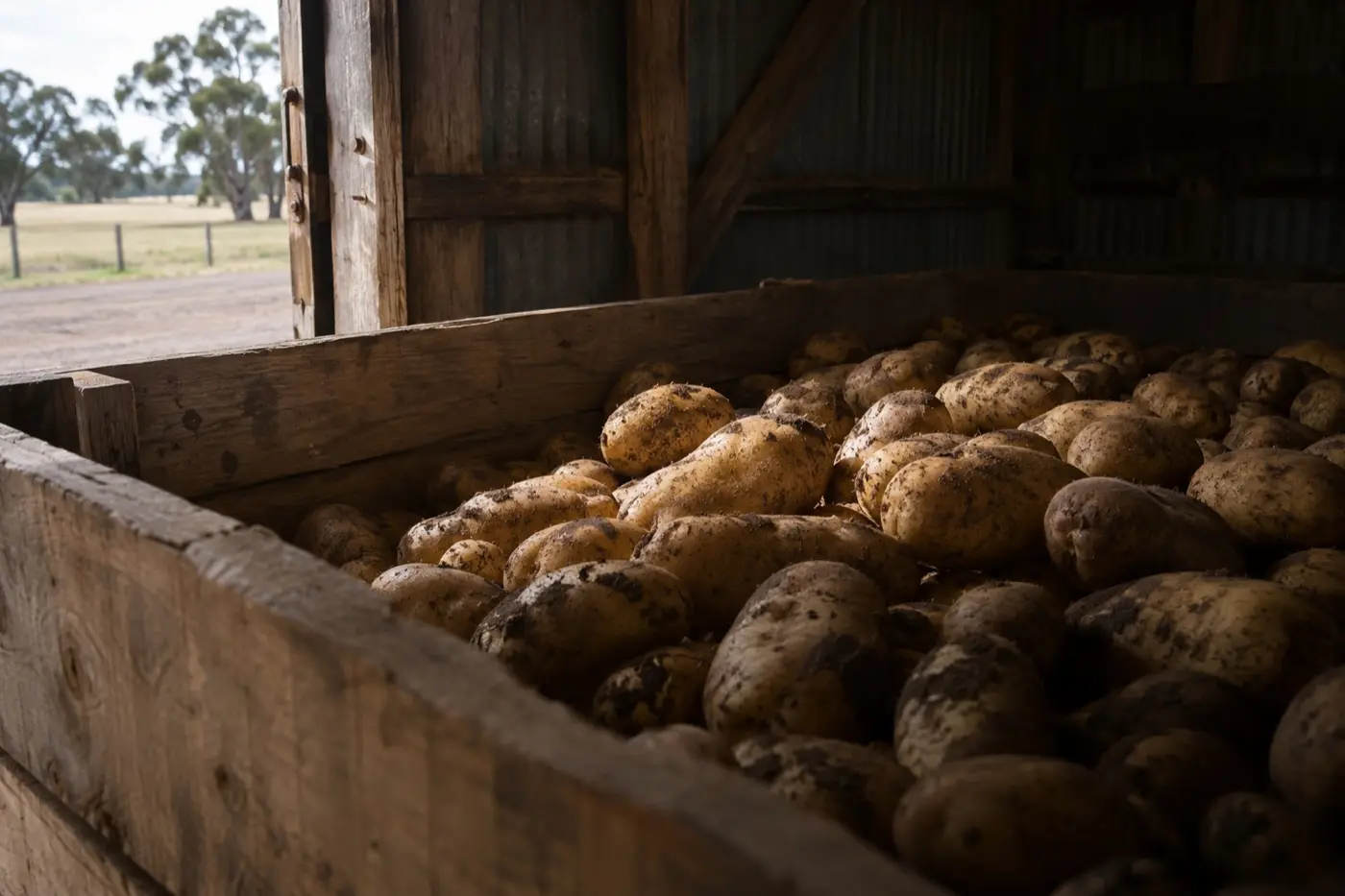
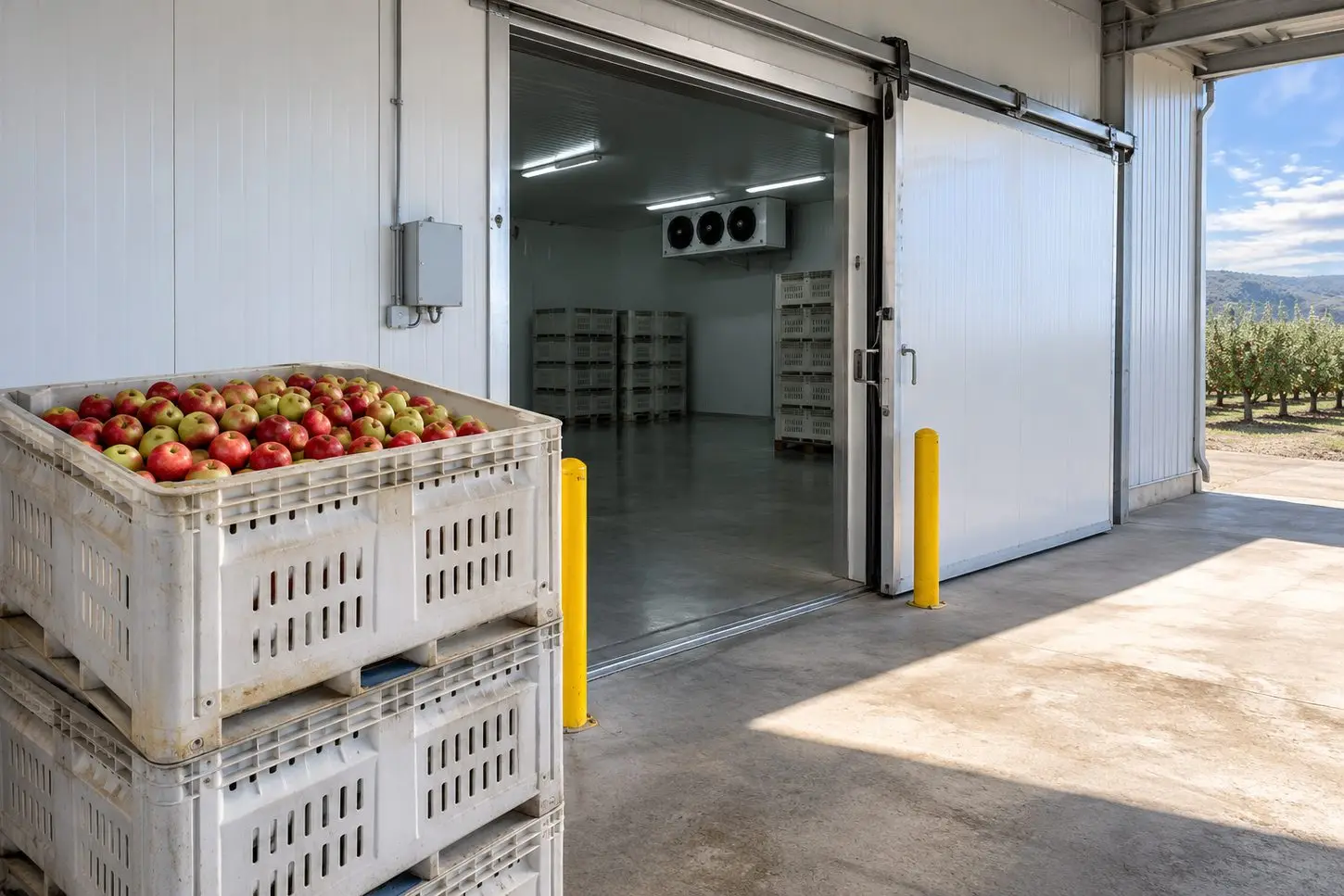
The truck is cold. Are the sweet corn cobs ready to load?
• Hari Yellina

Schedule crate movements so newly picked corn reaches pre-cooling promptly. Images are AI-generated illustrations.
The refrigerated truck arrives on time. Its display shows the requested temperature. The first pallet of sweet corn has been in the coolroom since breakfast, while the last one arrived from the paddock minutes ago. A single reading from the truck cannot answer whether either load is ready to travel.
Start the cooling plan at the picking row
Sweet corn is still respiring after harvest. Warm conditions accelerate quality loss, including the conversion of sugars to starch. A green husk can conceal kernels that have already lost sweetness. The Queensland sweet corn grower’s handbook and UC Davis both stress prompt removal of field heat followed by continued refrigeration.
Plan the collection run around how quickly the shed can start cooling each pick. Decide who moves a full crate out of direct sun, where it waits and who tells the shed it is coming. Shade reduces additional heating while the load is waiting. It cannot carry out the work of the pre-cooler. If picking is running ahead of cooling capacity, tell the supervisor while the harvest sequence can still be adjusted.
Look for an air path through the packed corn
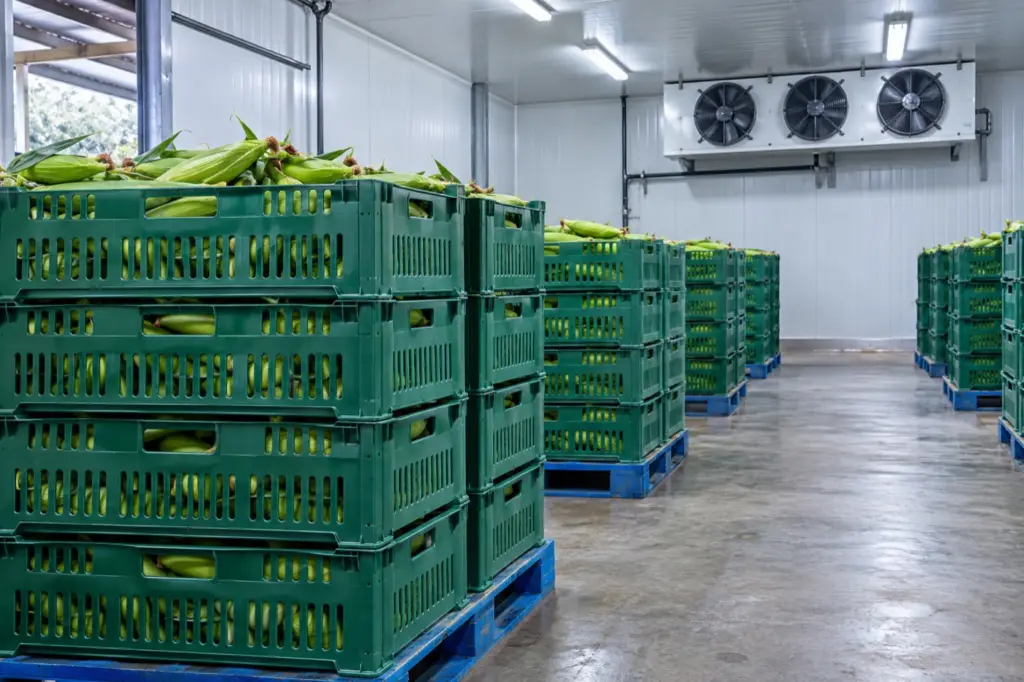
Cooling time depends on the load and system. A pallet of tightly packed cobs changes temperature differently from a few loose ears. In a forced-air system, the equipment draws cold air through vented packages. Align the openings and follow the site’s stacking and sealing arrangement. An overhanging liner or an offset stack can interrupt that path even when the fan is running.
Hydrocooling is another commercial option where the site has a suitable system, appropriate water-quality controls and packaging that tolerates water. Use the method established for the packhouse. Switching methods on a busy day can change both cooling performance and food-safety controls.
Release the load on product evidence
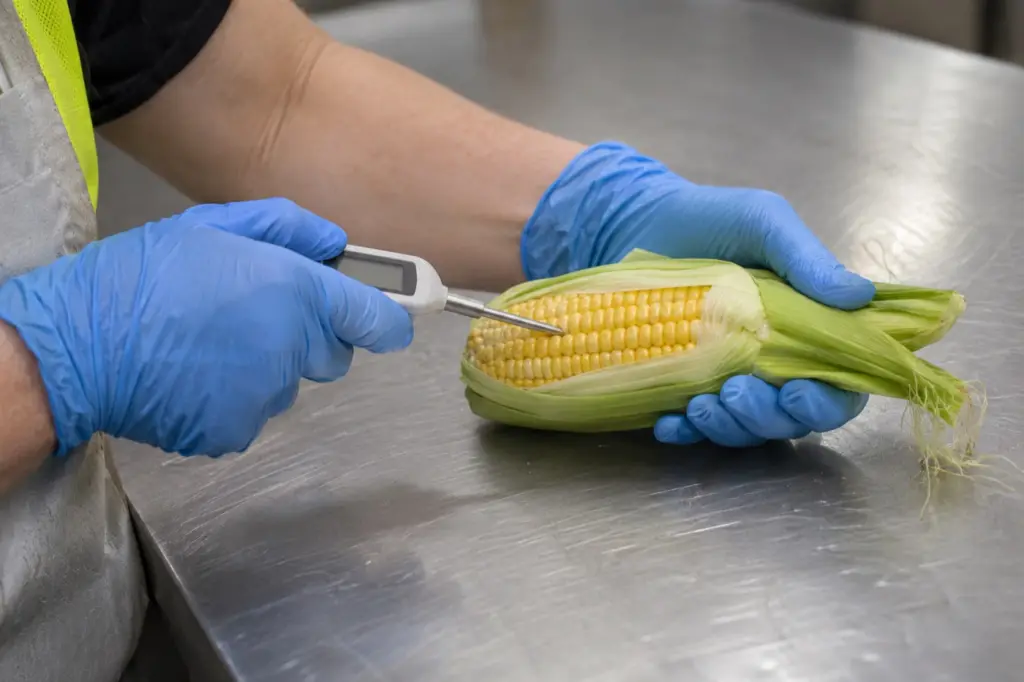
Use the site’s clean, suitable temperature probe and sampling procedure to check representative cobs, including a position expected to cool slowly. Record the lot, time, sampling position and product temperature. Compare the result with the agreed dispatch specification. A wall gauge measures room air, and the driver’s display describes the transport unit. Neither reading establishes the temperature of the corn in the middle.
If one pallet is still warm, keep its identity separate and tell dispatch which load needs more cooling. Record the next check before it is moved to the truck. That gives the person loading the last pallet the same information the morning shift had about the first.