
Vehicles and machinery
Telehandler operation
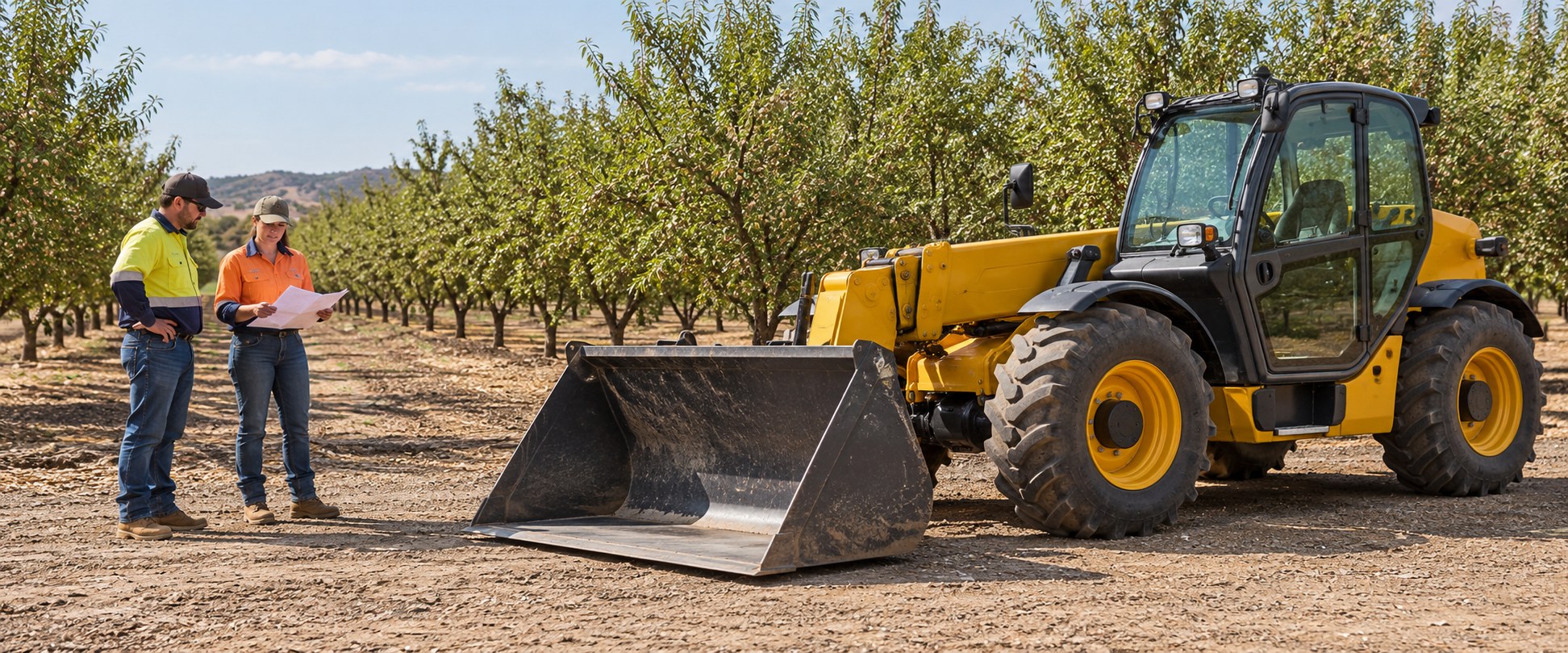
A telehandler is a machine with a long arm, called a boom, that can reach up and out. You may use a telehandler to lift, carry, place and load materials in harvest, re-harvest or other farm work. Only if you are trained, assessed and authorised. Operate a telehandler only if your host has trained and assessed you on that machine and authorised you to operate it. Your host will confirm whether the work needs a licence. You must hold any licence the work requires. A licence alone does not show you can operate the machine safely.
English available · English–Tongan version also available. The Tongan did not pass the full language check. The English is the official version.LANGUAGE-QA FAIL - blocking control failed: B5, G5
Know the limits
Limits and safety rules for this job
These points are copied from the approved job sheet. “Not part of this job” is work this sheet does not cover. “Only if it is part of your confirmed job and you are trained and authorised” is work that needs this permission first. “Never do these” are things you must never do. “Other limits that always apply” are limits and safety rules for every shift. All the steps and safety instructions for this job are in the full job sheet below.
Not part of this job
- This sheet covers operating the telehandler only. Repairs and maintenance, jump-starting a flat battery, operating other machines, using power tools, handling chemicals, electrical work, working at heights and entering dams, tanks, channels or confined spaces are separate tasks. They need their own instructions, training and authorisation.
- Lifting people is not part of this work. Never let anyone ride in a bucket. Lifting people is a separate task. It is allowed only when the machine and attachment are designed and approved for lifting people, your host authorises it, and you have the required training.
Only if it is part of your confirmed job and you are trained and authorised
- Only if you are trained, assessed and authorised. Operate a telehandler only if your host has trained and assessed you on that machine and authorised you to operate it. Your host will confirm whether the work needs a licence. You must hold any licence the work requires. A licence alone does not show you can operate the machine safely.
Never do these
- Passengers: do not carry another person on a machine made for one person.
- Do not enter a block that is being sprayed or has a no-entry sign. Do not drink irrigation water: it may contain fertiliser or chemicals.
Other limits that always apply
- This sheet describes typical telehandler operation work and conditions. Your actual duties depend on the farm and what you are trained and authorised to do. Reading this sheet does not authorise you to drive a farm vehicle, operate machinery or repair equipment.
- Pre-start checks: before each shift, do the pre-start checks your host trained you in, using your host's checklist. These may include the controls, the radio and the attachment. Never use an unsafe machine.
- Faults: report any fault, damage or oil leak to your supervisor straight away. Do not touch a leaking hose.
- Flat battery: if the machine will not start, tell your supervisor. Jump-starting is a separate task. If you see a cracked or leaking battery, or notice an unusual smell near it, keep away and tell your supervisor.
- Load chart: your host will show you the load chart for the machine and the attachment you use. It shows how much the machine can lift safely at each boom length and angle. A load that is safe close to the machine may not be safe further out or higher up. Check the chart before each lift, as your host trained you. Never lift more than the chart allows.
- Attachments: use only attachments that are approved for that machine by its maker and provided by your host. Check that the attachment is fitted correctly and rated for the load, as your host shows you. Do not carry anything on an attachment that is not made for carrying loads. Secure loads as your host shows you.
- Keep people clear: before you lift or move, check that everyone is well clear. Never let anyone stand or walk under a raised boom or load. If someone comes close, stop and wait until they are clear. Your host may fence off the work area.
- Power lines and structures: a raised boom can hit overhead power lines and other structures. Electricity can also jump to a boom that comes close to a line, even if it does not touch. Before you start, your host will show you where the power lines are and the areas where the machine, boom, attachment and load must not go. Look up before you raise the boom. If you are not sure, stop and ask your supervisor.
- Be seen: wear the high-visibility clothing your host provides at all times. When you are out of the cab, never approach a working machine until the operator has stopped and clearly signalled you to come closer. Eye contact alone is not enough.
- Public roads: never drive on or across a public road unless your host has confirmed that the machine, your licence and the route are approved.
- Seat belt, doors and windows: wear your seat belt at all times. Shut the doors and windows before the machine moves. Use the flashing light or headlights as your host tells you. If the machine starts to tip, stay in the cab and hold on. Do not try to jump out.
- This sheet describes typical telehandler operation work. Before you start, your host will give you the job description and safe work instructions for your actual duties, the PPE you need, a farm induction and training for your tasks. Follow those instructions. Do not do any work without the required PPE, training and authorisation. Complete the induction at every new farm, and get the instructions and training for every new task. If anything is missing, unsafe or unclear, stop and ask your supervisor. You can also contact Orchard Tech.
A picture guide
See the work at a glance
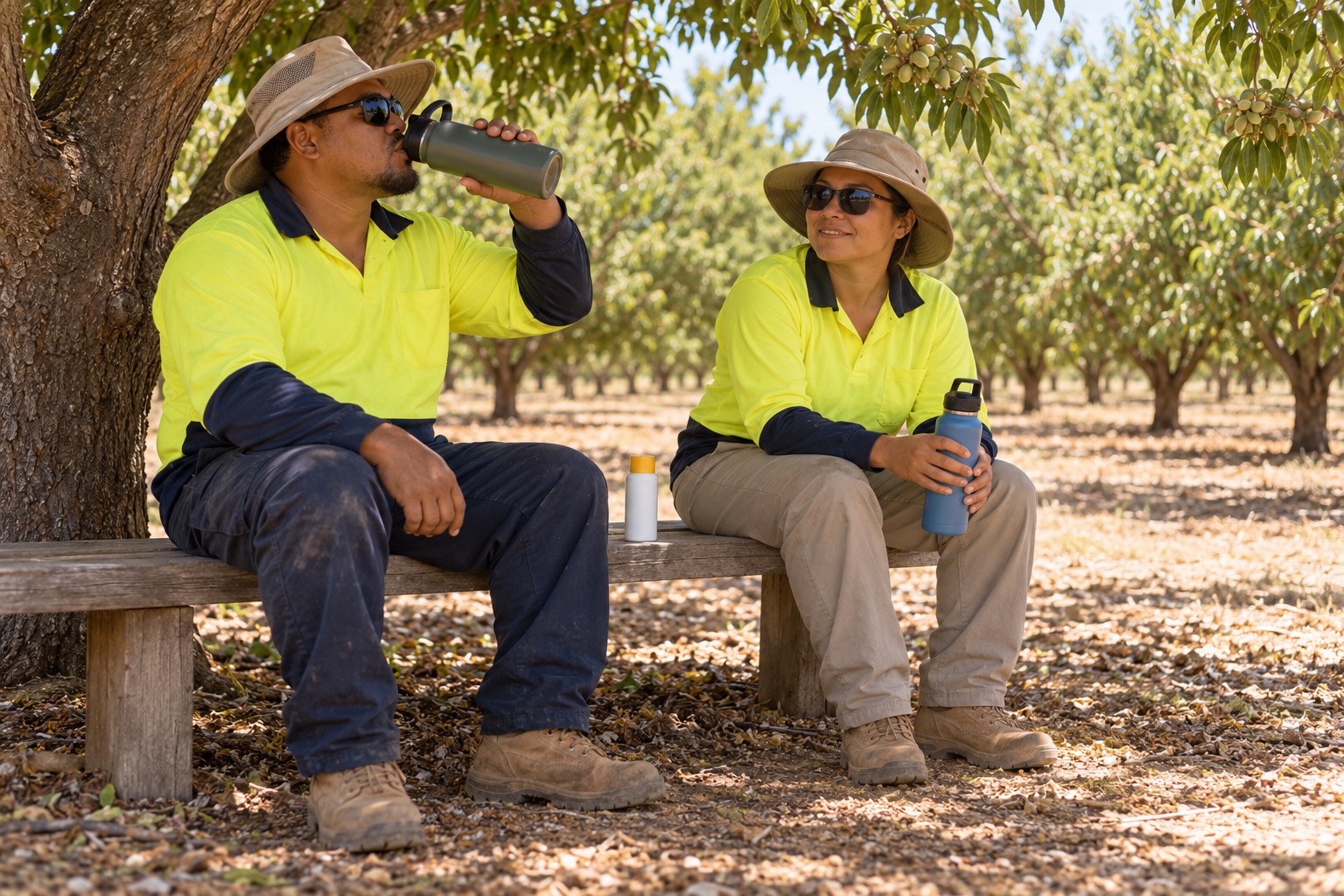
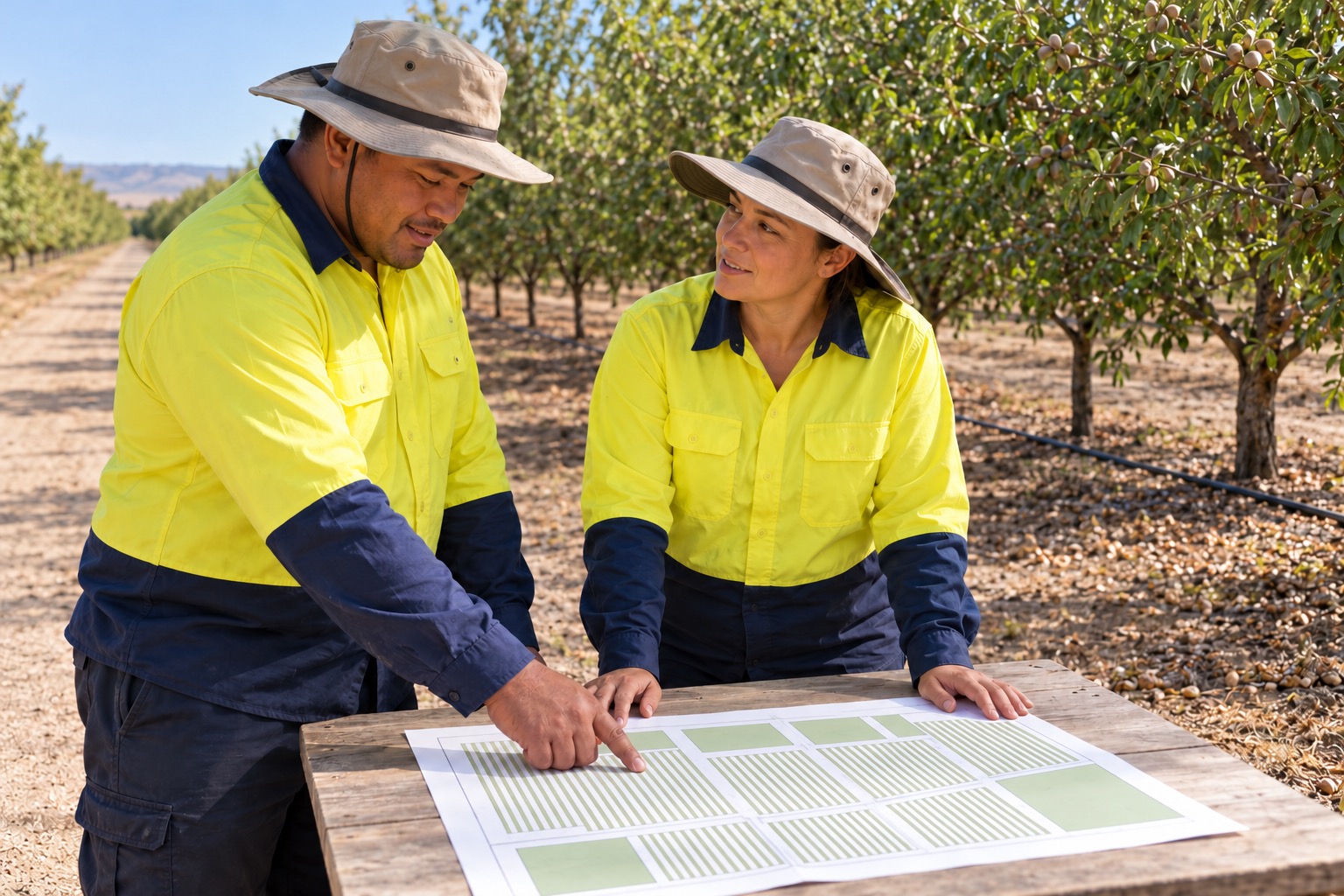
These AI-generated illustrations do not depict actual Orchard Tech employees. They introduce the approved source sheet below and do not replace induction, training or host instructions.



Read before you start
The paired view always keeps English with the existing Tongan. There is no Tongan-only view.
Full English source
Telehandler operation on an almond farm
What to expect before you start
Version 1.1 | Date of review: 18 October 2026 | Date of next review: 18 October 2028
This sheet describes typical telehandler operation work and conditions. Your actual duties depend on the farm and what you are trained and authorised to do. Reading this sheet does not authorise you to drive a farm vehicle, operate machinery or repair equipment.
Who you work for
Orchard Tech is your employer. Your host farm (your host) directs your daily work. Both are responsible for your health and safety. Raise questions or safety concerns with your supervisor or Orchard Tech: Hari Yellina, 0439 32 32 32, or Soana Fanua, 0400 174 471.
Your working hours
Your confirmed roster sets your days, hours and breaks. Ask your supervisor if you are unsure.
The work you may do
Telehandler operation. A telehandler is a machine with a long arm, called a boom, that can reach up and out. An attachment, such as a bucket, fits on the end of the boom. You may use a telehandler to lift, carry, place and load materials in harvest, re-harvest or other farm work. Your host will tell you what to move, where to take it and which attachment to use.
Only if you are trained, assessed and authorised. Operate a telehandler only if your host has trained and assessed you on that machine and authorised you to operate it. Your host will confirm whether the work needs a licence. You must hold any licence the work requires. A licence alone does not show you can operate the machine safely.
This sheet covers operating the telehandler only. Repairs and maintenance, jump-starting a flat battery, operating other machines, using power tools, handling chemicals, electrical work, working at heights and entering dams, tanks, channels or confined spaces are separate tasks. They need their own instructions, training and authorisation.
Before you start
- Pre-start checks: before each shift, do the pre-start checks your host trained you in, using your host's checklist. These may include the controls, the radio and the attachment. Never use an unsafe machine.
- Faults: report any fault, damage or oil leak to your supervisor straight away. Do not touch a leaking hose.
- Flat battery: if the machine will not start, tell your supervisor. Jump-starting is a separate task. If you see a cracked or leaking battery, or notice an unusual smell near it, keep away and tell your supervisor.
- Starting up: adjust your seat. Tell other workers to move away. Check that the boom is fully lowered and pulled in.
Lifting and carrying loads
A telehandler can tip over, and loads can slip or fall. Your host will train you to check each load before you lift it.
- Load chart: your host will show you the load chart for the machine and the attachment you use. It shows how much the machine can lift safely at each boom length and angle. A load that is safe close to the machine may not be safe further out or higher up. Check the chart before each lift, as your host trained you. Never lift more than the chart allows.
- Keep loads low: pull the boom in and carry the load low and close to the machine. Move the controls smoothly and gently. Avoid sudden movements.
- Ground: soft ground, slopes, holes and banks make tipping more likely. Lift and park on firm, even ground.
- Attachments: use only attachments that are approved for that machine by its maker and provided by your host. Check that the attachment is fitted correctly and rated for the load, as your host shows you. Do not carry anything on an attachment that is not made for carrying loads. Secure loads as your host shows you.
- Lifting people is not part of this work. Never let anyone ride in a bucket. Lifting people is a separate task. It is allowed only when the machine and attachment are designed and approved for lifting people, your host authorises it, and you have the required training.
People, power lines and blind spots
- Keep people clear: before you lift or move, check that everyone is well clear. Never let anyone stand or walk under a raised boom or load. If someone comes close, stop and wait until they are clear. Your host may fence off the work area.
- Blind spots: the boom, the load and the cab frame can block your view, especially when you reverse. Keep the windows clean. If you cannot see that the way is clear, stop and ask for help.
- Power lines and structures: a raised boom can hit overhead power lines and other structures. Electricity can also jump to a boom that comes close to a line, even if it does not touch. Before you start, your host will show you where the power lines are and the areas where the machine, boom, attachment and load must not go. Look up before you raise the boom. If you are not sure, stop and ask your supervisor.
- If the machine touches a power line, or you think electricity has jumped to it, stay in the cab unless there is a fire or another danger to your life. Warn others to keep away and not to touch the machine. Call 000. Wait until the power company says it is safe to leave. Your host will teach you the emergency procedure before you start.
- Be seen: wear the high-visibility clothing your host provides at all times. When you are out of the cab, never approach a working machine until the operator has stopped and clearly signalled you to come closer. Eye contact alone is not enough.
Moving around the farm safely
Driving the telehandler
- Public roads: never drive on or across a public road unless your host has confirmed that the machine, your licence and the route are approved.
- Seat belt, doors and windows: wear your seat belt at all times. Shut the doors and windows before the machine moves. Use the flashing light or headlights as your host tells you. If the machine starts to tip, stay in the cab and hold on. Do not try to jump out.
- Passengers: do not carry another person on a machine made for one person.
- Travel: keep the boom lowered and pulled in, with the load or bucket low. Drive at a safe speed for the ground, the load and the people around you.
- Leaving the machine: whenever you leave it, park it with the attachment on the ground, the handbrake on and the engine off. Your host will show you how to shut down and secure it. At the end of the shift or task, park where your host tells you, on firm, even ground. Check the machine over and report any problems. Return the key the way your host shows you.
Farm traffic rules
- Follow the farm traffic plan: use the main tracks and set routes, obey signs and speed limits, and slow down for turns, loads, people, dust, poor visibility and rough ground. Keep away from steep slopes, banks and water.
- Headlands and crossings: headlands are the turning areas at the ends of the rows. Slow down, look both ways and give way as instructed. Watch for tractors, harvesters, trucks, people and vehicles coming out of rows.
Weather and the outdoors
Most work is outdoors in heat, cold, wind, rain and dust. Watch for holes, pipes, slippery ground and snakes. Work may change or stop in heat, storms or smoke: follow your host's instructions. Use sun protection all year (broad-brim hat, long sleeves, sunglasses, sunscreen), drink water often, take shade breaks and dress for the weather. Tell your supervisor straight away if you or a co-worker feel sick, dizzy or very hot.
- Do not enter a block that is being sprayed or has a no-entry sign. Do not drink irrigation water: it may contain fertiliser or chemicals.
- Dust: follow your host's instructions for dust. If dust makes it hard to see clearly or to breathe, stop the machine in a safe place and tell your supervisor.
Sitting and getting on and off
You may sit in the cab for long periods, and rough ground can jolt and shake you. Use the steps and handholds to get on and off. Do not jump down. Keep away from moving parts and hot engine parts. Use your breaks. Tell your supervisor early if you feel pain, discomfort or unusual tiredness.
PPE and help on the farm
Your host will provide the personal protective equipment (PPE) for your tasks and show you how to wear, check and look after it. This may include safety boots, high-visibility clothing, gloves, eye or hearing protection, long sleeves and long trousers, and sun protection. Report missing, damaged or poorly fitting PPE before you start. PPE does not replace training, instructions or other safety controls.
At induction, learn who your supervisor is, where water, toilets and first aid are, the emergency plan, how to get help where there is no phone coverage, and the check-in arrangements when you work alone.
- In a life-threatening emergency, call Triple Zero (000), then tell your supervisor. If you see a snake, keep clear and never try to catch or kill it. If a snake bites you, or you think you have been bitten, keep as still as possible and call 000 or ask someone to call.
- Report every injury, near miss or unsafe situation to your supervisor and Orchard Tech as soon as possible, even if it seems small.
- Ask for a demonstration, an explanation or language help whenever you do not understand.
Important note before starting any jobThis sheet describes typical telehandler operation work. Before you start, your host will give you the job description and safe work instructions for your actual duties, the PPE you need, a farm induction and training for your tasks. Follow those instructions. Do not do any work without the required PPE, training and authorisation. Complete the induction at every new farm, and get the instructions and training for every new task. If anything is missing, unsafe or unclear, stop and ask your supervisor. You can also contact Orchard Tech. |
Paired English + Lea Fakatonga
The Tongan did not pass the full language check. The English is the official version. If anything is unclear, ask for a human interpreter — Orchard Tech will provide one.
12 safety instructions and the rule that English is the official version are shown in English only. This is not a passed or certified translation.
BILINGUAL AID - ENGLISH IS THE AUTHORITATIVE VERSION - NOT AUTHORISED FOR TONGAN-ALONE DISPLAY
Source record details (for supervisors)
The paired English–Tongan source was issued under an owner exception. The source records 12 blocking issues and 138 composed Tongan rows. 12 safety instructions and the English-authority policy remain in exact English. This is not a passed or certified translation.
LANGUAGE-QA FAIL - blocking control failed: B5, G5
BILINGUAL AID - ENGLISH IS THE AUTHORITATIVE VERSION - NOT AUTHORISED FOR TONGAN-ALONE DISPLAY
If you do not understand any part of this sheet, ask for a human interpreter. Orchard Tech will provide one.
Kapau ʻoku ʻikai mahino kiate koe ha konga ʻo e laʻipepa ni, kole ha tokotaha fakatonulea. ʻE ʻomi ʻe Orchard Tech ha tokotaha fakatonulea maʻau. °
Telehandler operation on an almond farm
Ngāue telehandler ʻi ha faama almond °
What to expect before you start
Meʻa ke ke ʻamanaki ki ai kimuʻa pea ke kamata °
English and Tongan version 1.4, based on English version 1.1 | Date of review: 18 October 2026 | Date of next review: 18 October 2028
Version fakapalangi mo Fakatonga 1.4, makatuʻunga ʻi he Version fakapalangi 1.1 | ʻAho ʻo e toe vakaiʻi: 18 October 2026 | ʻAho ʻo e toe vakaiʻi hoko: 18 October 2028 °
Each Tongan line is printed under its English. Lines marked ° were written by Orchard Tech. See About this Tongan version at the end.
ʻOku paaki ʻa e laine Fakatonga takitaha ʻi lalo ʻi heʻene lea fakapalangi. Ko e ngaahi laine ʻoku fakaʻilongaʻi ʻaki ʻa e ° naʻe faʻu ʻe Orchard Tech. Vakai ki he konga Fekauʻaki mo e Version Fakatonga ni ʻi he ngataʻanga. °
This sheet describes typical telehandler operation work and conditions. Your actual duties depend on the farm and what you are trained and authorised to do. Reading this sheet does not authorise you to drive a farm vehicle, operate machinery or repair equipment.
ʻOku fakamatala ʻa e laʻipepa ni ki he ngāue telehandler ʻoku faʻa fai mo e ngaahi tuʻunga ʻoku fai ai. ʻOku makatuʻunga ho ngaahi fatongia moʻoni ʻi he faama mo e ngaahi ngāue kuo akoʻi koe ke fai pea kuo fakangofua koe ke fai. ʻOku ʻikai ʻoatu ʻe hoʻo lau ʻa e laʻipepa ni ha ngofua ke ke fakaʻuli ha meʻalele ʻa e faama, ngāueʻaki ha mīsini pe fakaleleiʻi ha meʻangāue. °
Who you work for
Tokotaha ʻoku ke ngāue ki ai °
Orchard Tech is your employer. Your host farm (your host) directs your daily work. Both are responsible for your health and safety. Raise questions or safety concerns with your supervisor or Orchard Tech: Hari Yellina, 0439 32 32 32, or Soana Fanua, 0400 174 471.
Ko Orchard Tech ʻa hoʻo pule ngāue. Ko e faama ʻoku ke ngāue ai (hoʻo host) ʻoku ne fakahinohino hoʻo ngāue fakaʻaho. ʻOku na fakatou fatongiaʻaki hoʻo moʻui lelei mo hoʻo malu. Tala ki hoʻo supavaisa pe Orchard Tech hoʻo ngaahi fehuʻi pe ngaahi meʻa ʻoku ke hohaʻa ki ai fekauʻaki mo e malu: Hari Yellina, 0439 32 32 32, pe Soana Fanua, 0400 174 471. °
Your working hours
Ho ngaahi houa ngāue °
Your confirmed roster sets your days, hours and breaks. Ask your supervisor if you are unsure.
Ko hoʻo fokotuʻutuʻu ngāue (roster) kuo fakapapauʻi ʻoku ne fokotuʻu ho ngaahi ʻaho, houa ngāue mo e taimi mālōlō. ʻEke ki hoʻo supavaisa kapau ʻoku ke veiveiua. °
The work you may do
Ngaahi ngāue te ke ala fai °
Telehandler operation. A telehandler is a machine with a long arm, called a boom, that can reach up and out. An attachment, such as a bucket, fits on the end of the boom. You may use a telehandler to lift, carry, place and load materials in harvest, re-harvest or other farm work. Your host will tell you what to move, where to take it and which attachment to use.
Ngāue telehandler. Ko e telehandler ko ha mīsini ʻoku ʻi ai hono nima loloa, ʻoku ui ko e boom, ʻa ia ʻe lava ke kakapa ki ʻolunga mo ki tuʻa. Ko ha meʻangāue ʻoku fakapipiki (attachment), hangē ko ha bucket, ʻoku fakamaʻu ki he ngataʻanga ʻo e boom. Te ke ala ngāueʻaki ha telehandler ke hiki hake, fetuku, tuku mo fakaheka ʻa e ngaahi meʻa ke ngāueʻaki ʻi he havesi, toe havesi (re-harvest) pe ngaahi ngāue kehe ʻa e faama. ʻE tala atu ʻe he faama ʻoku ke ngāue ai ʻa e meʻa ke ke ʻunuaki, ʻa e feituʻu ke ke ʻave ki ai mo e meʻangāue (attachment) ke ke ngāueʻaki. °
Only if you are trained, assessed and authorised. Operate a telehandler only if your host has trained and assessed you on that machine and authorised you to operate it. Your host will confirm whether the work needs a licence. You must hold any licence the work requires. A licence alone does not show you can operate the machine safely.
ʻO kapau pē kuo akoʻi koe, kuo siviʻi koe pea kuo fakangofua koe. Ngāueʻaki ha telehandler ʻo kapau pē kuo akoʻi koe mo siviʻi koe ʻe he faama ʻoku ke ngāue ai ʻi he mīsini ko ia, pea kuo ne fakangofua koe ke ke ngāueʻaki ia. ʻE fakapapauʻi ʻe he faama ʻoku ke ngāue ai pe ʻoku fiemaʻu ha laiseni ki he ngāue. Kuo pau ke ke maʻu ha laiseni pē ʻoku fiemaʻu ʻe he ngāue. ʻOku ʻikai fakahaaʻi ʻe ha laiseni pē ʻe lava ke ke ngāueʻaki malu ʻa e mīsini. °
This sheet covers operating the telehandler only. Repairs and maintenance, jump-starting a flat battery, operating other machines, using power tools, handling chemicals, electrical work, working at heights and entering dams, tanks, channels or confined spaces are separate tasks. They need their own instructions, training and authorisation.
ʻOku fakamatala ʻa e laʻipepa ni ki hono ngāueʻaki ʻo e telehandler pē. Ko e ngaahi fakaleleiʻi mo e tokangaʻi (maintenance), jump-starting ha puha ʻuhila (battery) kuo ʻosi hono ivi, ngāueʻaki ʻa e ngaahi mīsini kehe, ngāueʻaki ʻa e ngaahi meʻangāue ʻoku fakalele ʻaki ha ivi (power tools), ngāue ki he ngaahi kemikale, ngāue ʻuhila (electrical work), ngāue ʻi he ngaahi feituʻu maʻolunga, mo e hū ki he ngaahi feituʻu tauhi vai (dams), ngaahi ʻaiʻanga (tanks), ngaahi halanga vai (channels) pe ngaahi feituʻu mapuni (confined spaces), ko e ngaahi ngāue makehe. ʻOku fiemaʻu ki he ngāue taki taha ʻa ʻene ngaahi fakahinohino pē ʻaʻana, ʻene akoʻi pē ʻaʻana mo ʻene ngofua pē ʻaʻana. °
Before you start
Kimuʻa pea ke kamata °
- English
Pre-start checks: before each shift, do the pre-start checks your host trained you in, using your host's checklist. These may include the controls, the radio and the attachment. Never use an unsafe machine.
Lea FakatongaNgaahi vakaiʻi kimuʻa ʻi he kamata: kimuʻa ʻi he sifi kotoa pē, fai ʻa e ngaahi vakaiʻi kimuʻa ʻi he kamata naʻe akoʻi koe ʻe he faama ʻoku ke ngāue ai ke ke fai, ʻo ngāueʻaki ʻa e lisi vakaiʻi ʻa e faama ʻoku ke ngāue ai. ʻE ala kau ʻi he ngaahi vakaiʻi ni ʻa e ngaahi meʻa puleʻi (controls), radio mo e meʻangāue (attachment). ʻOua ʻaupito naʻa ke ngāueʻaki ha mīsini ʻoku ʻikai malu. °
- English
Faults: report any fault, damage or oil leak to your supervisor straight away. Do not touch a leaking hose.
Lea FakatongaNgaahi palopalema (faults): lipooti ha palopalema (fault) pē, ha maumau pē pe ha mama lolo pē ki hoʻo supavaisa ʻi he taimi pē ko ia. ʻOua naʻa ke ala ki ha paipa (hose) ʻoku mama. °
- English
Flat battery: if the machine will not start, tell your supervisor. Jump-starting is a separate task. If you see a cracked or leaking battery, or notice an unusual smell near it, keep away and tell your supervisor.
Lea FakatongaPuha ʻuhila (battery) kuo ʻosi hono ivi: kapau ʻoku ʻikai lava ke fakamoʻui ʻa e mīsini, tala ki hoʻo supavaisa. Ko e jump-starting ko ha ngāue makehe. Kapau te ke sio ki ha puha ʻuhila (battery) kuo mafahifahi pe ʻoku mama, pe te ke fakatokangaʻi ha nanamu ʻoku ʻikai anga maheni ofi ki ai, nofo mamaʻo pea tala ki hoʻo supavaisa. °
- English
Starting up: adjust your seat. Tell other workers to move away. Check that the boom is fully lowered and pulled in.
Lea FakatongaKamata: fakafeʻungaʻi ho sea. Tala ki he kau ngāue kehe ke nau mavahe atu. Vakaiʻi kuo tuku hifo kakato ʻa e boom pea kuo fakanounou ia (pulled in). °
Lifting and carrying loads
Hiki mo fetuku uta °
A telehandler can tip over, and loads can slip or fall. Your host will train you to check each load before you lift it.
ʻE lava ke fulihi ha telehandler, pea ʻe lava ke heke pe tō ʻa e ngaahi uta. ʻE akoʻi koe ʻe he faama ʻoku ke ngāue ai ke ke vakaiʻi ʻa e uta kotoa pē kimuʻa pea ke hiki hake ia. °
- English
Load chart: your host will show you the load chart for the machine and the attachment you use. It shows how much the machine can lift safely at each boom length and angle. A load that is safe close to the machine may not be safe further out or higher up. Check the chart before each lift, as your host trained you. Never lift more than the chart allows.
Lea FakatongaFakamatala fakangatangata uta (load chart): ʻe fakaʻaliʻali atu ʻe he faama ʻoku ke ngāue ai ʻa e fakamatala fakangatangata uta ki he mīsini mo e meʻangāue (attachment) ʻoku ke ngāueʻaki. ʻOku fakahaaʻi ʻe he fakamatala ni ʻa e lahi ʻo e uta ʻe lava ke hiki hake ʻe he mīsini ʻi ha founga malu, ʻi he loloa takitaha mo e angle takitaha ʻo e boom. Ko ha uta ʻoku malu ʻi heʻene ofi ki he mīsini ʻe ala ʻikai malu kapau ʻoku toe mamaʻo ange ki tuʻa pe toe maʻolunga ange. Vakaiʻi ʻa e fakamatala fakangatangata uta kimuʻa ʻi he hiki uta kotoa pē, ʻo fakatatau ki he founga naʻe akoʻi koe ʻe he faama ʻoku ke ngāue ai. ʻOua ʻaupito naʻa ke hiki ha uta ʻoku laka hake ʻi he lahi ʻoku fakangofua ʻe he fakamatala fakangatangata uta. °
- English
Keep loads low: pull the boom in and carry the load low and close to the machine. Move the controls smoothly and gently. Avoid sudden movements.
Lea FakatongaTauhi ʻa e ngaahi uta ke maʻulalo: fakanounou ʻa e boom pea fetuku ʻa e uta ke maʻulalo mo ofi ki he mīsini. ʻUnuaki māmālie ʻa e ngaahi meʻa puleʻi (controls), ke ʻoua ʻe fakafokifa ʻa e ngaahi ngaʻunu. Fakaʻehiʻehi mei he ngaahi ngaʻunu fakafokifa. °
- English
Ground: soft ground, slopes, holes and banks make tipping more likely. Lift and park on firm, even ground.
Lea FakatongaKelekele: ʻoku ʻai ʻe he kelekele molu (soft ground), ngaahi feituʻu tahifo, ngaahi ava mo e ngaahi tapa maʻolunga (banks) ke toe lahi ange ʻa e faingamālie ke fulihi ʻa e mīsini. Fai ʻa e hiki uta mo e tau mīsini ʻi he kelekele ʻoku tuʻumaʻu mo tokalelei. °
- English
Attachments: use only attachments that are approved for that machine by its maker and provided by your host. Check that the attachment is fitted correctly and rated for the load, as your host shows you. Do not carry anything on an attachment that is not made for carrying loads. Secure loads as your host shows you.
Lea FakatongaNgaahi meʻangāue (attachments): ngāueʻaki pē ʻa e ngaahi meʻangāue (attachments) kuo fakangofua ʻe he kautaha naʻa ne ngaohi ʻa e mīsini ke ngāueʻaki ʻi he mīsini ko ia, pea ʻoku ʻoatu ʻe he faama ʻoku ke ngāue ai. Vakaiʻi kuo fakapipiki totonu ʻa e meʻangāue (attachment) pea ʻoku feʻunga hono fakangatangata ʻo e uta (load rating) mo e uta, ʻo fakatatau ki he founga ʻoku fakaʻaliʻali atu ʻe he faama ʻoku ke ngāue ai. ʻOua naʻa ke fetuku ha meʻa ʻi ha meʻangāue (attachment) naʻe ʻikai ngaohi ke fetuku uta. Fakamaʻu ke maʻu ʻa e uta ʻo fakatatau ki he founga ʻoku fakaʻaliʻali atu ʻe he faama ʻoku ke ngāue ai. °
- English
Lifting people is not part of this work. Never let anyone ride in a bucket. Lifting people is a separate task. It is allowed only when the machine and attachment are designed and approved for lifting people, your host authorises it, and you have the required training.
Lea FakatongaʻOku ʻikai kau ʻi he ngāue ni ʻa e hiki hake ʻo e kakai. ʻOua ʻaupito naʻa ke tuku ha taha ke heka ʻi loto ʻi ha bucket. Ko e hiki hake ʻo e kakai ko ha ngāue makehe. ʻOku fakangofua pē ʻa e hiki hake ʻo e kakai ʻi he taimi kuo ngaohi mo fakangofua fakatouʻosi ai ʻa e mīsini mo e meʻangāue (attachment) ke hiki hake ʻa e kakai, kuo fakangofua ia ʻe he faama ʻoku ke ngāue ai, pea ʻoku ke maʻu ʻa e akoʻi ʻoku fiemaʻu. °
People, power lines and blind spots
Kakai, ngaahi laine ʻuhila mo e ngaahi feituʻu ʻoku ʻikai ke ke lava ʻo sio ki ai (blind spots) °
- English
Keep people clear: before you lift or move, check that everyone is well clear. Never let anyone stand or walk under a raised boom or load. If someone comes close, stop and wait until they are clear. Your host may fence off the work area.
Lea FakatongaTauhi ʻa e kakai ke mamaʻo: kimuʻa pea ke hiki uta pe ngaʻunu, vakaiʻi kuo mavahe atu ʻo ʻatā ʻaupito ʻa e tokotaha kotoa pē. ʻOua ʻaupito naʻa ke tuku ha taha ke tuʻu pe lue ʻi lalo ʻi ha boom kuo hiki hake pe ha uta kuo hiki hake. Kapau ʻoku ʻunuʻunu ofi ha taha, tuʻu pea tatali kae ʻoua kuo ne mavahe atu ʻo ʻatā. ʻE ala fokotuʻu ʻe he faama ʻoku ke ngāue ai ha ʻā (fence) takatakai ʻi he feituʻu ngāue. °
- English
Blind spots: the boom, the load and the cab frame can block your view, especially when you reverse. Keep the windows clean. If you cannot see that the way is clear, stop and ask for help.
Lea FakatongaNgaahi feituʻu ʻoku ʻikai ke ke lava ʻo sio ki ai (blind spots): ʻe lava ke punitia hoʻo sio ʻe he boom, uta mo e faʻunga ʻo e fale fakaʻuli (cab frame), tautefito ʻi hoʻo fakaʻuli fakaholomui. Tauhi ʻa e ngaahi matapā sioʻata ke maʻa. Kapau ʻoku ʻikai ke ke lava ʻo sio ʻoku ʻatā ʻa e hala, tuʻu pea kole tokoni. °
- English
Power lines and structures: a raised boom can hit overhead power lines and other structures. Electricity can also jump to a boom that comes close to a line, even if it does not touch. Before you start, your host will show you where the power lines are and the areas where the machine, boom, attachment and load must not go. Look up before you raise the boom. If you are not sure, stop and ask your supervisor.
Lea FakatongaNgaahi laine ʻuhila mo e ngaahi faʻunga (structures): ʻe lava ke tau ha boom kuo hiki hake ʻi he ngaahi laine ʻuhila ʻi ʻolunga mo e ngaahi faʻunga kehe. ʻE lava foki ke puna ʻa e ʻuhila ki ha boom ʻoku ʻunuʻunu ofi ki ha laine ʻuhila, neongo kapau ʻoku ʻikai ke ala ki ai ʻa e boom. Kimuʻa pea ke kamata, ʻe fakaʻaliʻali atu ʻe he faama ʻoku ke ngāue ai ʻa e ngaahi feituʻu ʻoku ʻi ai ʻa e ngaahi laine ʻuhila mo e ngaahi feituʻu ʻoku tapu ke ʻalu ki ai ʻa e mīsini, boom, meʻangāue (attachment) mo e uta. Sio hake kimuʻa pea ke hiki hake ʻa e boom. Kapau ʻoku ke veiveiua, tuʻu pea ʻeke ki hoʻo supavaisa. °
- English
If the machine touches a power line, or you think electricity has jumped to it, stay in the cab unless there is a fire or another danger to your life. Warn others to keep away and not to touch the machine. Call 000. Wait until the power company says it is safe to leave. Your host will teach you the emergency procedure before you start.
English retained in the sourceLea Fakatonga: If the machine touches a power line, or you think electricity has jumped to it, stay in the cab unless there is a fire or another danger to your life.
English retained in the sourceLea Fakatonga: Warn others to keep away and not to touch the machine.
English retained in the sourceLea Fakatonga: Call 000.
English retained in the sourceLea Fakatonga: Wait until the power company says it is safe to leave.
English retained in the sourceLea Fakatonga: Your host will teach you the emergency procedure before you start.
- English
Be seen: wear the high-visibility clothing your host provides at all times. When you are out of the cab, never approach a working machine until the operator has stopped and clearly signalled you to come closer. Eye contact alone is not enough.
Lea FakatongaKe hā koe: tui ʻi he taimi kotoa pē ʻa e vala lanu mataʻāʻā ʻoku ʻoatu ʻe he faama ʻoku ke ngāue ai. ʻI he taimi ʻoku ke ʻi tuʻa ai mei he fale fakaʻuli (cab), ʻoua ʻaupito naʻa ke ʻunuʻunu ofi ki ha mīsini ʻoku ngāue kae ʻoua kuo taʻofi ia ʻe he tokotaha ʻoku ne ngāueʻaki pea kuo ne ʻoatu ha fakaʻilonga mahino ke ke ʻunuʻunu ofi ange. ʻOku ʻikai feʻunga ʻa e fesiofaki pē. °
Moving around the farm safely
Fefonongaʻaki ʻi he faama ʻi ha founga malu °
Driving the telehandler
Fakaʻuli ʻa e telehandler °
- English
Public roads: never drive on or across a public road unless your host has confirmed that the machine, your licence and the route are approved.
Lea FakatongaNgaahi hala puleʻanga: ʻoua ʻaupito naʻa ke fakaʻuli ʻi ha hala puleʻanga pe kolosi ai, tukukehe kapau kuo fakapapauʻi ʻe he faama ʻoku ke ngāue ai kuo fakangofua ʻa e mīsini, hoʻo laiseni mo e hala ke ke fou ai. °
- English
Seat belt, doors and windows: wear your seat belt at all times. Shut the doors and windows before the machine moves. Use the flashing light or headlights as your host tells you. If the machine starts to tip, stay in the cab and hold on. Do not try to jump out.
Lea FakatongaLeta maluʻi, ngaahi matapā mo e ngaahi matapā sioʻata: fakamaʻu ho leta maluʻi ʻi he taimi kotoa pē. Tāpuni ʻa e ngaahi matapā mo e ngaahi matapā sioʻata kimuʻa pea ngaʻunu ʻa e mīsini. Ngāueʻaki ʻa e maama ʻoku kemo (flashing light) pe ngaahi maama muʻa (headlights), ʻo fakatatau ki he meʻa ʻoku tala atu ʻe he faama ʻoku ke ngāue ai. °
English retained in the sourceLea Fakatonga: If the machine starts to tip, stay in the cab and hold on.
English retained in the sourceLea Fakatonga: Do not try to jump out.
- English
Passengers: do not carry another person on a machine made for one person.
Lea FakatongaKau pasese: ʻoua naʻa ke fetuku ha taha kehe ʻi ha mīsini naʻe ngaohi ki ha tokotaha pē. °
- English
Travel: keep the boom lowered and pulled in, with the load or bucket low. Drive at a safe speed for the ground, the load and the people around you.
Lea FakatongaFefonongaʻaki: tauhi ʻa e boom ke tuku hifo mo fakanounou, pea tauhi ʻa e uta pe bucket ke maʻulalo. Fakaʻuli ʻi ha vave ʻoku malu ʻo feʻunga mo e kelekele, uta mo e kakai ʻoku takatakai ʻiate koe. °
- English
Leaving the machine: whenever you leave it, park it with the attachment on the ground, the handbrake on and the engine off. Your host will show you how to shut down and secure it. At the end of the shift or task, park where your host tells you, on firm, even ground. Check the machine over and report any problems. Return the key the way your host shows you.
Lea FakatongaMavahe mei he mīsini: ʻi he taimi kotoa pē ʻoku ke mavahe ai mei he mīsini, tau ia, tuku ʻa e meʻangāue (attachment) ʻi he kelekele, fakamaʻu ʻa e meʻa taʻofi nima (handbrake), pea tamateʻi ʻa e mīsini (engine). ʻE fakaʻaliʻali atu ʻe he faama ʻoku ke ngāue ai ʻa e founga ke tamateʻi ai ʻa e mīsini pea ʻai ia ke malu (secure). ʻI he ngataʻanga ʻo e sifi pe ngāue, tau ʻi he feituʻu ʻoku tala atu ʻe he faama ʻoku ke ngāue ai, ʻi he kelekele ʻoku tuʻumaʻu mo tokalelei. Vakaiʻi ʻa e mīsini pea lipooti ha palopalema pē. Fakafoki ʻa e kii (key) ʻo fakatatau ki he founga ʻoku fakaʻaliʻali atu ʻe he faama ʻoku ke ngāue ai. °
Farm traffic rules
Ngaahi tuʻutuʻuni fefonongaʻaki ʻi he faama °
- English
Follow the farm traffic plan: use the main tracks and set routes, obey signs and speed limits, and slow down for turns, loads, people, dust, poor visibility and rough ground. Keep away from steep slopes, banks and water.
Lea FakatongaMuimui ki he palani fefonongaʻaki ʻa e faama: ngāueʻaki ʻa e ngaahi hala lalahi mo e ngaahi hala kuo fokotuʻu, talangofua ki he ngaahi fakaʻilonga mo e fakangatangata ʻo e vave, pea fakasiʻisiʻi hoʻo vave koeʻuhi ko e ngaahi afe, uta, kakai, efu, ʻikai lelei ʻa e sio, mo e kelekele tokakovi. Nofo mamaʻo mei he ngaahi feituʻu ʻoku tahifo lahi, ngaahi tapa maʻolunga (banks), mo e vai. °
- English
Headlands and crossings: headlands are the turning areas at the ends of the rows. Slow down, look both ways and give way as instructed. Watch for tractors, harvesters, trucks, people and vehicles coming out of rows.
Lea FakatongaNgaahi feituʻu afe (headlands) mo e ngaahi kolosiʻanga: ko e headlands ʻa e ngaahi feituʻu afe ʻi he ngataʻanga ʻo e ngaahi ʻotu. Fakasiʻisiʻi hoʻo vave, sio ki he ongo tafaʻaki fakatouʻosi pea tuku ʻa e niʻihi kehe ke nau muʻomuʻa ʻo fakatatau ki he fakahinohino kuo ʻoatu. Tokanga ki he ngaahi tulekitoa, mīsini havesi, loli, kakai mo e ngaahi meʻalele ʻoku haʻu mei he ngaahi ʻotu. °
Weather and the outdoors
Ko e ʻea mo e ngāue ʻi tuʻa °
Most work is outdoors in heat, cold, wind, rain and dust. Watch for holes, pipes, slippery ground and snakes. Work may change or stop in heat, storms or smoke: follow your host's instructions. Use sun protection all year (broad-brim hat, long sleeves, sunglasses, sunscreen), drink water often, take shade breaks and dress for the weather. Tell your supervisor straight away if you or a co-worker feel sick, dizzy or very hot.
Ko e lahi taha ʻo e ngāue ʻoku fai ʻi tuʻa, ʻi he vela, momoko, matangi, ʻuha mo e efu. Tokanga ki he ngaahi ava, paipa, kelekele hekeheke mo e fanga ngata. ʻE ala liliu pe tuʻu ʻa e ngāue ʻi he vela, ngaahi matangi mālohi (storms) pe ʻahu: muimui ki he ngaahi fakahinohino ʻa e faama ʻoku ke ngāue ai. Ngāueʻaki ʻa e maluʻi mei he laʻā ʻi he taʻu kakato (tatā ʻoku falahi hono tapa, falani nima loloa, matasioʻata maluʻi mei he laʻā, kilimi laʻā), inu vai tuʻo lahi, mālōlō ʻi he malumalu pea tui vala ʻoku feʻunga mo e ʻea. °
Lea Fakatonga: Tell your supervisor straight away if you or a co-worker feel sick, dizzy or very hot.
- English
Do not enter a block that is being sprayed or has a no-entry sign. Do not drink irrigation water: it may contain fertiliser or chemicals.
Lea FakatongaʻOua naʻa ke hū ki ha poloka ʻoku lolotonga fai ai ʻa e fana (spraying) pe ʻoku ʻi ai ha fakaʻilonga tapu hū. ʻOua naʻa ke inu ʻa e vai fuʻifuʻi ngoue: ʻe ala ʻi ai ha meʻa fafanga ʻakau (fertiliser) pe kemikale. °
- English
Dust: follow your host's instructions for dust. If dust makes it hard to see clearly or to breathe, stop the machine in a safe place and tell your supervisor.
Lea FakatongaEfu: muimui ki he ngaahi fakahinohino ʻa e faama ʻoku ke ngāue ai fekauʻaki mo e efu. °
English retained in the sourceLea Fakatonga: If dust makes it hard to see clearly or to breathe, stop the machine in a safe place and tell your supervisor.
Sitting and getting on and off
Tangutu mo e heka mo hifo °
You may sit in the cab for long periods, and rough ground can jolt and shake you. Use the steps and handholds to get on and off. Do not jump down. Keep away from moving parts and hot engine parts. Use your breaks. Tell your supervisor early if you feel pain, discomfort or unusual tiredness.
Te ke ala tangutu ʻi he fale fakaʻuli (cab) ʻi ha taimi loloa, pea ʻe lava ke ueʻi fakafokifa mo luluʻi koe ʻe he kelekele tokakovi. Ngāueʻaki ʻa e ngaahi sitepu (steps) mo e ngaahi meʻa piki nima (handholds) ke heka hake mo hifo. ʻOua naʻa ke puna hifo. Nofo mamaʻo mei he ngaahi konga ʻoku ngaʻunu mo e ngaahi konga vela ʻo e mīsini (engine). Maʻu ʻa ho ngaahi taimi mālōlō. °
Lea Fakatonga: Tell your supervisor early if you feel pain, discomfort or unusual tiredness.
PPE and help on the farm
PPE mo e tokoni ʻi he faama °
Your host will provide the personal protective equipment (PPE) for your tasks and show you how to wear, check and look after it. This may include safety boots, high-visibility clothing, gloves, eye or hearing protection, long sleeves and long trousers, and sun protection. Report missing, damaged or poorly fitting PPE before you start. PPE does not replace training, instructions or other safety controls.
ʻE ʻoatu ʻe he faama ʻoku ke ngāue ai ʻa e teunga maluʻi fakataautaha (PPE) ki hoʻo ngaahi ngāue, pea fakaʻaliʻali atu ʻa e founga ke tui, vakaiʻi mo tokangaʻi ai. ʻE ala kau heni ʻa e sū malu, vala lanu mataʻāʻā, kofunima, meʻa maluʻi mata pe telinga, falani nima loloa mo e talausese loloa, mo e maluʻi mei he laʻā. Lipooti ʻa e PPE ʻoku ʻikai maʻu, maumau pe ʻikai feʻunga mo ho sino kimuʻa pea ke kamata. ʻOku ʻikai fetongi ʻe he PPE ʻa e akoʻi, ngaahi fakahinohino pe ngaahi founga maluʻi kehe. °
At induction, learn who your supervisor is, where water, toilets and first aid are, the emergency plan, how to get help where there is no phone coverage, and the check-in arrangements when you work alone.
ʻI he fakataukeiʻi, ako ke ke ʻilo ko hai hoʻo supavaisa, ʻa e feituʻu ʻoku ʻi ai ʻa e vai, ngaahi falemālōlō mo e ʻuluaki tokoni (first aid), ʻa e palani ki he meʻa fakatuʻupakē, ʻa e founga ke maʻu ai ha tokoni ʻi ha feituʻu ʻoku ʻikai aʻu ki ai ʻa e fakaʻilonga telefoni (phone coverage), mo e ngaahi fokotuʻutuʻu fetuʻutaki ʻi hoʻo ngāue toko taha (check-in arrangements). °
- English
In a life-threatening emergency, call Triple Zero (000), then tell your supervisor. If you see a snake, keep clear and never try to catch or kill it. If a snake bites you, or you think you have been bitten, keep as still as possible and call 000 or ask someone to call.
English retained in the sourceLea Fakatonga: In a life-threatening emergency, call Triple Zero (000), then tell your supervisor.
Lea FakatongaKapau te ke sio ki ha ngata, nofo mamaʻo mei ai pea ʻoua ʻaupito naʻa ke feinga ke puke pe fakamateʻi ia. °
English retained in the sourceLea Fakatonga: If a snake bites you, or you think you have been bitten, keep as still as possible and call 000 or ask someone to call.
- English
Report every injury, near miss or unsafe situation to your supervisor and Orchard Tech as soon as possible, even if it seems small.
Lea FakatongaLipooti ʻa e lavea kotoa pē, ʻa e meʻa kotoa pē naʻe meimei hoko ai ha fakatuʻutāmaki (near miss), pe ʻa e tuʻunga kotoa pē ʻoku ʻikai malu, ki hoʻo supavaisa mo Orchard Tech ʻi he vave taha ʻe lava, neongo kapau ʻoku ngali siʻisiʻi. °
- English
Ask for a demonstration, an explanation or language help whenever you do not understand.
Lea FakatongaKole ke fakaʻaliʻali atu hono founga, ke fakamatalaʻi atu, pe ke ʻoatu ha tokoni ʻi he lea, ʻi he taimi kotoa pē ʻoku ʻi ai ha meʻa ʻoku ʻikai mahino kiate koe. °
English Important note before starting any jobLea Fakatonga Fakamatala mahuʻinga kimuʻa pea kamata ha ngāue pē ° English This sheet describes typical telehandler operation work. Before you start, your host will give you the job description and safe work instructions for your actual duties, the PPE you need, a farm induction and training for your tasks. Follow those instructions. Do not do any work without the required PPE, training and authorisation. Complete the induction at every new farm, and get the instructions and training for every new task. If anything is missing, unsafe or unclear, stop and ask your supervisor. You can also contact Orchard Tech. Lea Fakatonga ʻOku fakamatala ʻa e laʻipepa ni ki he ngāue telehandler ʻoku faʻa fai. Kimuʻa pea ke kamata, ʻe ʻoatu ʻe he faama ʻoku ke ngāue ai ʻa e fakamatala ʻo e ngāue mo e ngaahi fakahinohino ngāue malu ki ho ngaahi fatongia moʻoni, ʻa e PPE ʻoku ke fiemaʻu, fakataukeiʻi ki he faama, mo e akoʻi ki hoʻo ngaahi ngāue. Muimui ki he ngaahi fakahinohino ko ia. ʻOua naʻa ke fai ha ngāue kapau ʻoku ʻikai ke ke maʻu ʻa e PPE, akoʻi mo e ngofua ʻoku fiemaʻu. Fakakakato ʻa e fakataukeiʻi ʻi he faama foʻou kotoa pē, pea maʻu ʻa e ngaahi fakahinohino mo e akoʻi ki he ngāue foʻou kotoa pē. Kapau ʻoku ʻi ai ha meʻa ʻoku ʻikai maʻu, ʻikai malu pe ʻikai mahino, tuʻu pea ʻeke ki hoʻo supavaisa. Te ke lava foki ʻo fetuʻutaki ki Orchard Tech. ° |
English About this Tongan versionLea Fakatonga Fekauʻaki mo e Version Fakatonga ni ° English English is the authoritative version. If the Tongan and the English are different, the English applies. English retained in the source Lea Fakatonga: English is the authoritative version. If the Tongan and the English are different, the English applies. |
English Always read the Tongan together with the English. Never display this sheet in Tongan alone. Lea Fakatonga Lau maʻu pē ʻa e lea Fakatonga fakataha mo e lea fakapalangi. ʻOua ʻaupito naʻa fakaʻaliʻali ʻa e laʻipepa ni ʻi he lea Fakatonga pē. ° |
English How the Tongan was prepared: Orchard Tech compared the English with Tongan-language materials published by Australian government agencies, such as WorkSafe Victoria and the Department of Employment and Workplace Relations, and other published sources. It used their words wherever possible and checked the Tongan by translating it back into English. Lea Fakatonga Founga naʻe teuteuʻi ai ʻa e lea Fakatonga: naʻe fakafehoanaki ʻe Orchard Tech ʻa e lea fakapalangi mo e ngaahi fakamatala Fakatonga naʻe pulusi ʻe he ngaahi kautaha fakapuleʻanga ʻo ʻAositelēlia, hangē ko WorkSafe Victoria mo e Department of Employment and Workplace Relations, pea mo e ngaahi maʻuʻanga fakamatala kehe kuo pulusi. Naʻe ngāueʻaki ʻenau ngaahi lea ʻi he lahi taha ʻe lava pea vakaiʻi ʻa e lea Fakatonga ʻaki hono toe liliu ki he lea fakapalangi. ° |
English Lines marked ° were written by Orchard Tech. They are not government wording and have not been checked by a native speaker, so they may contain mistakes. Lea Fakatonga Ko e ngaahi laine ʻoku fakaʻilongaʻi ʻaki ʻa e ° naʻe faʻu ʻe Orchard Tech. ʻOku ʻikai ko e ngaahi lea ʻa e puleʻanga, pea ʻoku teʻeki vakaiʻi ʻe ha tokotaha ʻoku lea Fakatonga talu ʻene kei siʻi. Ko ia, ʻe ala ʻi ai ha ngaahi fehalaaki. ° |
English Some safety instructions stay in English, after the words “Lea Fakatonga:”, because Orchard Tech has not confirmed matching government Tongan wording for them. Lea Fakatonga ʻOku kei tuʻu ʻa e ngaahi fakahinohino ki he malu ʻe niʻihi ʻi he lea fakapalangi, hili ʻa e ngaahi lea “Lea Fakatonga:”, koeʻuhi ʻoku teʻeki fakapapauʻi ʻe Orchard Tech ha ngaahi lea Fakatonga ʻa e puleʻanga ʻoku tatau mo e ngaahi fakahinohino ko ia. ° |
English Language check result: LANGUAGE-QA FAIL - blocking control failed: B5, G5. This means those instructions stay in English, and this sheet does not include all the emergency-call information that the language rules of Orchard Tech require. Orchard Tech approved issuing the sheet on that basis. Lea Fakatonga Ola ʻo e vakaiʻi ʻo e lea: LANGUAGE-QA FAIL - blocking control failed: B5, G5. ʻOku ʻuhinga ʻeni ʻoku kei tuʻu ʻa e ngaahi fakahinohino ko ia ʻi he lea fakapalangi, pea ʻoku ʻikai kau ʻi he laʻipepa ni ʻa e kotoa ʻo e fakamatala ki he tā telefoni ʻi ha meʻa fakatuʻupakē ʻoku fiemaʻu ʻe he ngaahi tuʻutuʻuni lea ʻa Orchard Tech. Naʻe fakangofua ʻe Orchard Tech ke tufaki ʻa e laʻipepa ni ʻi he tuʻunga ko ia. ° |
English If you do not understand something, use the English or talk to your supervisor. Orchard Tech will provide you with an interpreter. Lea Fakatonga Kapau ʻoku ʻikai mahino ha meʻa kiate koe, ngāueʻaki ʻa e lea fakapalangi pe talanoa ki hoʻo supavaisa. ʻE ʻomi ʻe Orchard Tech ha tokotaha fakatonulea maʻau. ° |
English Prepared by Orchard Tech, PALM scheme Approved Employer AE1920172. Lea Fakatonga Naʻe teuteuʻi ʻe Orchard Tech, ko e Pule Ngāue Kuo Fakangofua (Approved Employer) ʻi he PALM scheme, AE1920172. ° |
LANGUAGE-QA FAIL - blocking control failed: B5, G5
BILINGUAL AID - ENGLISH IS THE AUTHORITATIVE VERSION - NOT AUTHORISED FOR TONGAN-ALONE DISPLAY