Three places to check when a summer warning comes through
• Hari Yellina
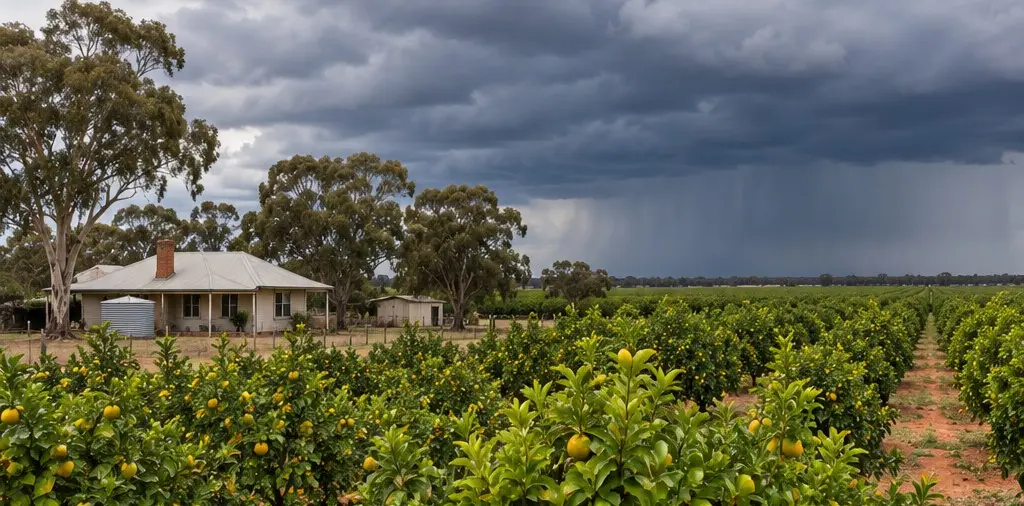
Warnings can cover the route even when the worksite itself appears unaffected. Images are AI-generated illustrations.
A crew living in Victoria may work in New South Wales on the other side of the Murray. A storm warning can cover the road to the shed while neither the farm office nor the house appears to be in the affected area. During spring, DEWR reminded PALM employers to prepare workers for severe weather. Start with the places the crew actually uses.
Put the addresses on the table
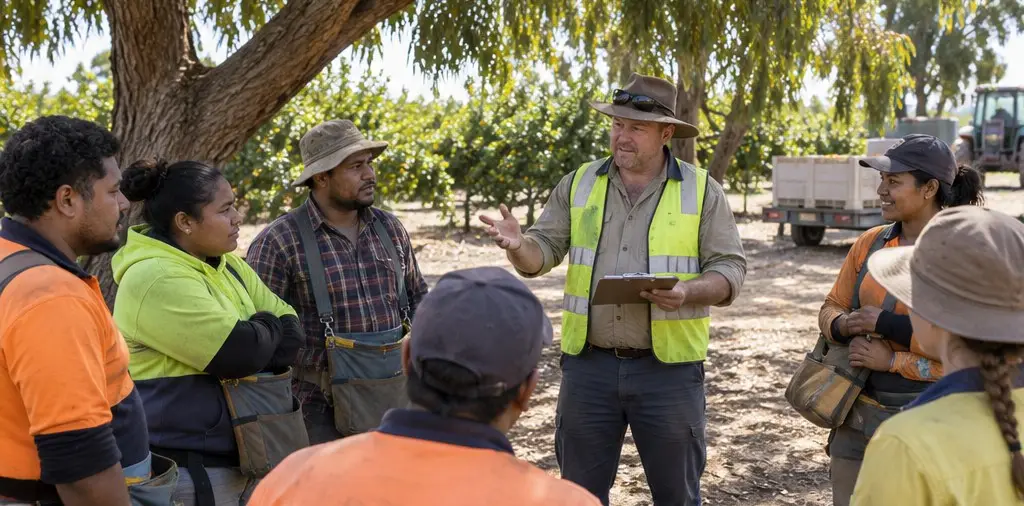
At an arrival briefing, ask workers to locate their accommodation, the worksite and the usual route on a map. Include the farm gate an ambulance or fire crew would use. If a worker knows the block by a nickname, give them the street address too. Show how to select official warning information for the correct state. VicEmergency carries Victorian warnings. Hazards Near Me NSW and the NSW SES provide relevant warnings in New South Wales.
Read the instruction, not just the coloured area
A watch zone tells the phone which locations matter to its owner. It does not make every alert in that zone an instruction to do the same thing. Open the warning, check its issue time, location, hazard and recommended action. Use the plain-language directions from emergency services. At a briefing, ask a worker to explain where they would look for an update in their preferred language, with interpreting support as needed.

Plan for the driver who has already left
Agree who checks the route before the bus departs and how the driver will hear if conditions change. The driver should pull over somewhere safe before using a phone. Never drive through floodwater. Follow road closures and official instructions, and avoid sending a second vehicle to “see how bad it is”. If phone reception or power fails, the crew should know another source of warnings, such as local emergency radio, and how the host and approved employer will account for people.

Test the plan after work as well
A warning at 9 pm reaches a different group of people from a toolbox talk at 6 am. Ask one housemate and the after-hours contact to walk through a fictional warning together. Can they give the address, reach everyone, find the official instruction and say who will organise transport if directed to leave? In a life-threatening emergency call 000. The approved employer should also assess whether the event triggers PALM incident reporting.