Dust and Diesel Fumes on Farms: Prepare for Victoria’s December Exposure-Limit Changes
• Hari Yellina
A diesel engine running beside a packing area and dust raised during a farm task need different assessments. Before changing a mask or buying a monitor, identify what workers may actually be breathing.
Victoria will adopt the new workplace exposure limits from 1 December 2026, with specific transition arrangements for 15 substances. The change is a reason to review the farm’s exposure assessment now, rather than assume every existing control will remain adequate.
Understand the dates before changing the plan
WorkSafe Victoria’s exposure standards and limits page explains the change from workplace exposure standards to workplace exposure limits. The existing standards apply until 30 November 2026. The new list contains new, revised and removed entries; it does not simply lower every number.
The WorkSafe FAQs explain transition arrangements for 15 substances. Diesel particulate matter needs a specific date check: for farming and other non-mining industries, WorkSafe’s table lists 0.1 mg/m³ from 1 December 2026 and 0.01 mg/m³ from 1 December 2029, measured as respirable elemental carbon.
The authorised 2026 amending regulations commence on 1 December 2026 and specify the 0.1 mg/m³ diesel limit in Schedule 8A as an eight-hour time-weighted average. The later date above is WorkSafe’s published transition timetable. Check the current entry for the actual substance and industry; a transition is not permission to leave harmful exposure uncontrolled.
Build the review around real tasks
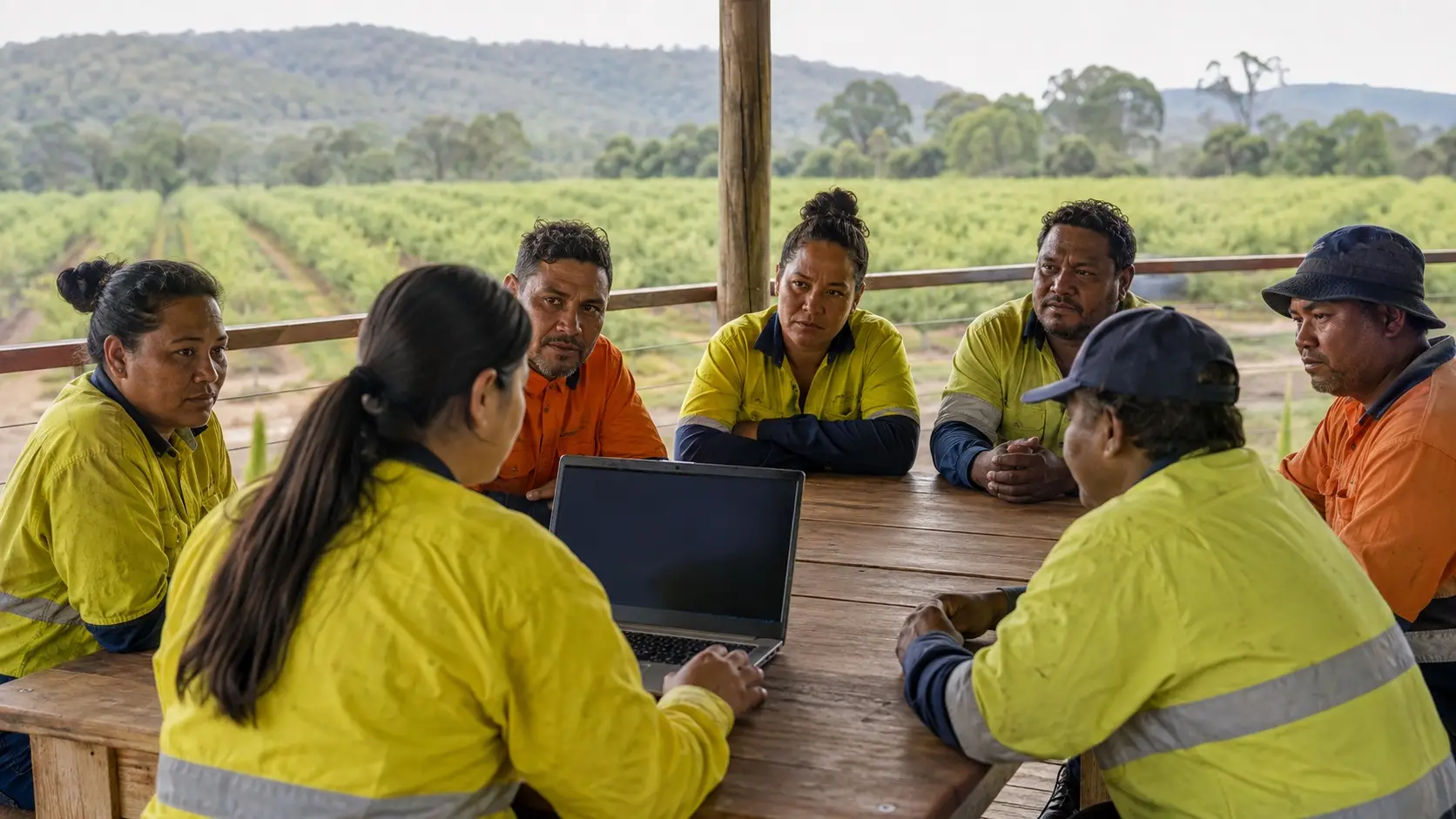
Start with a short walk-through involving the people who perform the work. A useful farm worksheet has six columns: task, location, potential contaminant, people nearby, existing control and unanswered question.
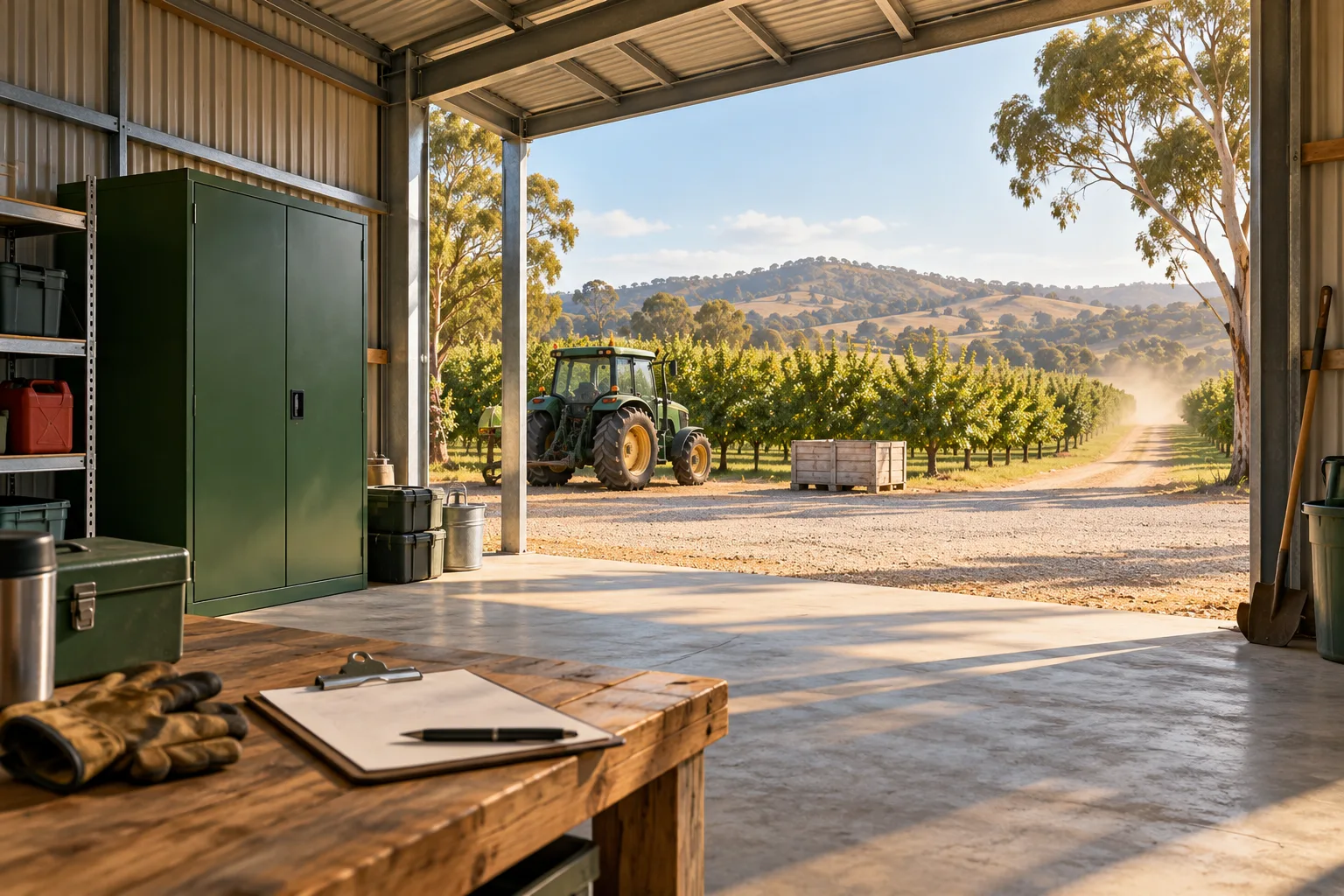
For example, an illustrative shed review might record a vehicle waiting near an open doorway. The useful questions are whether the engine needs to run there, where its exhaust travels and whether another crew works downwind. Recording only “tractor on site” would miss the exposure situation.
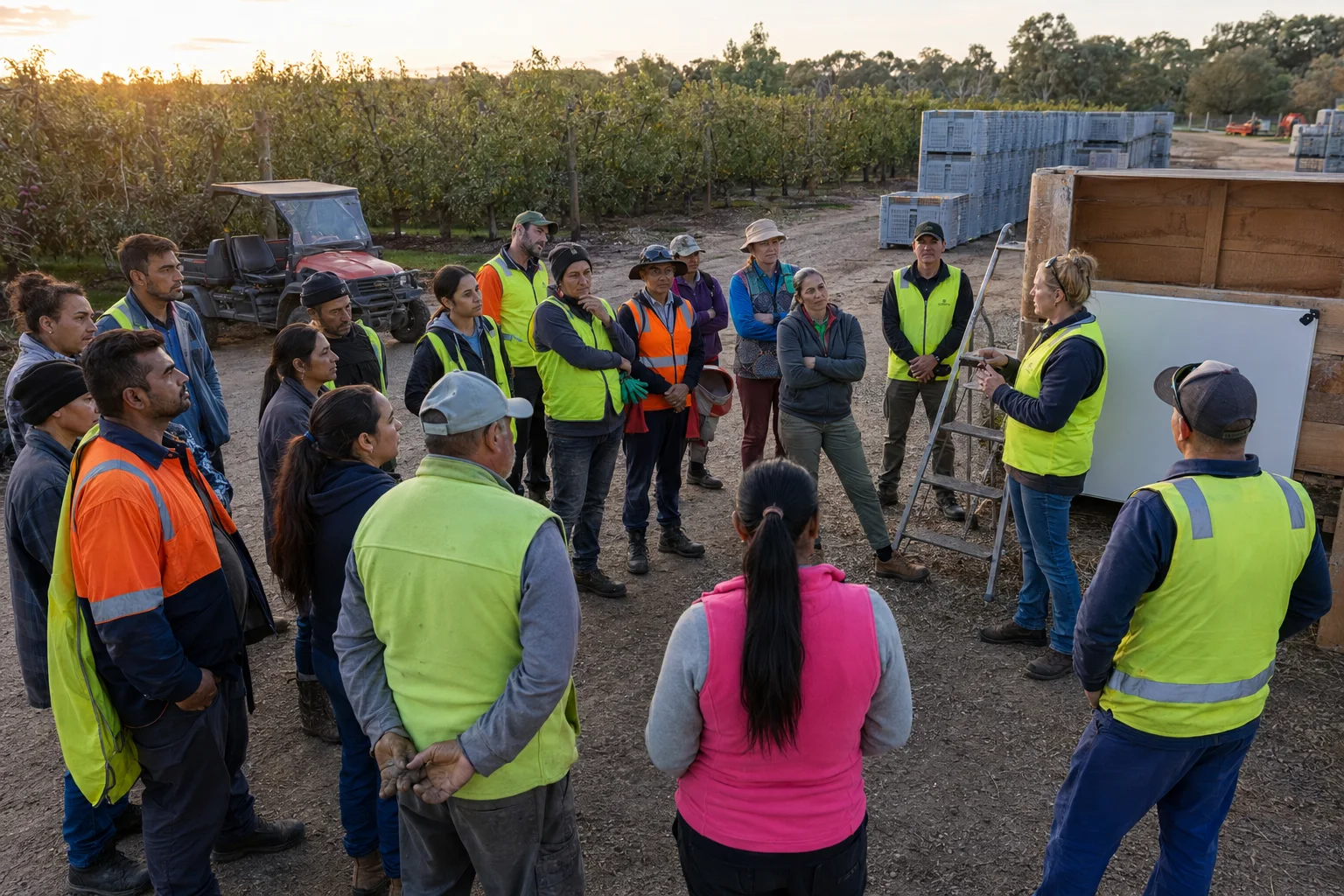
Look at routine work and occasional tasks. A brief clean-out, maintenance job or changed loading arrangement can create a different exposure pattern from normal production. Include labour hire workers and anyone passing through the area in the discussion.
Check controls and the evidence behind them
WorkSafe says the underlying duties continue: eliminate exposure risks so far as reasonably practicable, otherwise reduce them, and meet applicable exposure limits. A limit is not a guarantee that every person will be protected from harm.
Decide which tasks need a competent exposure assessment and whether an occupational hygienist should help. Visible dust and smell cannot establish compliance. A previous report also needs to match today’s equipment, work duration, materials and operating conditions.
For each proposed change, write down who will arrange it and how workers will know it is ready. If the answer is “keep the vehicle outside”, make the waiting location and handover process clear. If ventilation needs attention, arrange an appropriate technical assessment rather than relying on an open door.
Make the handover usable
Bring the findings into the farm induction and task briefing. Supervisors need to know what has changed, what workers should report and who can authorise a different method.
Set a review date before December for unresolved items, then revisit the assessment when the task or conditions change. The useful outcome is a workable exposure-control plan with evidence behind it.
About the author
Hari Yellina is Chief Executive Officer at Orchard Tech. His articles cover agricultural workforce planning and practical workplace responsibilities.
Sources checked 26 October 2026. General information; apply current requirements to the actual workplace and circumstances. Featured image: AI-generated illustration of a fictional scene.