Farm Induction for Labour Hire Workers: A First-Shift Checklist for Victorian Hosts
• Hari Yellina

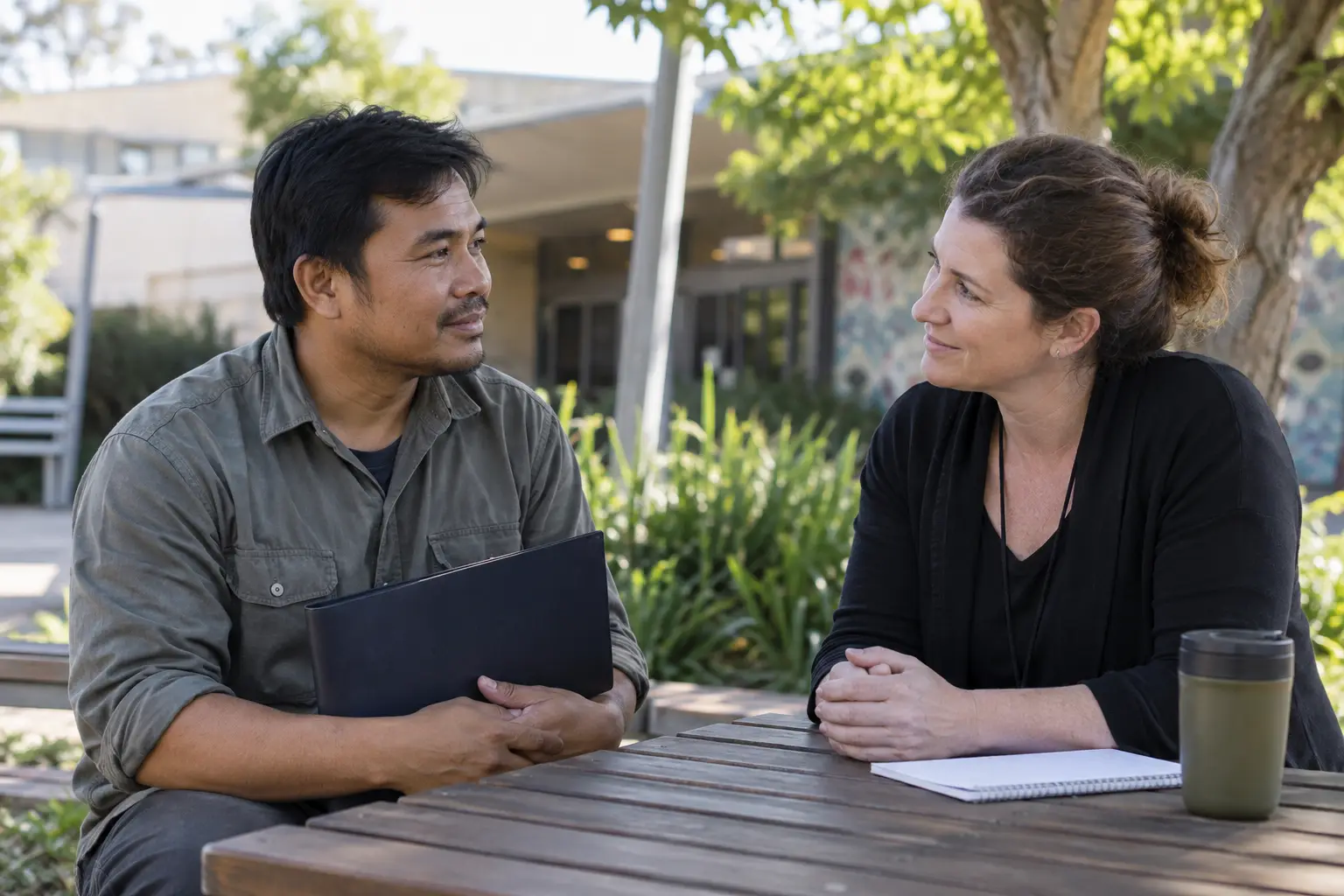
Original AI-generated illustration. Fictional people and workplace.
Victoria | Reviewed 13 September 2026. An experienced picker arrives at a new orchard. They know the crop, but not the vehicle routes, the emergency assembly area or the supervisor responsible for their block. Experience helps with the job; it does not supply local knowledge.
A useful farm induction closes that gap before work begins. It connects the worker to the actual place, task and people they will rely on during the shift.
Who is responsible for induction?
Both the provider and host have a part to play. WorkSafe recommends an induction from the labour hire provider and a site-specific induction from the host. The host must provide training appropriate to the job, and the provider must verify training is delivered when addressing a worker’s skill gaps. See WorkSafe’s induction and training guidance.
Under Victoria’s OHS framework, host and provider must consult, cooperate and coordinate so far as reasonably practicable. Allocating who delivers a briefing helps organise the work; it does not remove either business’s legal duties. WorkSafe explains the shared responsibilities.
Before arrival: agree on the first job
Start with a specific assignment. “General farm work” leaves too much unresolved. Identify the initial task, location, equipment and supervisor, then confirm the skills and any licences needed. Arrange how questions will be explained if workers need language support.
For example, a worker booked for hand picking should not arrive to discover that the first assignment is operating unfamiliar equipment. A changed assignment needs discussion and an assessment of what the worker requires to perform it safely.
At the gate: walk the route
A map is easier to understand when it matches what a worker can see. Walk the approved pedestrian route to the work area. Point out where vehicle movements create a risk, any restricted areas, and the route to facilities and emergency arrangements.
Try a practical question: “If you finish here and need to return to the shed, which way will you go?” The answer can expose an unclear instruction before the worker takes a shortcut. This is an illustrative approach, not a replacement for traffic controls or a site risk assessment.
At the task: demonstrate and check
Explain the method, demonstrate it and give the worker an appropriate opportunity to show their understanding under supervision. A nod during a group briefing tells you little about whether someone can recognise a problem while working.
WorkSafe’s seasonal-worker training case study describes the risk created when a farm assumed previous experience meant local training was unnecessary. Its practical lesson is to check the skills needed for the equipment and setting actually used at the host site.
For a hand-picking task, the discussion might cover the approved picking method, how containers are handled, where full containers go and what to do when access becomes unsafe. The details must come from the farm’s assessed task and controls. Do not improvise equipment instructions from a generic checklist.
A first-shift farm induction checklist
Use this as a conversation starter and adapt it to the work:
- Place: Can the worker identify their work area, safe access route and restricted areas?
- Task: Has the actual job been explained and the required training completed?
- People: Does the worker know their supervisor and who covers an absence?
- Problems: Can they explain how to report a hazard, incident or unclear instruction?
- Emergencies: Do they understand the site’s alarm, assistance and evacuation arrangements?
- Facilities: Can they find drinking water, toilets and the designated break area?
- Follow-up: Who will check how the worker is managing during the shift?
These prompts do not establish competence or compliance on their own. A checked box should refer to something that happened, not something the supervisor intended to explain later.
Keep a record that another supervisor can use
Record the date, site, task, trainer and material covered. Include any limits on what the worker is ready to do and the follow-up needed. WorkSafe recommends recording induction attendance and retaining the program content; those records also help the provider check what has been delivered.
Imagine a worker has completed the site walk but still needs supervised task practice. A record that says only “inducted” could lead the next supervisor to assume the person is ready for independent work. A more useful entry identifies the outstanding step and who will complete it.
Check again when the work changes
An induction is tied to a particular setting. Moving to a different block, packing line or role can introduce unfamiliar hazards. WorkSafe directs hosts to consult the provider and worker before changing tasks or work location. Check what additional instruction and supervision is needed.
For wider planning, read our harvest workforce checklist. Our psychosocial hazards guide also examines conflicting instructions and unavailable support.
Discuss the first-shift arrangements when you plan your workforce with Orchard Tech, so the people arriving at the gate have a clear place to start.
General information about current Victorian duties, checked 13 September 2026. Illustrative examples are not reports of actual Orchard Tech placements. Adapt the checklist to site-specific risks and training requirements.
About the author
Hari Yellina is Chief Executive Officer at Orchard Tech. View his profile and more articles.