
Victorian Workplace Law in October 2026: What Applies and What Starts Later
• Hari Yellina

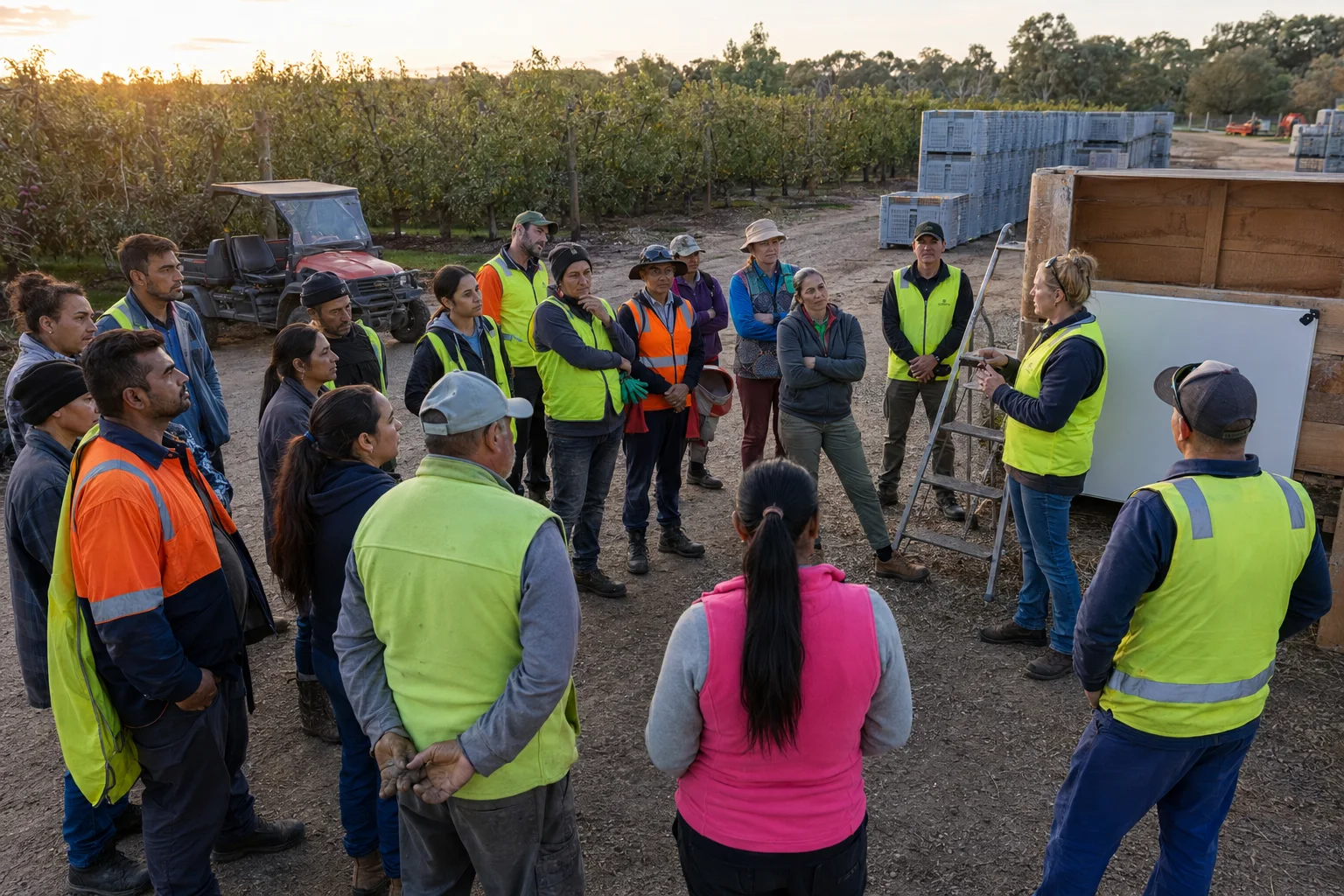
Illustrative image of a farm office. It does not depict a specific Orchard Tech workplace, client or incident.
Victoria | Legal position reviewed 26 October 2026. A farm briefing can easily mix up a law that is operating, an Act whose main provisions start later, a regulator’s guidance and a national model that Victoria has not adopted. This status guide separates those categories. Check the linked official sources again before changing a workplace procedure.
Already operating
Victorian labour hire licensing and supply chains
Victoria’s amended labour hire definition has applied from 1 October 2026. It expressly addresses arrangements that are wholly or principally for labour supply through intermediaries. A host should identify the legal supplier, check its current licence and understand any on-supply chain. See the Labour Hire Authority’s commencement notice and our intermediary licence-check guide.
Psychological health and existing OHS duties
Victoria’s Occupational Health and Safety (Psychological Health) Regulations 2025 commenced on 1 December 2025. Existing OHS duties to provide a safe workplace, consult workers and manage risks also continue. A farm should look at its actual work and supervision, not assume a written policy finishes the job. Read our farm psychosocial-hazards guide.
WorkCover family support after a work-related death
WorkSafe records relevant WIRC Act changes from 6 August 2025 and a further dependent-children pension change from 1 November 2025. These are existing arrangements, not a 2027 proposal. Read WorkSafe’s commencement summary and our family-support explainer.
Fair Work protected pay orders
“Same job, same pay” does not add a host rate to every labour hire placement automatically. The protected rate applies where a Fair Work Commission regulated labour hire arrangement order covers the host, employer, workers and work, subject to the Act’s conditions. See the Fair Work Ombudsman and our farm crew pay-order guide.
Passed, with key provisions still to commence
Victoria’s 2026 HSR and authorised representative reforms
The Workplace Legislation Amendment (Accident Compensation and Other Matters) Act 2026 received Royal Assent on 1 October 2026. Some administrative and dust-related provisions applied from 2 October. WorkSafe says the OHS representation and enforcement changes, including HSR and authorised representative powers, apply from 10 September 2027 unless proclaimed earlier. Current powers continue until the relevant provisions commence. See WorkSafe’s staged commencement and our HSR reform guide.
Dangerous goods reform
Victoria’s dangerous goods Acts have passed, but WorkSafe says the main package is planned for April 2028. The Dangerous Goods Act 1985 and associated regulations still apply now. Keep managing chemicals, fuel, storage and transport under current requirements. Read WorkSafe’s reform page and our farm preparation guide.
Claimants’ rights code and return-to-work coordinator duties
WorkSafe still lists the Code of Claimants’ Rights and extra training, facilities and assistance duties for return-to-work coordinators as awaiting proclamation. The coordinator provisions have a 1 July 2027 fallback date if not commenced sooner. Existing return-to-work obligations remain. See our WorkCover status explainer.
Guidance or a proposal is not Victorian law by itself
Safe Work Australia’s December 2025 model WHS incident-notification changes need adoption by a jurisdiction. Victoria’s notification duties still come from its Occupational Health and Safety Act 2004 and relevant regulations. Use WorkSafe Victoria’s current notification guidance, not a model-law checklist copied from another state. Our incident-notification comparison explains the distinction.
The Labour Hire Authority still describes a separate extension for specified construction activities as anticipated later in October. This is not the horticulture supply-chain change that commenced on 1 October. Check the final regulations and commencement notice before treating the construction proposal as operating.
A short check before a toolbox talk
- Name the jurisdiction, statute and regulator for the issue.
- Open the current official page or authorised legislation and check the commencement of the particular provision.
- Identify the host, provider and worker duties that apply to this task today.
- Record who will update the briefing if a proclamation, regulation or guidance changes.
This is a status guide, not a site-specific risk assessment or legal advice. To discuss a Victorian labour requirement, use Orchard Tech’s employer enquiry page.
About the author
Hari Yellina is Chief Executive Officer at Orchard Tech.
Related Articles
Victoria’s Dangerous Goods Reforms: What Farms Can Prepare for Before 2028 — Without Treating Them as Current Law
The new dangerous goods package is passed, not commenced. Keep complying with the current Act, and use the lead time to map chemicals, transport and who signs off.
Read More →