DID YOU KNOW?
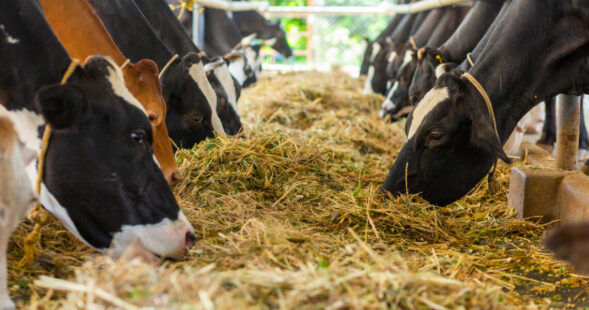
A dairy cow’s diet does not consist solely of grain. If this were true it would be as if people just ate meat and potatoes — not only would this be extremely dull, but it would also be nutritionally deficient. To be healthy and produce a strong calf and high-quality milk, a cow needs a wide variety of feed components. Its rations must be changed based on her age and when she is in her breeding/milking cycle: Young cows, like growing teenagers, require proper nutrition, including age-appropriate calories and protein, in order to promote consistent growth for the future “ladies in the barn.” A cow, like any new mother, needs particular nutrition after giving birth in order to rebuild her strength and bodily condition.
Nevertheless, there are a few items that must not be given as feed. They are:
Restricted animal material
Australia’s ruminant feed ban helps protect against bovine spongiform encephalopathy (BSE). Restricted animal material includes material from vertebrate animals, including birds and fish; it is not limited to mammals. Eggs and feeds containing restricted material must not be fed to ruminants. Defined exemptions include tallow, gelatin, milk products and oils, subject to the applicable requirements. Used cooking oil must meet the specified treatment and impurity requirements; industry-association membership alone is not proof of compliance. Animal Health Australia also advises stockfeed manufacturers to use ARA-accredited processors for used cooking oil. Check the national feed-ban guidance and the rules in your state or territory before choosing feed.
Pine and cypress prunings
Some species can cause reproductive harm in cattle. The USDA’s poisonous-plant research guidance identifies ponderosa pine needles as an abortion risk and notes that Monterey cypress also contains the implicated compound. This is not a statement that every pine or cypress species has the same effect. Keep suspect prunings out of feed and ask a veterinarian or agricultural adviser about the particular plants and cattle involved.
Whole Potatoes
Excess produce can sometimes be found on dairy farms. It is, however, critical to ensure that the potatoes given as feed are of a size that will not become trapped in the cow’s throat. An obstruction can prevent a cow from belching and cause bloat. Seek veterinary help promptly if an animal appears to be choking; see the Merck Veterinary Manual’s explanation of choke.
Related articles
Darwin live cattle exports to Vietnam in April 2022
April 2022 market report. The figures, price expectations and trading conditions below refer to the period covered by ABC Rural’s 28 April 2022 report. The first live cattle shipment of 2022 from Darwin to Vietnam left East Arm in April. At the time, exporters expected a difficult year for the trade. In 2021, the number […]
Read more →
Japanese encephalitis and pork safety in the 2022 NSW outbreak
Japanese encephalitis cannot be caught by eating pork or pork products. People can become infected through bites from infected mosquitoes. NSW Health explains how to protect yourself and who should consider vaccination. What NSW Health reported in March 2022 On 11 March 2022, NSW Health announced its fifth confirmed case at that point in the […]
Read more →