
Why the first pistachio bin needs a hulling slot
• Hari Yellina
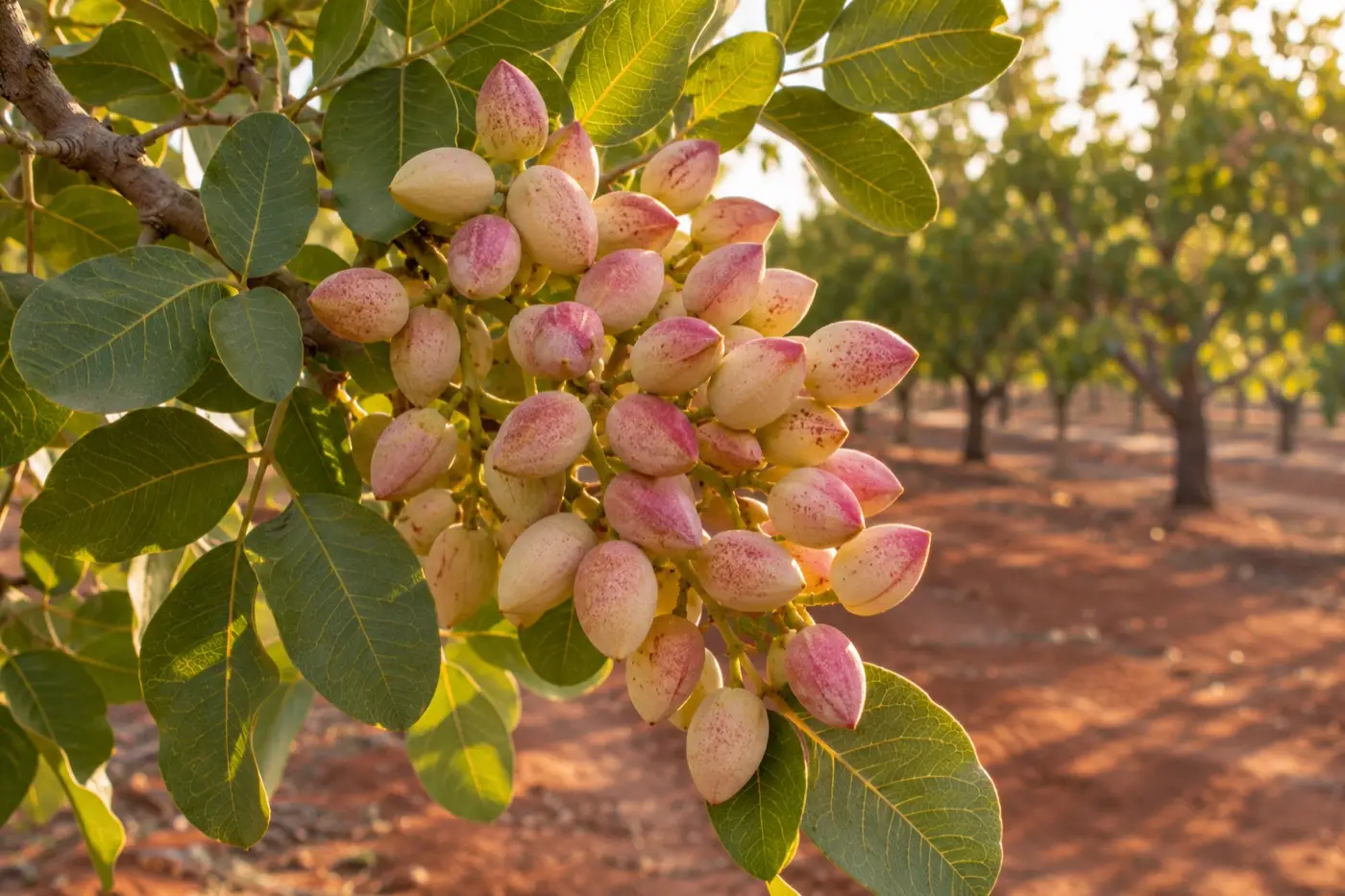
At harvest the hard shell is still inside a fleshy outer hull. Images are AI-generated illustrations.
The huller is a short drive from the pistachio block. On paper, transport looks easy. Then the first bin fills in the morning and sits while the truck waits for a full load. By the time the last bin is picked up, the oldest fruit has already spent much of the shift in its hull. The odometer tells the grower very little about that delay.
The outer hull is still on at harvest
A fresh pistachio carries a fleshy outer hull around the hard shell. At the processing plant, hulling removes that outer material. Drying follows. The cream shell familiar to shoppers stays around the kernel for an in-shell product. The Australian industry’s grading process includes sorting for discoloured shells, so what happens in the field bin can follow the nuts a long way down the line.
The Pistachio Growers’ Association’s preharvest advice connects shell staining with temperature and time after harvest. Natural compounds from the fleshy hull can stain the shell as the fruit waits. Other factors, including harvest maturity, can also affect appearance. A marked shell alone cannot tell a grower which step caused it.

Work backwards from the receiving slot
Before setting the shaker’s start time, confirm when the receiver can take the first load, which bins and vehicles are available, and who will answer if the receiving line slows. Ask for the processor’s current delivery instructions for the season. A target remembered from a previous harvest can miss a changed intake window.
Put the time the first fruit entered each bin on the load record, along with its block, dispatch time and delivery reference. If several bins travel together, the driver should be able to identify the oldest one. A single truck departure time gives no clue that one bin spent five hours longer in the orchard than its neighbour.

Give a delayed bin an owner
Suppose the processor calls to move the intake slot while the second truck is being filled. The field supervisor can now tell the receiver how much has been harvested and when the first bin began filling. Together they can agree which load should move first and whether the next block should start later.
At the end of the run, compare the field times with receival and any grading feedback. If the long wait happened before the truck ever arrived, a shorter first collection or a different shaker start may be more useful next season than putting on a faster vehicle.
Sources and further reading
Related articles
Chestnut production in Australia
Australia is a country that has a wide variety of nuts that are produced and then exported. Out of these nuts, chestnuts are a type that is favoured by the Australian citizens. Moreover, these nuts are produced in the south of Australia. The majority of the production occurs in Victoria. It is important to note […]
Read more →