The spray diary says ‘north block’. Could another person identify the rows?
• Hari Yellina
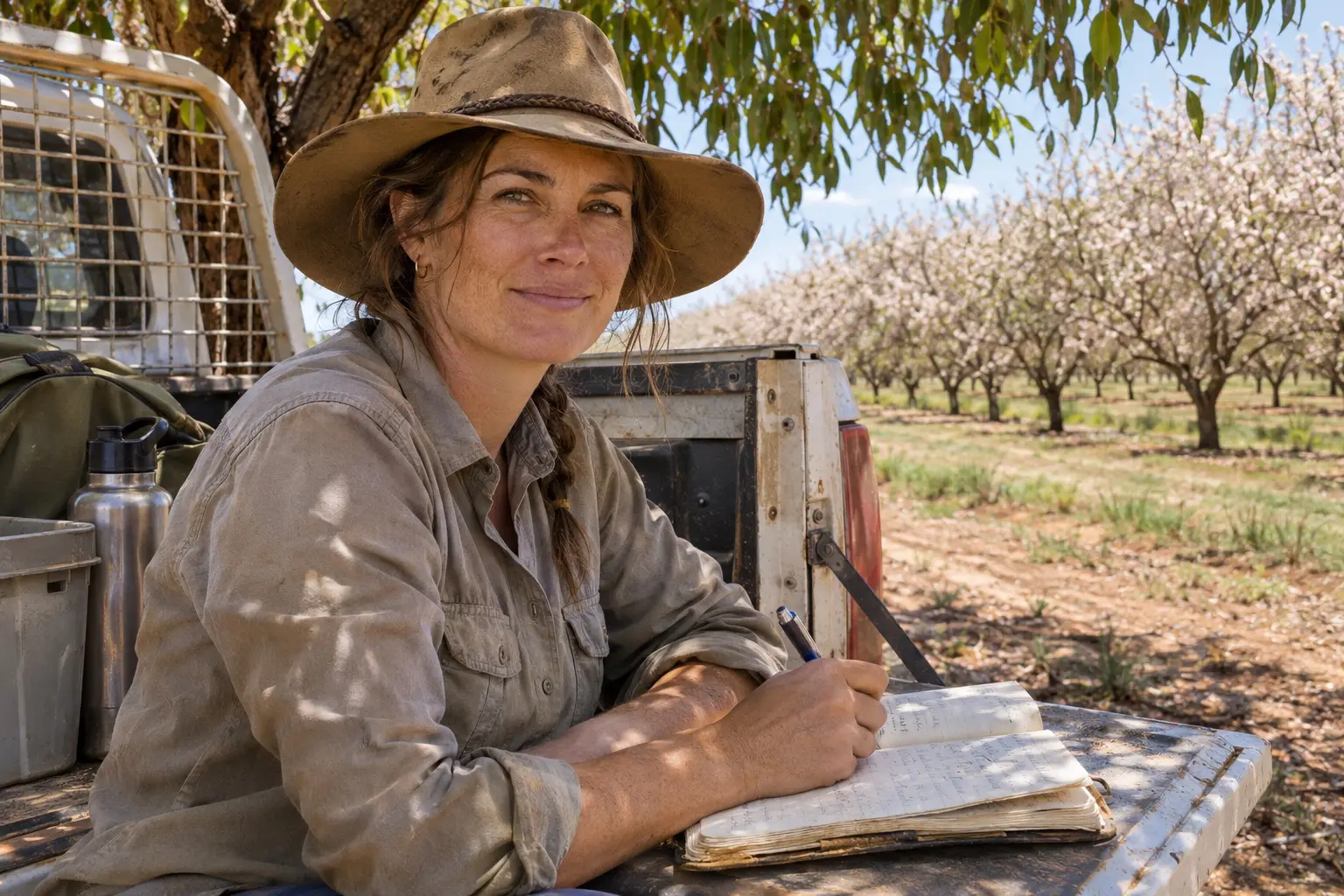
A farm splits its north almond block into two irrigation sections, but the old name survives on the roster. On Tuesday only the western section is treated. By Friday a supervisor looking at the words “north block” cannot work out whether the entry covers six rows or sixty. The applicator remembers. Next season that person may be on another farm.
What Victoria requires the record to contain
For agricultural chemical use covered by the Victorian requirements, make the record within 48 hours and keep it for two years from use. Record the product trade name, date, application rate or details from which it can be calculated, treated crop or situation, and the specific location. For outdoor spraying, include wind speed and direction at the place and time of application.
Record the applicator’s name and contact details and, where applicable, those of the supervisor and the person for whom the work was done. Agriculture Victoria lists limited exceptions on its records page. Its full list is a better starting point for a form than adapting a purchasing invoice or last week’s job sheet.
Make the map usable after a shift change
Give each subsection a stable identifier and link it to a dated map. One location might read “N2, west of the service track, rows 1–6, map revision B”. The row range and revision are practical ways to make a location clear. If part of a planned run was skipped, record what actually happened and mark the boundary on the working copy.
Try retrieving one entry with the applicator away. Can another supervisor identify the product, locate the rows and contact the responsible person? A supervisor deciding on worker access or harvest timing must still use the relevant label, permit conditions and site instructions.
Sources
Sources checked 24 November 2026. Image is an AI-generated illustration.