Why grape stems can brown while the berries still look fresh
• Hari Yellina
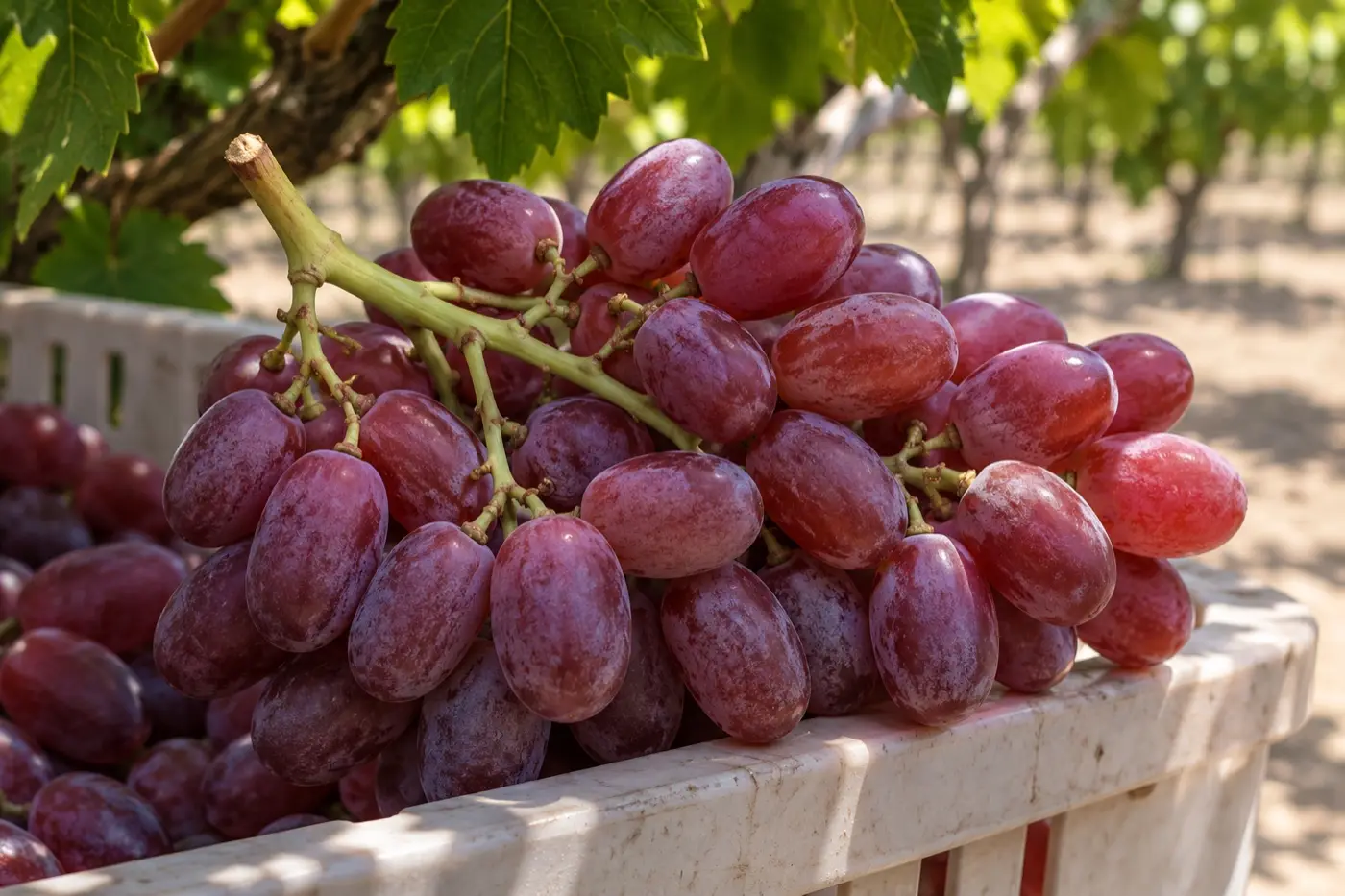
Check the fine stems as well as the condition of the berries. Images are AI-generated illustrations.
A buyer opens a carton of red table grapes. The berries are firm, but the small stems that hold them to the bunch have started to brown. The dispatch sheet shows the grapes left the shed cold. To understand what the buyer saw, go back another step. Where was that carton between the first cut and the start of cooling?
Turn the bunch over
The branched stalk of a grape bunch is called the rachis. Water loss from the bunch after picking can lead to brown stems and loose berries. In University of California research, different varieties showed different sensitivities to water loss. The researchers also found that a relatively short cooling delay in hot conditions could contribute to later stem browning.
When field or shed staff check a sample bunch, look at its smaller stems as well as berry colour and firmness. Note the block, variety, pick time and where the carton waited. Stem colour is a clue for comparing lots. By itself, it cannot establish exactly when deterioration began.
Follow the oldest carton through the pickup
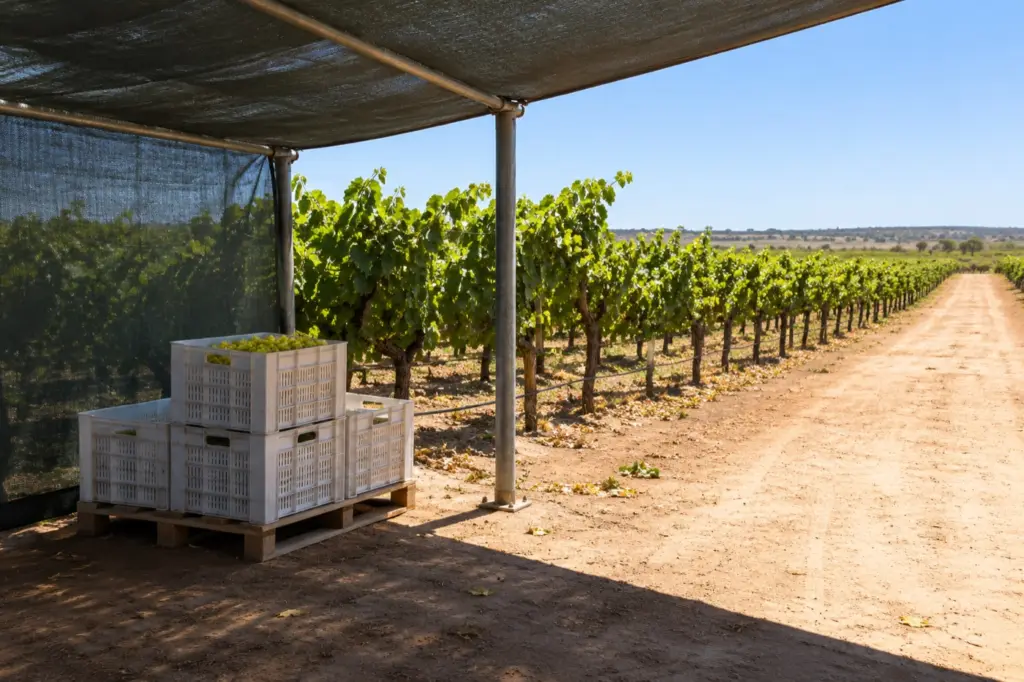
Australian table grapes can be hand-picked and packed in the field. A full pallet can therefore contain cartons packed an appreciable time apart. For one run, mark the time the first carton was packed, when the pallet moved into shade, when it left the row and when active cooling started. Shade helps limit exposure while the pallet waits. It still arrives at the shed with field heat to remove.
Suppose the transport arrives promptly but finds three partial pallets being held until each is full. Moving the pickup time earlier may change nothing. Look at whether a smaller collection, a different shaded assembly point or adjusted picking order would get the oldest cartons into the cooler sooner. Agree the change with the field and shed supervisors.
Check the path through the pallet
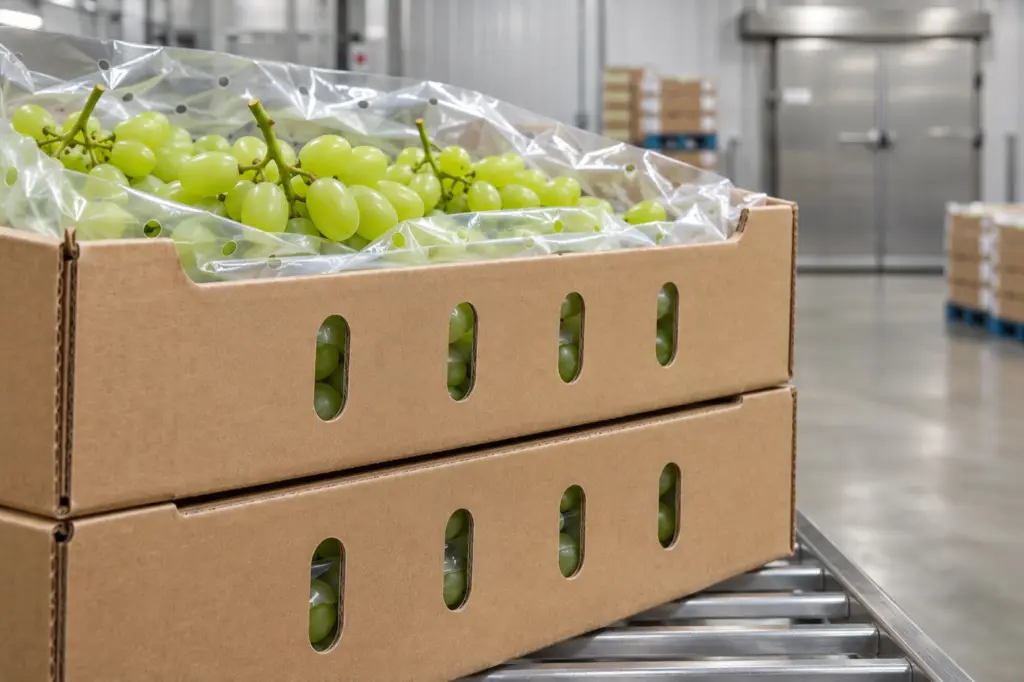
With forced-air cooling, the pack and stack affect where air can pass. A carton turned across the intended vent pattern, or a displaced liner covering side openings, can disrupt the path through the fruit. Use the approved carton, liner and pallet pattern for that market. Ask the cooling operator to check an unfamiliar pack before the full run goes through.
Record the fruit temperature required by the packhouse procedure as well as the time cooling started. Air temperature at the door describes the room. A representative fruit reading tells the dispatcher more about the packed load. If a buyer later reports brown stems, the lot record can now distinguish a wait beside the vines from a cooling problem inside the shed.