
Phones, Power Tools and E-Bikes: Safer Battery Charging in Shared Farm Accommodation
• Hari Yellina
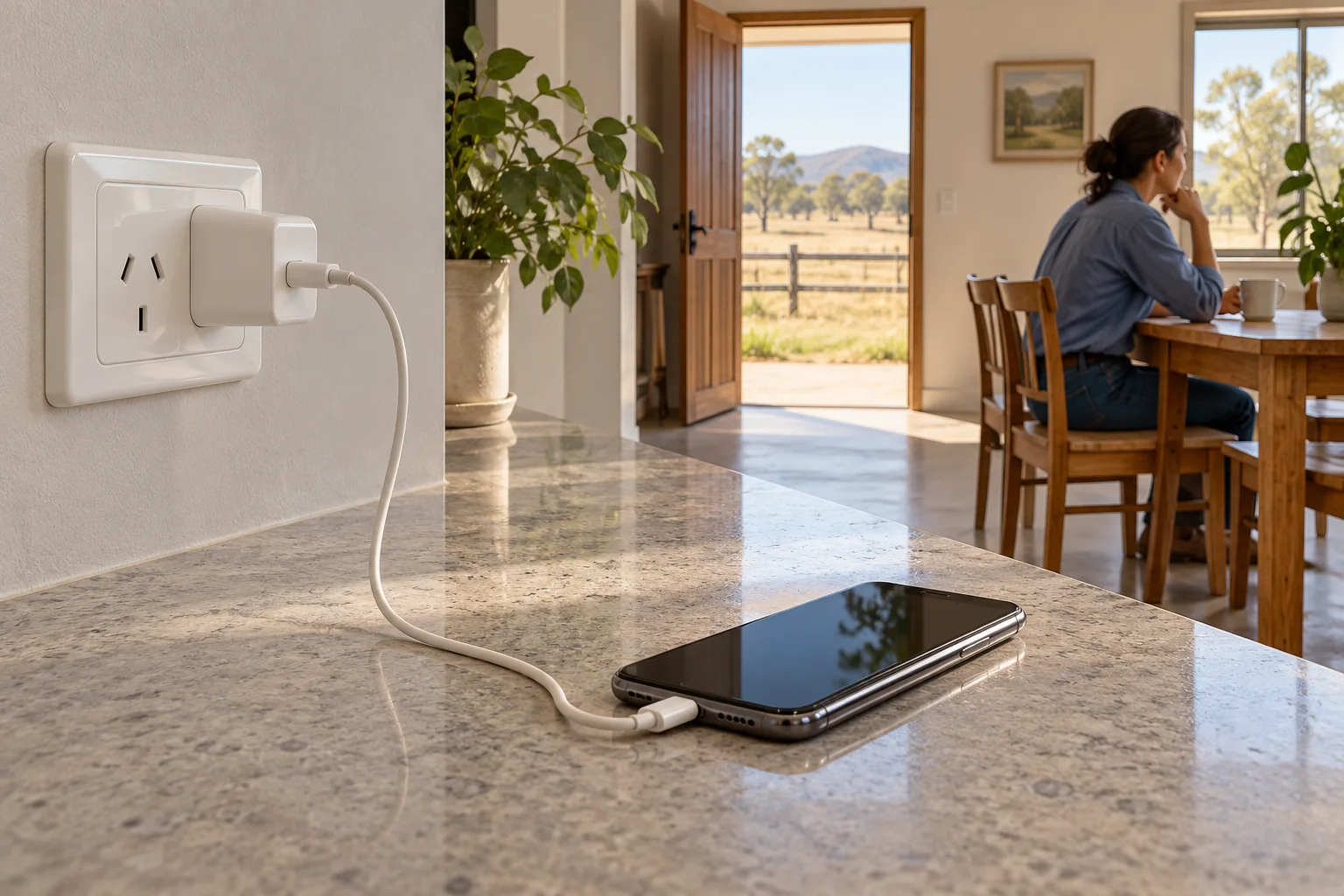
When several people share accommodation, charging arrangements can grow informally: a phone beside a bed, a tool battery on a bench or an e-bike near the easiest socket. Review the available locations before the rooms fill for harvest.
The aim is to give residents a practical way to charge everyday devices without introducing avoidable fire hazards.
Agree on suitable charging locations
CFA’s battery and charging guidance recommends compatible chargers, hard surfaces for small devices, and keeping equipment away from combustible materials, heat and moisture. Larger equipment such as e-bikes and power tools should be charged away from living spaces. Keep exits and hallways clear.
CFA also recommends charging only when people are home and awake, unplugging when charging is complete and avoiding damaged batteries or cables. Lithium-ion batteries must not go in household bins. If there is smoke or flame, call Triple Zero (000) and do not touch the device.
Look at the accommodation as residents use it
A suggested walk-through starts with three questions: where do people currently charge devices, which locations are unsuitable, and what workable alternative is available? Ask residents rather than assuming that a rule posted at the entrance is enough.
Consider different shift times. Someone returning from an early start needs an arrangement they can follow while awake. A person using an e-bike may need a suitable location that also addresses storage and access. If the property lacks an appropriate arrangement, the manager needs to resolve that problem rather than leave residents to improvise.
Use a qualified electrician for questions about electrical installations or capacity. Do not create a charging area by adding an improvised chain of extension leads and power boards.
Make reporting simple
Tell residents whom to contact about a damaged charger, unsuitable outlet or battery concern. The manager should have a clear route for technical advice and safe disposal arrangements. Residents should not be asked to repair a battery or keep using suspect equipment while a replacement is discussed.
CFA’s spring battery warning following a shed fire reinforces the need to treat rechargeable equipment carefully. Moving a charging problem into a shed does not remove the need to assess that location.
Explain the emergency response before it is needed
Use a short, accessible briefing to explain the alarm, exits, meeting point and emergency call arrangements. If a battery device smokes or catches fire, get people out and call 000. Do not attempt to carry the burning device outside or ask another resident to handle it.
Check that the charging arrangement works alongside the property’s smoke-alarm checks and evacuation arrangements. Revisit it when new residents or larger battery devices arrive, and when a reported problem shows the current setup is not working.
About the author
Hari Yellina is Chief Executive Officer at Orchard Tech. His articles cover agricultural workforce planning and practical workplace responsibilities.
Sources checked 26 October 2026. General information; apply current requirements to the actual workplace and circumstances. Featured image: AI-generated illustration of a fictional scene.