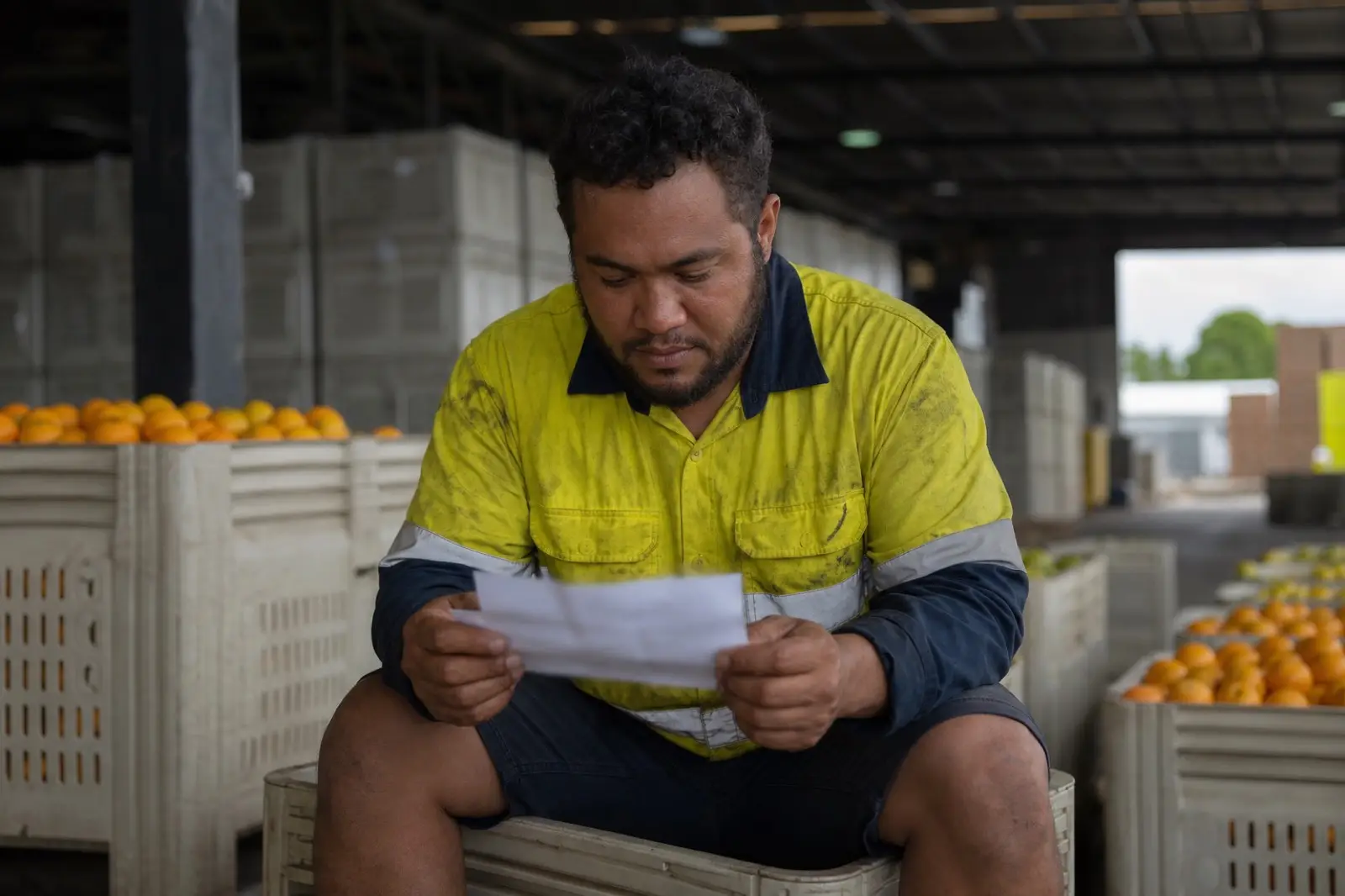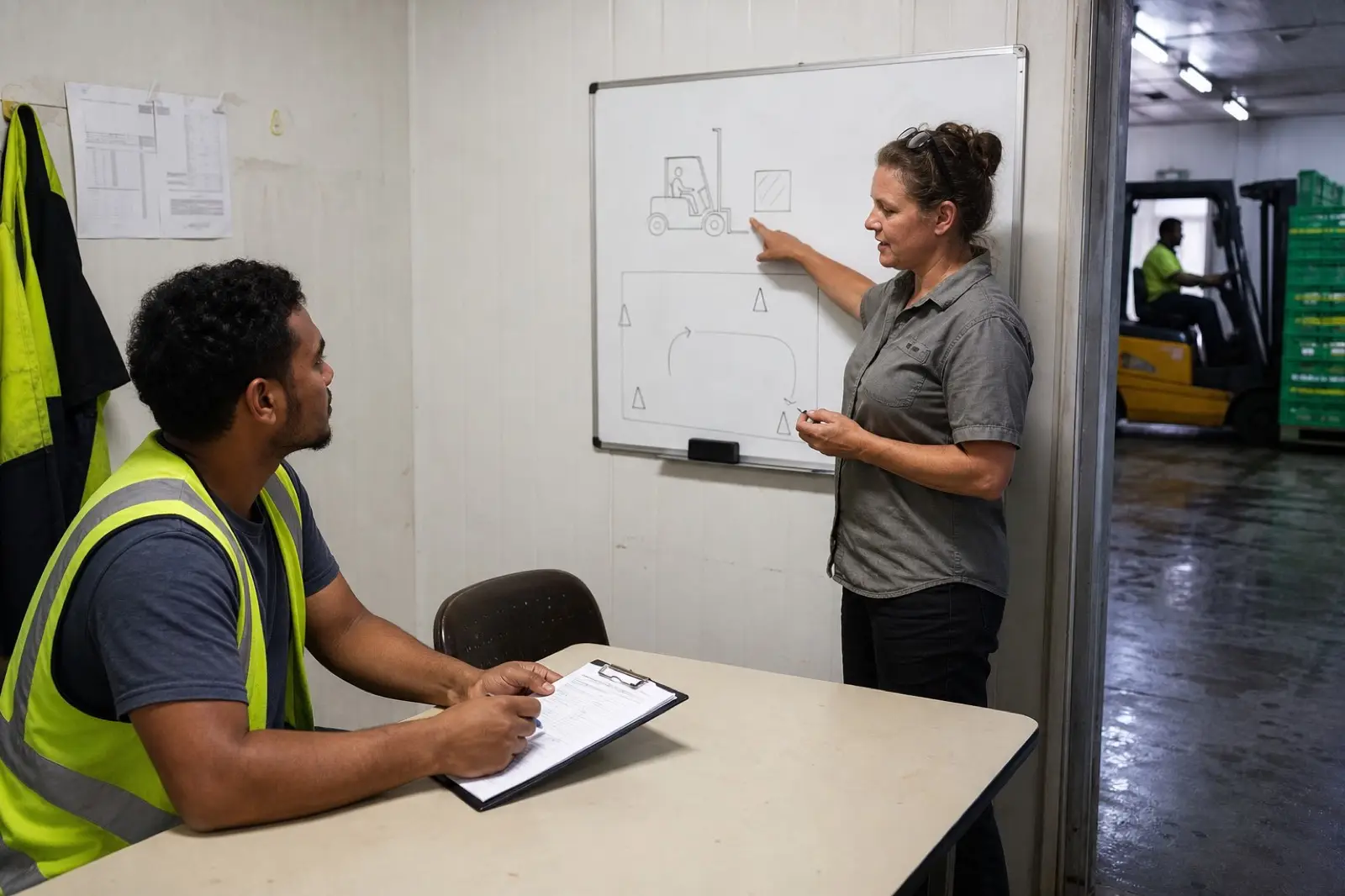

Illustrative photograph. Not a specific Orchard Tech workplace or a named PALM worker.
Last reviewed: 29 August 2026. This page is general information for hosts and workers, not legal advice. PALM scheme rules sit in the current Approved Employer Deed of Agreement and Approved Employer Guidelines. Always check the live documents on the PALM scheme website before you act.
The Pacific Australia Labour Mobility (PALM) scheme is run by the Department of Employment and Workplace Relations (DEWR) and the Department of Foreign Affairs and Trade (DFAT). It lets eligible Australian businesses hire workers from nine Pacific island countries and Timor-Leste when there are not enough local workers available. Short-term placements run for up to nine months. Long-term placements run between one and four years. For a plain-English overview, see Orchard Tech’s PALM scheme program page.
What version 2.1 is
In March 2026 the PALM scheme published Approved Employer Guidelines 2.1. The scheme’s own employer channel said the update took effect on 26 March 2026, and that the rewrite was meant to make obligations clearer and easier to navigate. The Australian Government’s stated aim was stronger worker protections, not a lighter-touch scheme.
A Development Policy Centre brief published 28 August 2026 treats Guidelines 2.1 (dated 27 March 2026 in that brief) as the current rulebook for welfare officers and related duties. If the PDF on palmscheme.gov.au has moved on again, use that file — not this article.
What employers should actually do
- Download the current Approved Employer Guidelines and the Approved Employer Deed of Agreement from the employer resources page. Do not rely on a printed copy from last season.
- Read the welfare, accommodation, transport, incident, grievance and reporting sections with whoever holds those jobs day to day — not only the person who signed the deed.
- Use PALMIS (the Approved Employer portal) for recruitments and reporting. DEWR says that is mandatory for new recruitments and reporting.
- Complete PALMLearn modules where the scheme requires them. The Welfare and Wellbeing Support Person hub points employers to PALMLearn for deed and guideline training.
Who the guidelines bind
Approved Employers are the legal parties to the deed. Host farms that take PALM workers through a labour hire Approved Employer still sit inside the same workplace laws: Fair Work, work health and safety, and visa conditions. Orchard Tech places labour in Victoria and New South Wales only. Victorian labour hire licensing sits alongside PALM. New South Wales does not run a state labour hire licensing scheme.
What did not change
PALM workers still have the same workplace rights as other employees in Australia. The scheme still uses subclass 403 (Pacific Australia Labour Mobility stream). Monitoring can still be announced or unannounced, at the worksite or at accommodation. Those points are on the scheme’s frequently asked questions.
For workers
If your employer’s paperwork, pay, hours, housing or transport does not match what you were told, you can raise it with your employer, your Worker Welfare and Wellbeing Support Person, your country’s Country Liaison Officer if you have one, and DEWR. You do not have to go to your employer first. The PALM scheme support line is 1800 51 51 31 or palm@dewr.gov.au (monitored 8.30 am to 6.30 pm; after hours for critical incidents only).
Sources checked 29 August 2026: PALM scheme website; PALM scheme employer resources; PALM scheme LinkedIn (Guidelines 2.1 in force 26 March 2026); Devpolicy, The welfare support system for PALM workers (28 August 2026). Confirm the live Guidelines PDF before you treat any numbered clause as current.