Before a Fire-Risk Day: Decide How the Whole Farm Crew Will Leave
• Hari Yellina
A farm departure plan can fail even when the supervisor receives a warning promptly. Some workers may be in a distant block, others may depend on the same bus, and the person with the vehicle keys may be elsewhere. A useful farm crew bushfire plan accounts for every person before the difficult day arrives.
Decide who acts and what they check
Use CFA’s farm fire safety resources to prepare the farm’s plan. Name the person monitoring conditions and making work decisions, plus a backup who can act if that person cannot be reached. Agree the plan’s triggers in advance, using current official advice and the farm’s circumstances.
Keep three different things clear: a Fire Danger Rating describes forecast fire danger; a declared Fire Danger Period brings local restrictions; and a Total Fire Ban imposes particular restrictions for the specified place and day. CFA’s farming restrictions guidance explains activity-specific conditions. Do not assume every Victorian municipality has the same commencement date or that one machinery rule covers every task.
Trace the message to the last block
Walk through how the stop or departure instruction will reach workers outdoors, in a shed and in any separate work area. A group message is only useful if the people receiving it have access and understand it. Agree an acknowledgement method and a backup for poor reception.
Explain the instruction in language the crew understands before the shift. Ask workers to describe where they would go and whom they would contact. This can reveal uncertainty that a signed briefing sheet does not show. Tell new arrivals and relief supervisors the same plan.
Count people and transport together
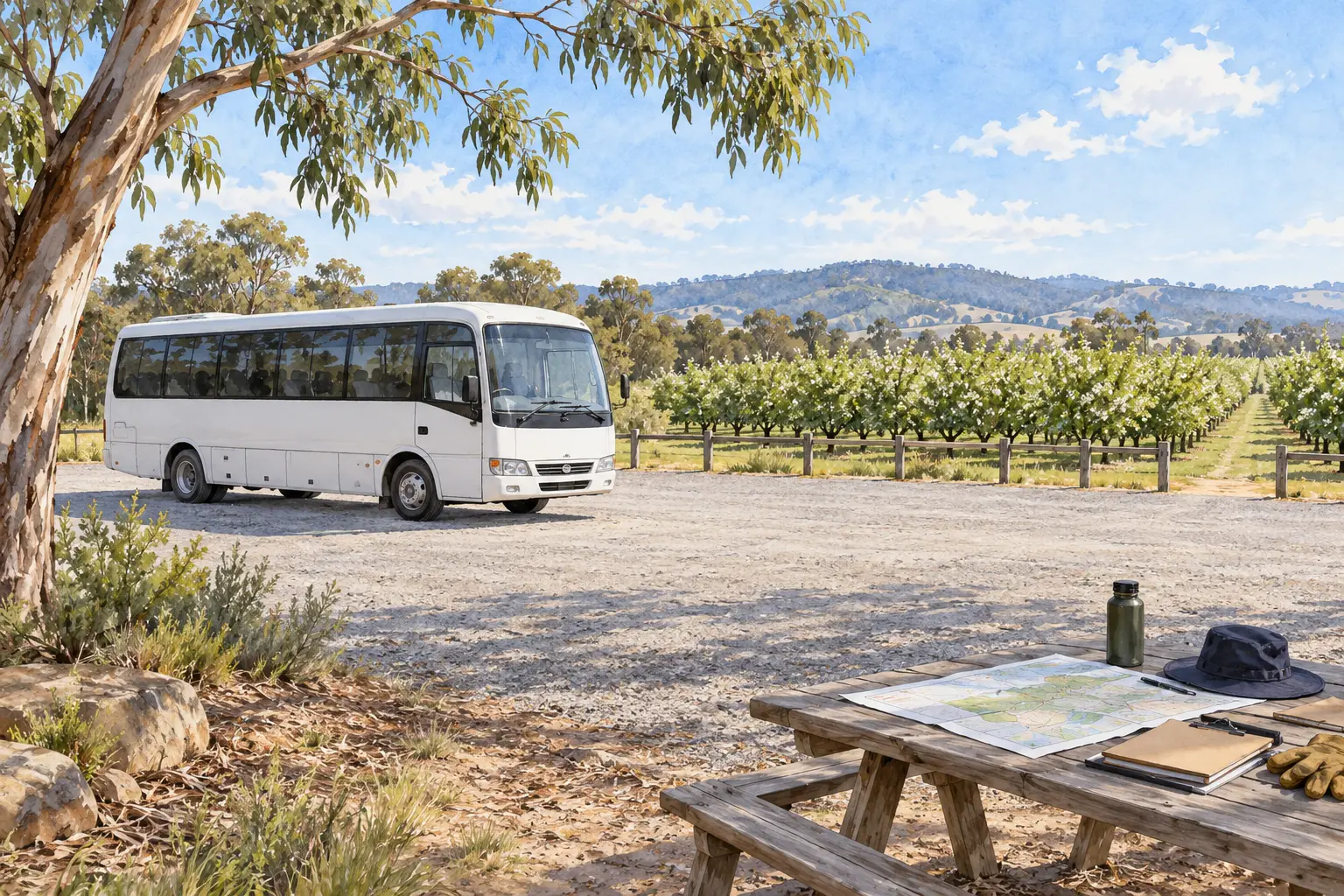
Write down how many people require transport, where they will meet, which vehicle and driver will collect them, and the alternative if that vehicle is unavailable. Include people finishing early or working away from the main group. Avoid a plan that quietly relies on somebody finding a spare seat after the instruction is given.
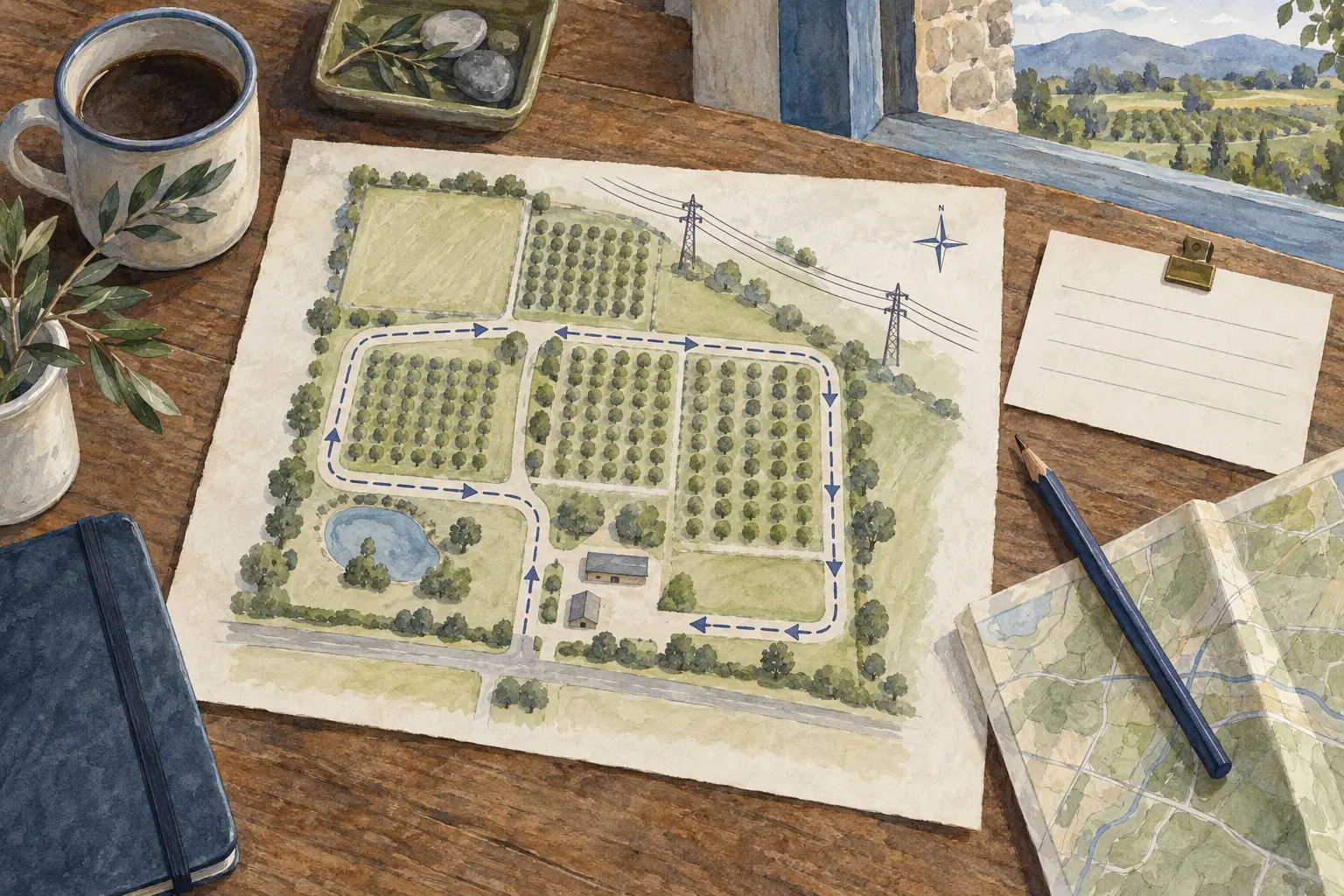
The destination and route need advance consideration under the farm’s fire plan and official advice. A shed, parked bus or familiar nearby property should not be labelled a safe refuge simply because it is convenient. Our emergency access guide helps with site information, but emergency vehicle access and crew departure are different decisions.
Practise the handover in ordinary weather
In a hypothetical rehearsal, the main crew assembles quickly but two irrigation workers are missing from the count. The coordinator discovers that their supervisor uses a different contact list. Updating that link before a fire-risk day is more useful than assuming the main group’s response proves the whole plan works.
Test the contact sequence, head count and transport availability without creating an emergency. Record who resolves each gap. Recheck arrangements when crew size, blocks, drivers or accommodation change, and reassess before work restarts after an interruption.
For immediate danger, follow official emergency instructions and call 000. Keep the worker emergency help guide accessible. Our thunderstorm planning article covers another weather hazard and should not be substituted for a bushfire departure plan.
Sources and further reading
Official sources checked on 14 October 2026. Practical examples are hypothetical.
About the author
Hari Yellina is Chief Executive Officer at Orchard Tech. His articles explain practical workforce planning for Australian agricultural businesses.
AI-generated illustration of fictional transport preparation in clear weather; it is not an emergency refuge.