Tall Machinery and Orchard Deliveries: Plan the Route Around Overhead Powerlines
• Hari Yellina
A delivery vehicle fits through the gate, but its body rises when unloading. A machine travels folded, then extends for work. When overhead powerlines are nearby, the route decision needs to cover those operating states as well as the journey into the orchard.
Locate the lines before booking the movement
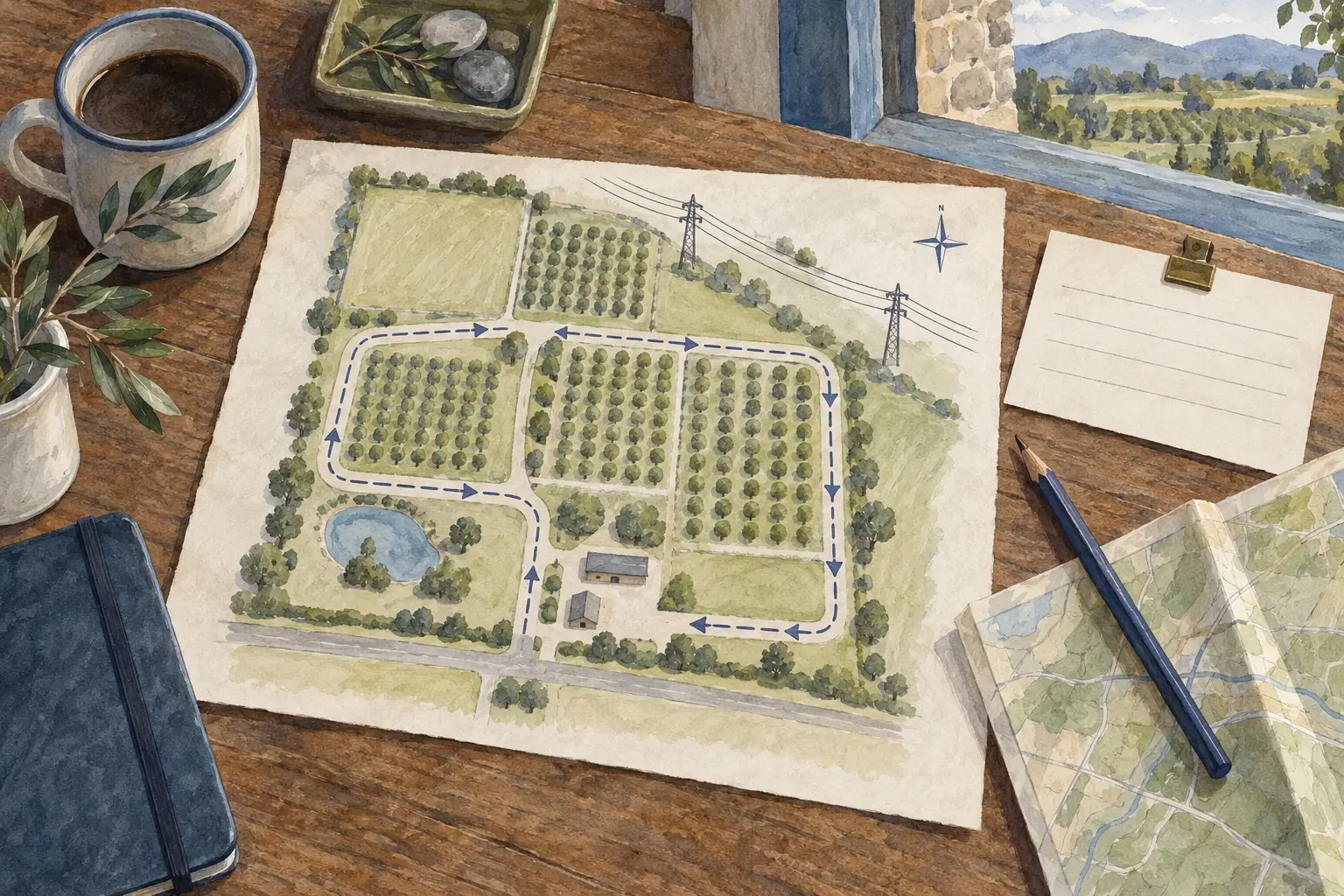
WorkSafe Victoria’s farm guidance addresses the risks of machinery near overhead assets. Identify the lines on the proposed route and around loading, unloading, storage and work areas. Check the site itself rather than relying solely on a driver knowing the district.
Bring the host, machine operator and delivery coordinator into the planning discussion. Ask which vehicle or equipment is actually coming, what it will do on arrival and whether a different access or unloading location can avoid the hazard. Record the agreed location in the booking instruction so the decision reaches the driver before arrival.
Consider the full working dimensions
A transport height is not the maximum reach of a boom, raised body or unfolding attachment. Obtain the relevant dimensions for each operating state and consider movement across the ground, including uneven areas. Do not estimate clearance by eye from the cab.
Energy Safe Victoria advises keeping oversized machinery and stored materials away from lines and reconsidering farm loading zones. It also warns that electricity can arc without contact and that lines can sag in hot weather. An apparently unchanged route therefore still needs an assessment for the proposed task.
Avoid the approach where practicable
A practical first option is to choose another route or work area away from the lines. For a delivery, that may mean agreeing on a different unloading place and arranging the remaining movement separately. Do not shift the risk to workers by asking them to improvise the final stage after the truck arrives.
Where work near lines cannot be avoided, use the current powered mobile plant guidebook and Energy Safe’s No Go Zone guidance with the relevant asset owner. Requirements depend on the asset and work context. One distance copied from a poster is not a universal safe clearance, and an observer alone does not authorise any approach.
Connect the booking to the gate briefing
A useful instruction identifies the agreed gate, route and unloading area; who meets the driver; and whom to contact if the vehicle or task differs from the plan. At arrival, confirm the intended operation before it starts. Include the powerline arrangements in the site induction for anyone helping with the movement.
In a hypothetical booking, a coordinator changes the unloading point after reviewing a truck’s raised-body dimensions. The revised booking reaches the transport company, and the host meets the driver at the gate to confirm it. The improvement happens before anyone has to decide what to do underneath the lines.
Explain the emergency instruction in advance
Energy Safe advises a person in a vehicle that hits or arcs a powerline to stay in the vehicle and call for help. People nearby must keep away and call 000; follow emergency services’ directions. Do not attempt an improvised approach to help someone at the vehicle. Keep the farm emergency location and access information available alongside the route plan.
Sources and further reading
- Staying safe around overhead powerlines on farms — WorkSafe Victoria
- Using powered mobile plant near overhead assets — WorkSafe Victoria
Official sources checked on 14 October 2026. Practical examples are hypothetical.
About the author
Hari Yellina is Chief Executive Officer at Orchard Tech. His articles explain practical workforce planning for Australian agricultural businesses.
AI-generated conceptual illustration; the sketch is not a surveyed route or a powerline clearance plan.