Cold-Room Work: Plan the Time Inside, Clothing and Warm Breaks
• Hari Yellina
A worker finishes an outdoor task and is reassigned to a produce cold room. The outside temperature gives little information about the next job. Cold-room worker safety depends on the conditions inside, the work being done and the arrangements for warming up and replacing wet clothing.
Follow the actual task from entry to exit
WorkSafe Victoria’s cold storage handbook covers environmental conditions and protective clothing alongside other storage risks. Its cold-exposure guidance considers temperature, air movement, work demands, time in the cold and warm-up arrangements. It is older guidance still provided on WorkSafe’s live site, rather than a new October 2026 rule.
Ask what the worker must do inside, how long the task normally takes, where they wait and what happens if completion is delayed. Consider the difference between moving briefly through a chiller and spending a shift doing repeated tasks in a freezer. A general statement that “jackets are available” does not describe the exposure or the work design.
Reduce exposure through the way work is arranged
WorkSafe’s handbook discusses work design, time spent in cold conditions, warming facilities and suitable dry protective clothing. Clothing is one control; it should not be the entire plan.
Review whether preparation or waiting can occur outside the cold area, whether the task can be organised to reduce exposure, and how the worker will leave to warm up. Set arrangements from the assessed task and conditions. This article does not specify a universal temperature limit or a single break interval for every room and worker.
Make dry clothing and warm recovery usable
Check that suitable clothing is available in the right sizes and that wet or damaged items can be replaced. Explain where replacements are kept and whom to tell. A worker arriving from outdoor work should not have to guess whether their existing clothes are suitable for the cold task.
The warm-up arrangement also needs to fit the shift. Identify where the worker goes, how cover is arranged if necessary and how they notify the supervisor. Include night shifts and temporary workers in that check. A facility that is locked or distant from the assigned work is unlikely to function as intended.
Explain how to stop and seek help
Train workers to recognise concerning effects of cold exposure, report them promptly and seek assistance under the site’s plan. Do not treat difficulty with cold conditions as something a worker must quietly tolerate to finish an allocation. Supervisors need a clear response when somebody reports a problem.
Use the induction handover to explain the task, controls, clothing, warm-up route and contact. Our worker PPE guide supports communication, while the food safety article addresses the separate hygiene requirements.
Check the boundary of the assignment
In a hypothetical task review, the supervisor discovers that a worker spends more time waiting inside than handling produce. Moving the preparation step outside changes the exposure before additional clothing is considered. The review then checks whether warm recovery and replacement clothing remain available throughout the shift.
Ordinary cold-room exposure planning does not clear entry into controlled-atmosphere storage or another potentially hazardous space. Identify that different task and obtain its specific assessment rather than extending an ordinary cold-work instruction to it.
Sources and further reading
- Safe operation of cold storage facilities — WorkSafe Victoria
- Safe operation of cold storage facilities — handbook
Official sources checked on 14 October 2026. Practical examples are hypothetical.
About the author
Hari Yellina is Chief Executive Officer at Orchard Tech. His articles explain practical workforce planning for Australian agricultural businesses.
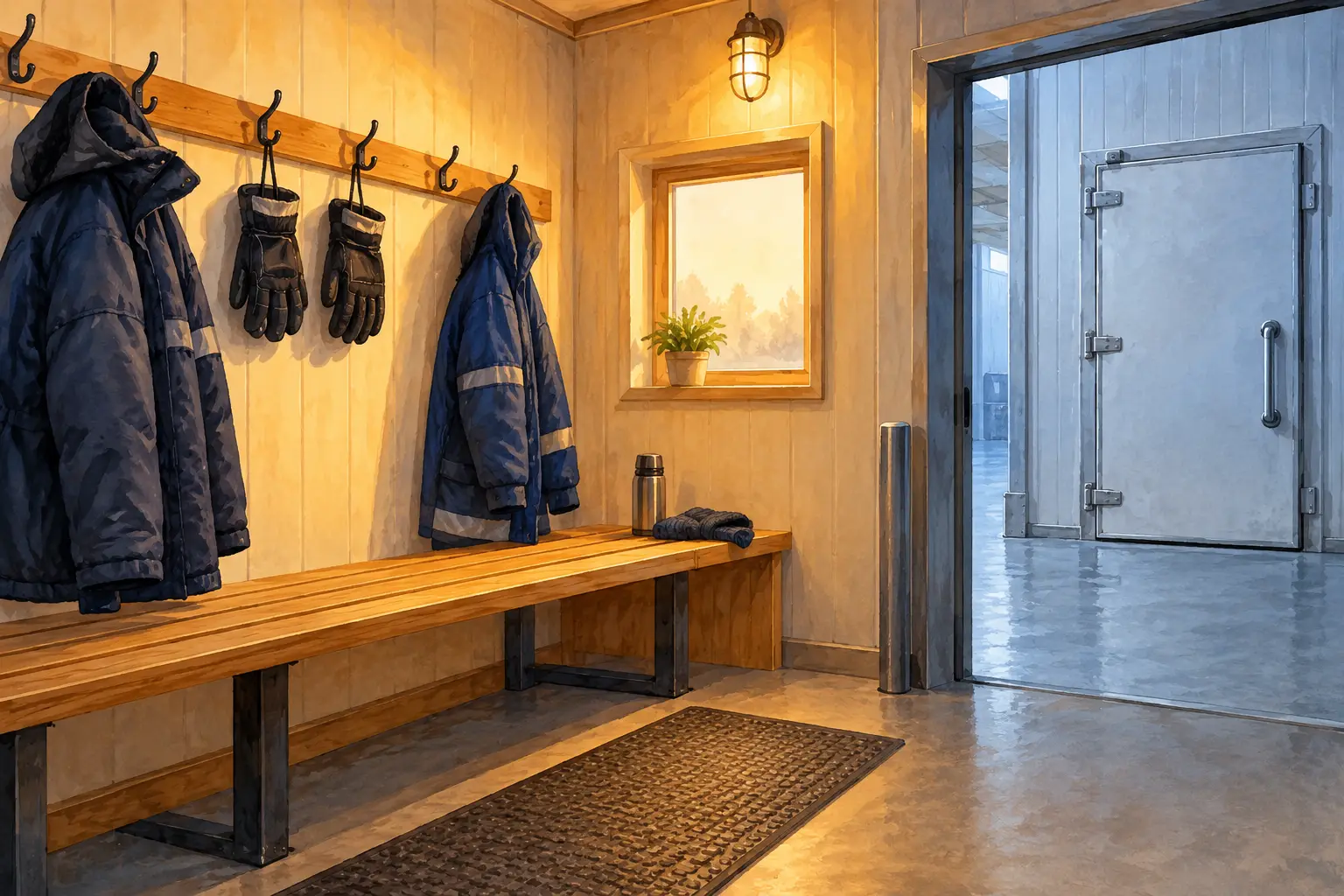
AI-generated illustration of a fictional warm-up area; it is not a facility assessment or certification.