PALM Welfare Meetings: Turn Fortnightly Check-ins into Follow-up Action
• Hari Yellina
A welfare meeting can finish on time while an important problem remains untouched. A worker may not want to discuss a personal concern in front of others, or a group may hear the same promise at several meetings without knowing what happened next.
For PALM welfare and wellbeing support staff, the value of a fortnightly meeting lies in the conversation and the follow-up, as well as the record that it took place.
Start with the official resources
The PALM scheme’s welfare and wellbeing support person toolkit includes meeting planners, note-taking templates and discussion guidance. Its fortnightly discussion guides provide material for conversations about everyday life, wellbeing and safety.
Under Approved Employer Guidelines 2.1, section 9.6, support persons must meet workers at least fortnightly. Face-to-face meetings are the expectation; virtual meetings are allowed when health directions require them. The employer must record the discussion and action taken on concerns.
The support person must be within 200 km travel distance of each placement unless DEWR agrees otherwise. A PALM worker cannot fill that role, and a suitable substitute is required during the support person’s absence.
The public PALM welfare page describes the minimum as meeting all workers in person every fortnight. Plan for that attendance and use the Guidelines’ specific health-direction exception if relevant; do not assume an ordinary phone check-in replaces the meeting. An attendance list or completed template alone does not establish that every welfare obligation has been met.
Give the next meeting a clear purpose
Choose a topic that fits what workers are dealing with now. A newly arrived group may have different questions from workers preparing to leave a placement. Ask what they want covered rather than assuming the same agenda suits everyone.
A proposed meeting structure is to revisit agreed actions, discuss one useful topic, invite questions and explain the next steps. Leave room for the conversation to change direction. A long presentation can use up the time needed to hear what is actually happening.
Check that the location, timing and language support make participation practical. Explain how workers can arrange an individual conversation without having to disclose the subject to the whole group.
Turn each concern into a clear next step
For a routine issue, record a concise description, the person responsible for follow-up, the expected response date and how the worker will receive an update. Keep sensitive details out of shared agendas and group messages. Our guide to worker information and privacy explains why access should match the purpose.
Here is a hypothetical example: several workers say a transport pickup time is unclear. The welfare contact checks the arrangement with the responsible coordinator, gives workers the confirmed information and asks at the next check-in whether the problem has stopped. Writing “transport discussed” would not capture that outcome.
Check the result with the person affected
A referral made or an email sent is a step in the process. Ask whether the worker received the help or information they needed. If the concern remains, explain the next route and who will pursue it. Avoid promising a particular outcome that another organisation controls.
Urgent safety or welfare concerns need prompt action through the appropriate emergency, support or reporting pathway; they should not wait for the next fortnightly meeting.
Before closing the meeting record, separate completed actions from items still open. That gives the next conversation a useful starting point and helps prevent the same unresolved issue disappearing between staff handovers.
About the author
Hari Yellina is Chief Executive Officer at Orchard Tech. His articles cover agricultural workforce planning and practical workplace responsibilities.
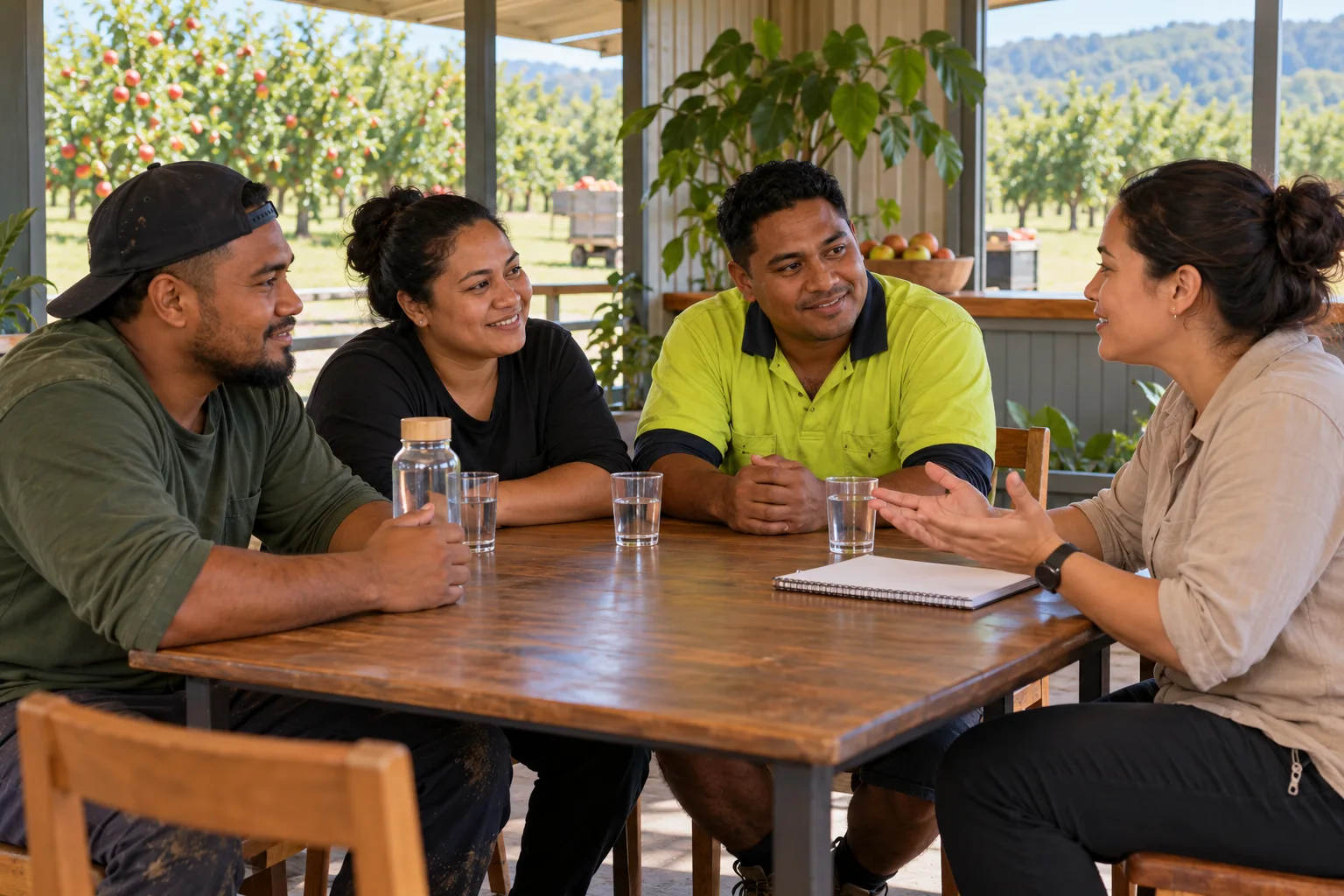
Sources checked 26 October 2026. General information; apply current requirements to the actual workplace and circumstances. Featured image: AI-generated illustration of a fictional scene.