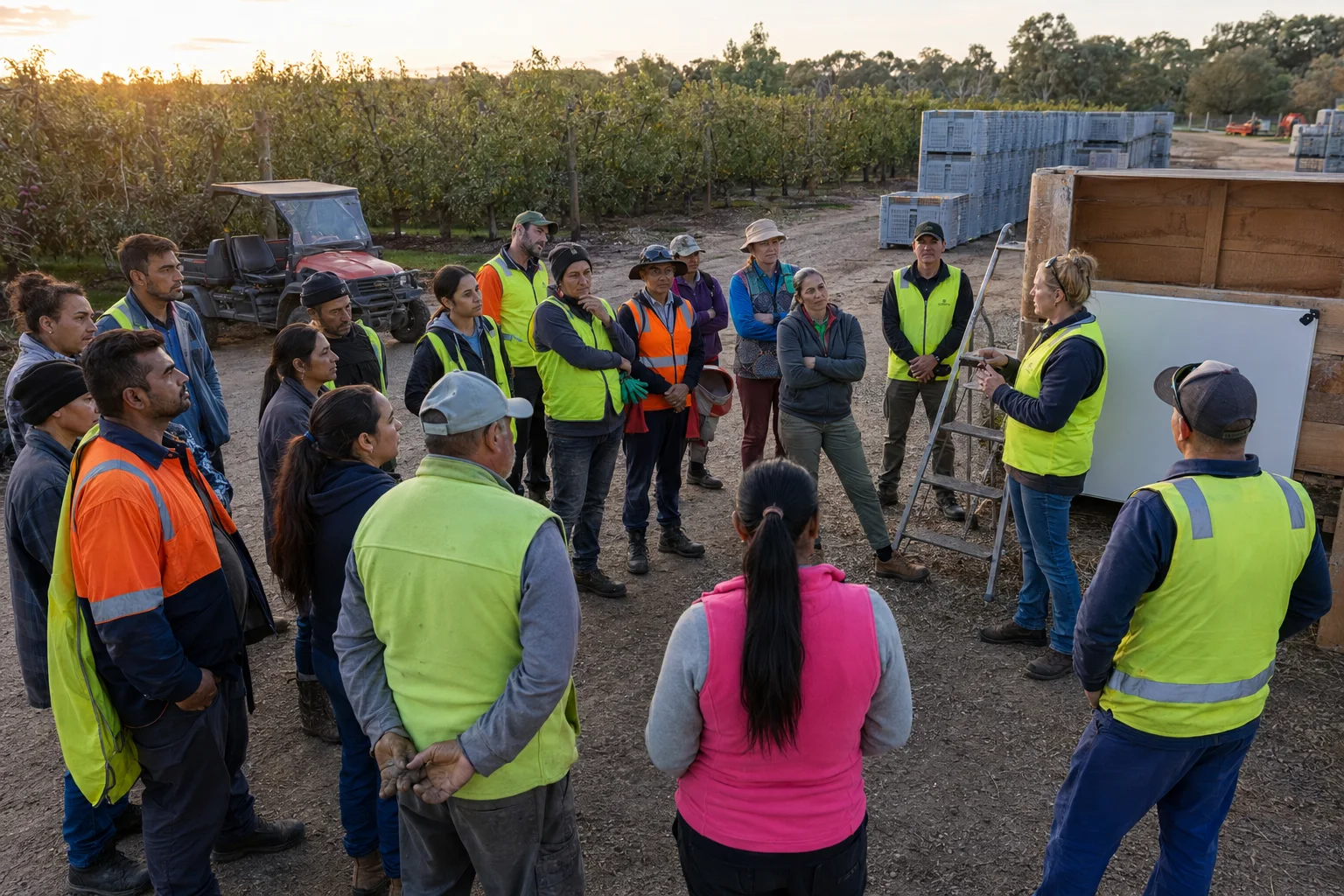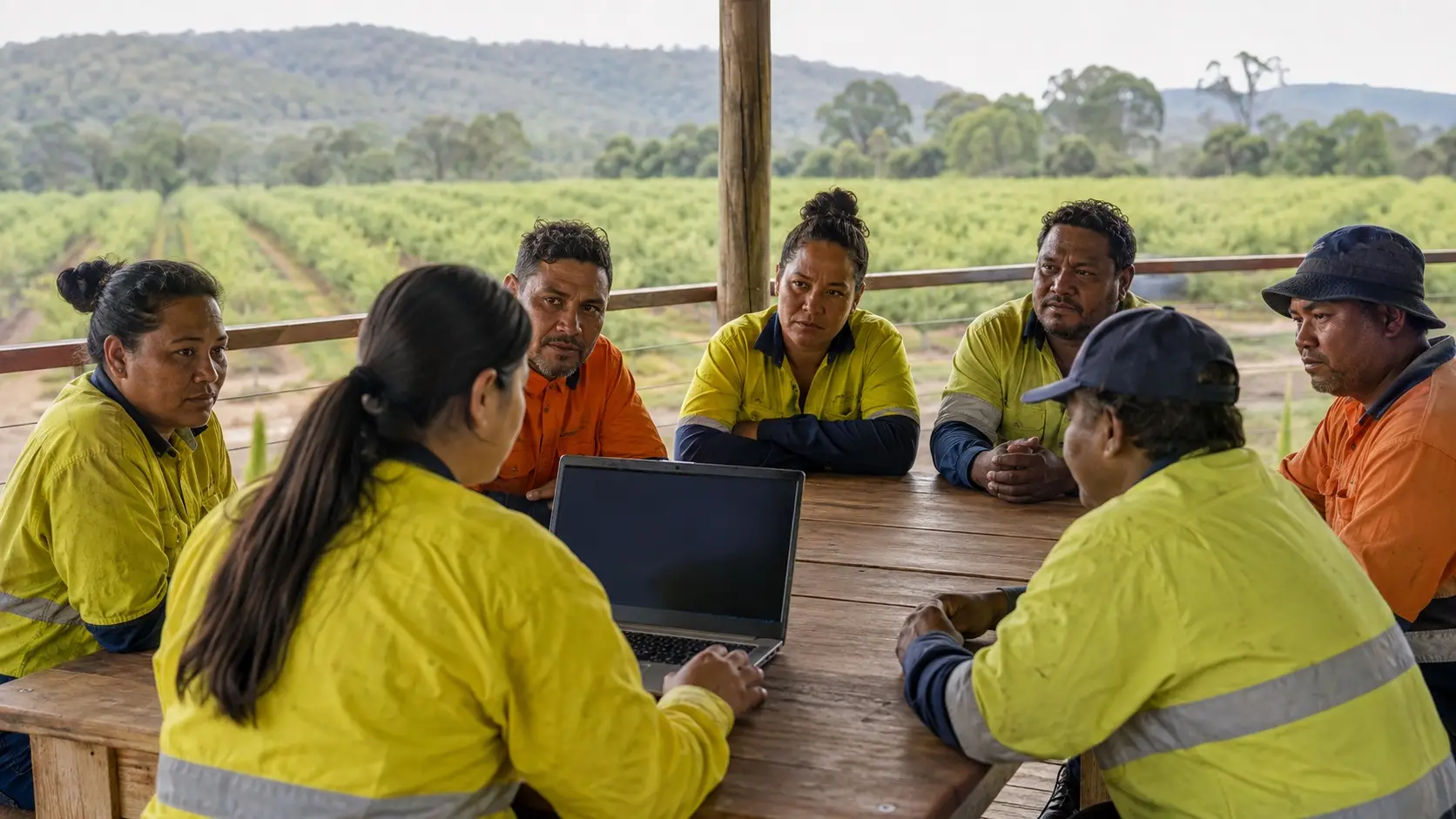
Toilets, Water and Break Areas: Keep Facilities Within Reach as Harvest Moves
• Hari Yellina
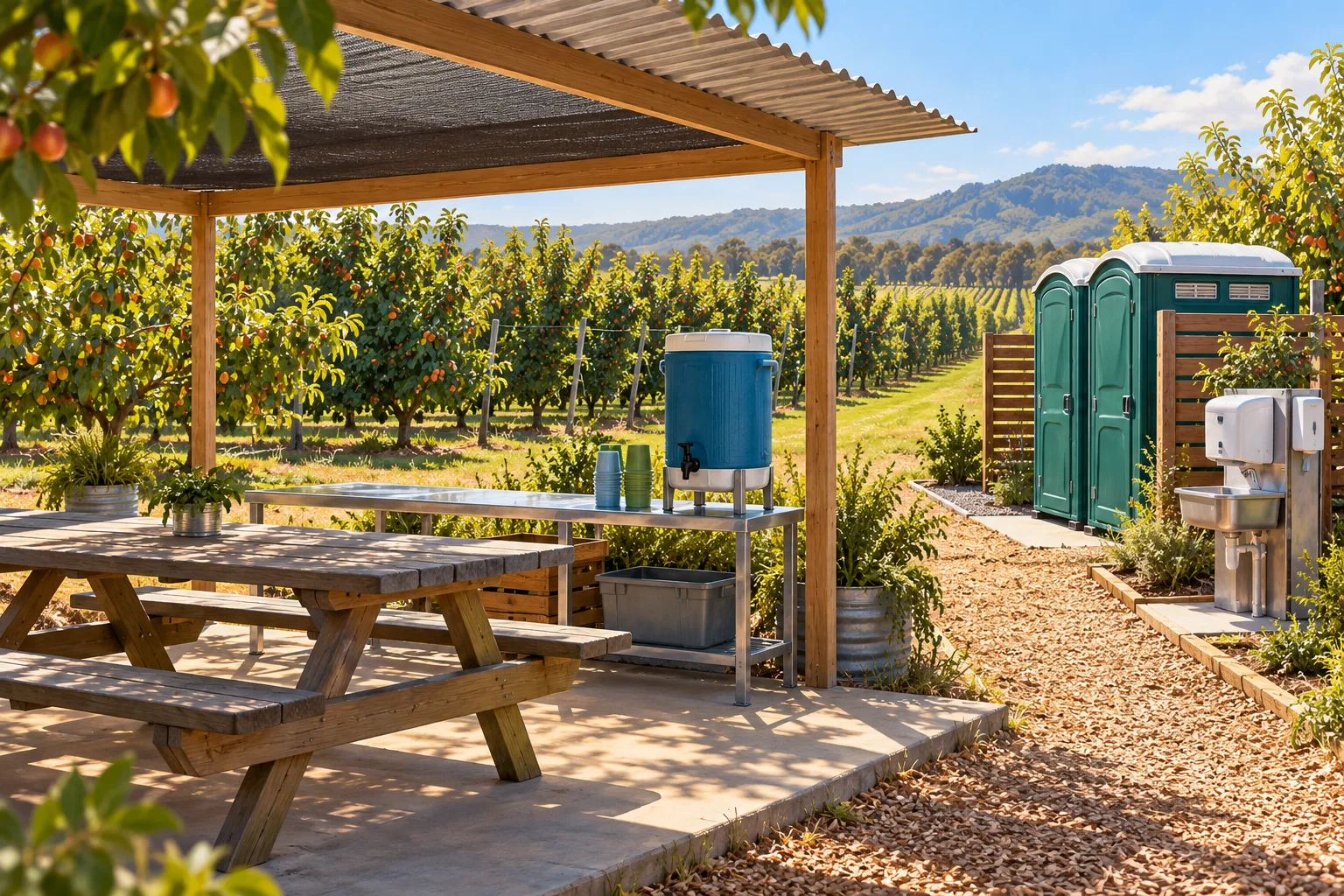
A facility can be available on the farm and still be difficult for a particular crew to reach. When harvesting moves to another block, yesterday’s arrangement may no longer work. Review amenities as part of the move, alongside equipment and transport.
Use the current Victorian facilities code
WorkSafe Victoria’s 2023 compliance code on workplace facilities and the working environment covers toilets, washing, drinking water and dining facilities. It also addresses mobile, temporary and remote work. Use this version rather than the superseded 2008 code.
Part 3 explains the need for reasonable access to basic facilities and consultation with mobile or remote employees. Temporary facilities should be close to where employees work for easy access. Appropriate provision depends on the workforce and circumstances; a single generic distance or toilet count is not a complete assessment.
Walk the route the worker will use
Before relocating the crew, check the actual path from the work area. Does it cross a vehicle route? Is the gate open? Can someone find the facility without relying on the one person who knows the property? Consider accessibility and the needs workers raise.
Ask the host and labour hire supervisor to agree on the arrangement, then show the crew. A marked map is helpful, but a map cannot reveal a locked door or a facility that has run out of supplies.
Assign the servicing work
The code describes clean, hygienic toilets and supporting washing and drying facilities. It also provides guidance on portable facilities and drinking water. Check its relevant sections and appendices when assessing provision for the actual number and make-up of workers.
A suggested daily responsibility sheet can be very short: who checks the facilities, who replenishes supplies, who contacts the service provider and what happens if a facility becomes unusable. Name a backup for each task. “Everyone will keep an eye on it” can leave nobody responsible for the next action.
Put the water check before the crew arrives, with a replenishment arrangement that covers the working period. Confirm the designated drinking-water source rather than assuming that any tap on the property supplies potable water.
Test the move as a complete arrangement
Consider a hypothetical crew moving from a block beside the main shed to a more distant block after lunch. The supervisor’s move checklist should include amenities and access, not just the new row numbers. If the arrangement is inadequate, resolve it before treating the crew as ready to start there.
Ask workers whether the facilities work in practice. Repeated questions about access, missing supplies or queues provide information for the next review. Record the issue and the correction so it does not reappear when another crew arrives.
Include the current locations and reporting contact in the farm induction, then update the briefing whenever the working location changes. The facilities plan needs to move with the harvest.
About the author
Hari Yellina is Chief Executive Officer at Orchard Tech. His articles cover agricultural workforce planning and practical workplace responsibilities.
Sources checked 26 October 2026. General information; apply current requirements to the actual workplace and circumstances. Featured image: AI-generated illustration of a fictional scene.