Packing-Shed Machinery: Plan Isolation Before Cleaning Starts
• Hari Yellina
A fruit packing line has stopped and cleaning is about to begin. Before anyone reaches into equipment or enters a hazardous area, the workplace needs a safe system for that specific machine and task. A quiet conveyor does not establish that its energy sources are controlled.
For Victorian packing sheds, isolation planning belongs alongside production planning. The cleaning crew, maintenance team and next shift all need a consistent understanding of the machine’s status.
Identify the task and the people involved
WorkSafe Victoria’s plant isolation guidance covers inspection, adjustment, cleaning, maintenance and repair. It calls for procedures developed with workers and health and safety representatives, with qualified assistance where the workplace lacks the necessary expertise.
Start with a description of the actual work: which part of the line, what needs cleaning or attention, who will enter the area and whether another contractor is involved. Put those details into the job handover before deciding when production can resume.
A stop button does not settle the isolation question
WorkSafe warns that emergency stops and similar stopping devices alone are not satisfactory isolation points. A tag provides information; it is not an effective isolation device. The site procedure needs to address the relevant energy sources, lockout arrangements and verification that work can begin safely.
Energy can remain after a machine stops. WorkSafe’s energised-plant guidance describes hazards including pressure, springs, batteries and gravity. Assessing and controlling these hazards requires people with the relevant competence. This article is a planning guide, not a machine-specific isolation procedure or electrical instruction.
A useful management check is whether the procedure’s equipment identification matches the line in front of the crew. Changes to equipment, controls or connected machinery should prompt a review. Do not ask a worker to improvise an isolation method because the correct procedure or authorised person is unavailable.
Include shift changes and the return to operation
WorkSafe’s safe isolation pocket checklist includes preparation, energy isolation, testing, crew changes and reactivation. Use it to review the completeness of the workplace system with a competent person.
Hypothetical example: a maintenance task runs past the afternoon shift change. The incoming supervisor sees a clean work area and assumes the line is ready. A structured handover instead identifies the unfinished work, the responsible people and the arrangements that remain in force. Restart waits for the site’s authorised process.
Include cleaners and labour hire workers in that communication. Their induction should explain the boundary of their authorised work, who to contact and what to do when equipment is stopped unexpectedly. Do not rely on a message that only the maintenance team can see.
Treat repeated interruptions as information
If the same blockage repeatedly interrupts a shift, record the task and the circumstances for engineering review. Repeated short interventions can become an unplanned part of production. The response should consider whether the task or equipment can be changed to reduce the need for hazardous access.
Where work on energised plant is proposed, WorkSafe sets out a separate assessment and control process. Production pressure does not establish that the work must be done with energy present. Escalate the task to the people authorised and competent to assess it.
Connect these arrangements to the first-shift induction and the shed’s pedestrian routes. A maintenance area can change how the rest of the crew moves through the workplace.
Scope: Victorian workplace planning guidance. Official sources checked on 10 October 2026. Use a competent, machine-specific risk assessment and safe system of work.
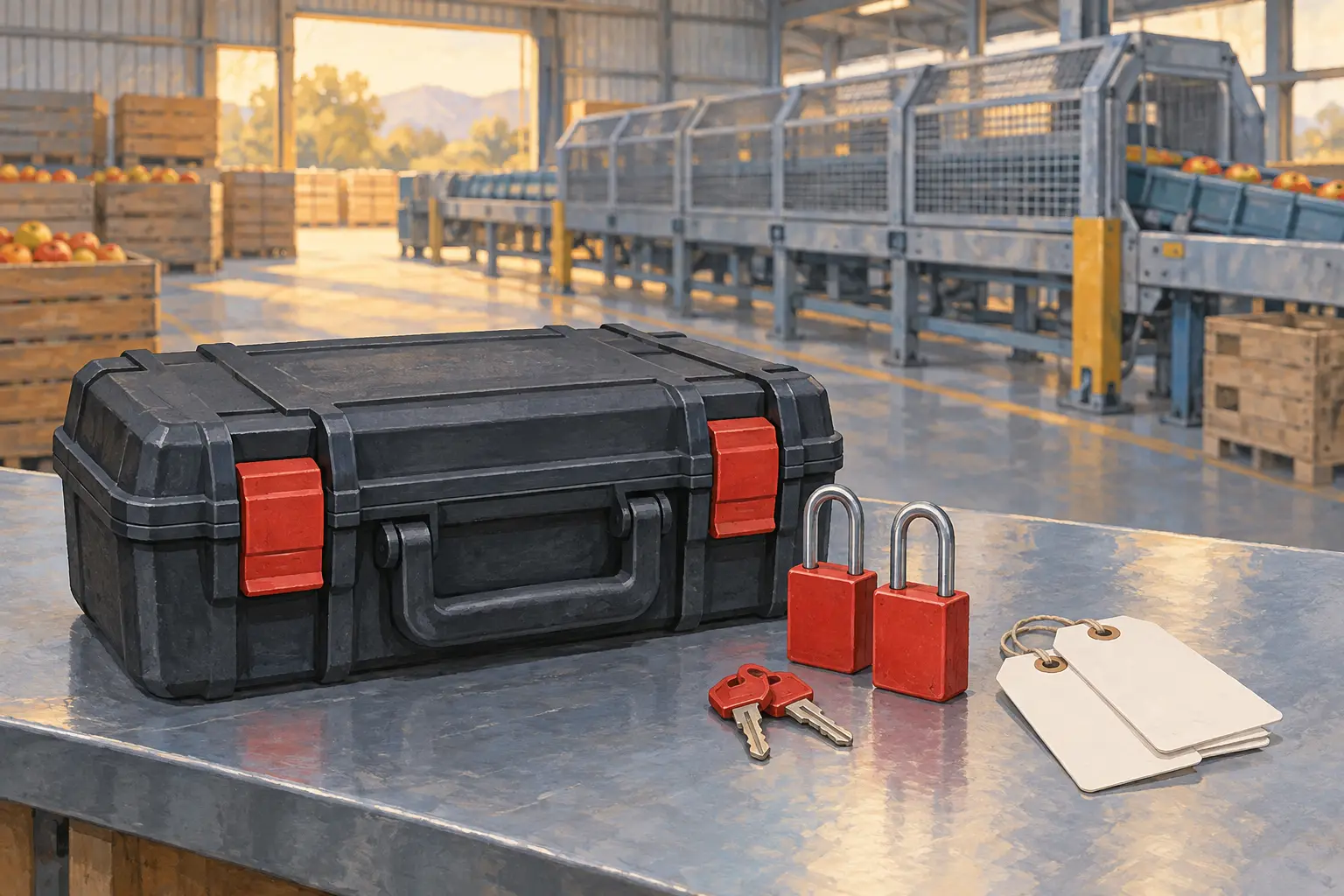
Featured image: AI-generated illustration of a fictional lockout kit; it does not demonstrate an installed isolation system.
About the author
Hari Yellina is Chief Executive Officer at Orchard Tech. View his profile and more articles.