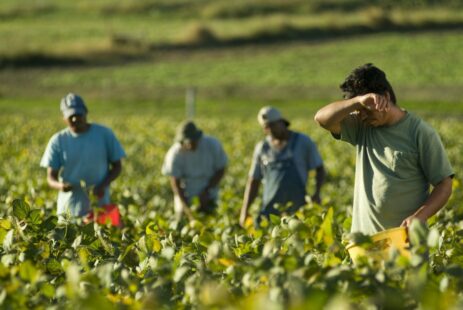
According to a new study from the Institute of Physics, billions of working hours have been lost globally due to extreme heat. Exporters are concerned that as the world warms, the trend will intensify. Excessive heat and humidity cost the economy more than 675 billion labour hours per year. The study reveals that annual worker losses will be far higher than originally projected. According to the data, these losses mostly affect agriculture and construction, but they also harm a variety of other industries. Globally, the cost of the lost production due to high heat exceeds 2.1 trillion dollars in purchasing power. It appears that ten per cent of output capability is wasted due to the indignities of working outside.
According to studies, approximately 30% of those costs may be recovered by rescheduling work hours during cooler hours of the day. The labour loss estimates are limited to workers in agriculture, fisheries, forestry, and construction. However, these sectors account for a significant percentage of the general working population in many regions, with approximately 69 per cent of workers in low-income countries employed in agricultural and other primary-sector occupations. Excessive heat at work is hazardous to one’s health; it limits a worker’s bodily functions and capacities, as well as his or her job capacity and productivity. Temperatures above 24–26°C have been linked to lower labour output.
A person operating at moderate work intensity loses 50% of his or her functional ability at 33–34°C. Heatstroke can occur as a result of severe heat exposure, and can potentially be fatal. Workers from all industries are affected, but certain vocations are particularly vulnerable because they require more physical effort and/or take place outside. Agriculture, environmental products and services (natural resource management), construction, garbage collection, emergency repair work, transportation, tourism, and sports are all examples of such employment. Indoor industrial employees are also at risk if the temperature rises too high.
Heat stress may also function as a motivator for agricultural labourers to relocate to cities or other countries in pursuit of better opportunities. Although a variety of factors influence migration decisions (e.g., inequality, a lack of opportunities or social ties, wars, and other security concerns), heat stress is increasingly becoming a driving force behind the international movement. In recent years, higher levels of heat stress have been linked to increased out-migration, implying that households consider climate conditions when making migration decisions.
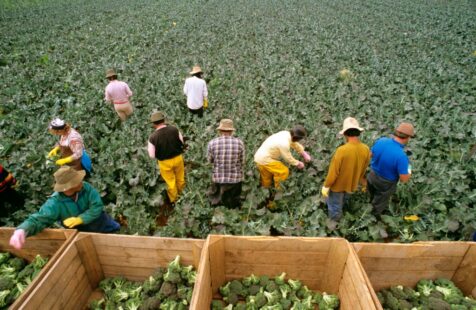
In January 2021, the Morrison government bestowed upon the farmers relief by providing them the temporary relaxation of student visas. Due to the pandemic and other unavoidable circumstances, various Australian industries were badly suffering from a shortage of labour. Amidst this, the agricultural industry was badly hit. Ernst &Young forecasted a labour gap of even […]
Read More →
Following an Australian Government announcement today calling for public comment on the topic, Australia’s $2.6 billion organic business is celebrating a milestone in establishing a statutory standard for use of the term “organic.” Minister for Agriculture David Littleproud, a long-time supporter of improving and streamlining Australia’s organic regulatory framework, made the announcement, which will allow […]
Read More →
In fresh news in the horticultural world, the members of the agricultural domain are calling for a trial of the newly announced agricultural visa. This novel endeavour is attempting to battle the labour shortages that have been caused due to the pandemic. Moreover, the government officials want it to come into effect before the end […]
Read More →