
Last fact-checked: 29 August 2026. This page gives general information about Australian student visa work conditions and workplace rights. It is not personal migration or legal advice. Always check the conditions attached to the individual visa.
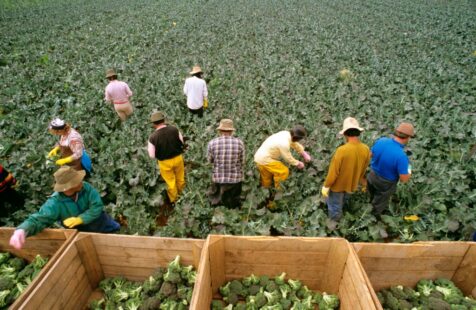
Agricultural work does not create a separate, ongoing exemption from student visa work limits. Historical announcements made during the COVID-19 period are still visible online, but they do not state the current rule.
The 2021 agriculture concession has ended
On 5 January 2021, the Australian Government announced a temporary pandemic measure allowing student visa holders working in agriculture to work more than the then-usual limit of 40 hours per fortnight during study periods.
That arrangement expired. The Department of Home Affairs’ current agriculture visa-options page states that the agriculture relaxation applied until 1 July 2023 and that restrictions were reintroduced from 1 July 2023 at 48 hours per fortnight. A 2021, 2022 or early-2023 article saying agriculture students could work beyond the cap is historical information, not a current permission.
The current condition 8105 rule
For most primary Student visa (subclass 500) holders subject to condition 8105, the current limit is 48 hours per fortnight while the course is in session. A fortnight is a period of 14 days beginning on a Monday. The limit applies to the student’s total work across all jobs, not 48 hours for each employer.
The current Migration Regulations 1994 should be read as a whole. Condition 8105(1) contains the older 40-hour wording, while condition 8105(2A) substitutes 48 hours for holders of subclass 500 visas and relevant bridging visas. Reading subclause (1) without subclause (2A) gives the wrong current number.
Condition 8105 also generally prevents work before the course starts. A limited exception applies where, at the time of applying for the student visa, the person held a substantive or bridging visa that permitted work. Because the actual visa grant and personal history matter, check the individual record rather than assuming this exception applies.
| Situation | General position under current guidance |
|---|---|
| Semester or term, including examinations | The course is in session. A student subject to condition 8105 must generally stay within 48 hours in each relevant fortnight. |
| Another course taken during a break that counts towards the main course | The course is treated as in session. The 48-hour limit generally continues. |
| Scheduled course break | Condition 8105’s 48-hour in-session cap does not apply while the course is genuinely not in session. Check the education provider’s official dates and all other visa conditions. |
| Mandatory work component registered as part of the course | Work specified as a course requirement when the course particulars were entered on CRICOS is excluded from the cap. Voluntary work experience, or hours beyond the registered requirement, counts towards the limit. |
| Masters degree by research or doctoral degree | The 48-hour cap does not apply to a student visa granted in relation to that research degree after the masters by research or doctoral course has started. This is not the rule for a masters by coursework student. |
| Course deferred, suspended, completed or affected by provider default | Home Affairs identifies limited circumstances in which a course is not in session. The facts and continuing visa validity must be checked; do not treat an informal gap in attendance as a scheduled break. |
Home Affairs also explains that paid and unpaid work experience generally counts towards the 48-hour limit unless it is the qualifying mandatory CRICOS course component. The Department’s current visa conditions list gives condition 8105 examples and definitions.
Count hours across the whole fortnight
Do not rely on a weekly or monthly average. Home Affairs illustrates the rule using consecutive 14-day periods beginning on a Monday. For example, working 30 hours in one week and 30 hours in the next can exceed the limit for the fortnight containing those two weeks, even if shorter weeks appear on either side. Keep one record that combines every job, rostered shift and counted work-experience hour.
Unpaid meal breaks are not work merely because they occur during a shift, but informal labels do not decide the issue. Home Affairs looks at matters such as attendance required by a roster or timesheet, being clocked on and remuneration shown on a payslip. Accurate rosters, time records and payslips help both the worker and employer check the total.
Use VEVO before accepting or rostering work
Use Visa Entitlement Verification Online (VEVO) to check the visa that is currently in effect and the conditions attached to it. A visa grant letter, ImmiAccount and the education provider’s official academic calendar can also help establish when the course starts and when a scheduled break occurs.
An employer should confirm work rights before employment and manage rosters so the worker is not asked to exceed the applicable limit. A worker with more than one job should tell each employer enough about other hours to prevent an unlawful roster. Neither side should rely only on an old screenshot, social-media post or the former agriculture concession.
Visa limits do not remove workplace rights
International students have the same minimum workplace rights and protections as other employees in Australia. The Fair Work Ombudsman’s international students fact sheet covers minimum pay, employment types, payslips, deductions and where to seek help. Visa status does not allow an employer to underpay a worker, withhold a payslip, disguise employment as volunteering or ignore workplace safety duties.
An employer cannot cancel a visa; only Home Affairs can grant, refuse or cancel visas. A student can contact the Fair Work Ombudsman for information about pay or workplace rights. Separate visa protections may be available to eligible people experiencing workplace exploitation, but those protections have requirements and should be checked against the current official guidance.
Get the right help for an individual situation
Course packaging, bridging visas, previous work rights, research degrees, suspension and mandatory placements can make an individual case more complex. Check VEVO and ask Home Affairs about visa conditions. Personal immigration assistance should come from a registered migration agent, an Australian legal practitioner or another person legally permitted to provide it. Home Affairs explains this in Who can help with your application.
Sources checked 29 August 2026: Department of Home Affairs agriculture visa options, condition 8105 guidance and VEVO; the current Migration Regulations 1994 on the Federal Register of Legislation; and the Fair Work Ombudsman international students fact sheet. Publisher: Orchard Tech. Review by: 30 November 2026, or immediately after a change to migration law or Home Affairs guidance.
Related Articles
Agriculture Loses Out Due to Tremendous Heat
Archive article. This article describes the period originally reported. It is not a current market, recruitment, health or regulatory update. For newer reading, visit the Orchard Tech Knowledge Centre and check the relevant official sources before acting. According to a new study from the Institute of Physics, billions of working hours have been lost globally […]
Read More →
Australia’s Organic Farms Retain the Title
Archive article. This article describes the period originally reported. It is not a current market, recruitment, health or regulatory update. For newer reading, visit the Orchard Tech Knowledge Centre and check the relevant official sources before acting. Following an Australian Government announcement today calling for public comment on the topic, Australia’s $2.6 billion organic business […]
Read More →
Horticulture Labour Shortage at Its Highest
Archive article. This article describes the period originally reported. It is not a current market, recruitment, health or regulatory update. For newer reading, visit the Orchard Tech Knowledge Centre and check the relevant official sources before acting. The ongoing pandemic and the shortage of seasonal workers and backpackers that are arriving in Australia has created […]
Read More →