
Packing-Shed Noise: Check Exposure Before Choosing Earmuffs
• Hari Yellina
A packing shed can sound different when the grader, conveyors and other equipment are operating together. Buying a box of earmuffs does not establish what each worker is exposed to or whether the controls are suitable for the shift.
For Victorian packing sheds, start with the work pattern and the sources of noise. Then decide what can be changed at the source, what needs assessment and what hearing protection is still required.
Understand what the Victorian exposure standard measures
WorkSafe Victoria’s Noise: Safety basics describes two parts to the workplace noise exposure standard: 85 dB(A) averaged over eight hours and a peak level of 140 dB(C), measured at the employee’s ear position. A brief reading beside one machine is not automatically a worker’s exposure across the day.
The same guidance identifies raised voices at a distance of one metre and ringing ears or reduced hearing after work as warning signs. These are reasons to investigate, not a substitute for an exposure assessment. Where needed, obtain an assessment from a qualified person.
Describe the actual shift before arranging measurements
Prepare a task list that follows the worker: time at the grading line, movement to other stations, cleaning tasks and breaks away from noise. Include the busiest operating conditions and any longer shifts. Give the assessor this information so the assessment reflects the work people actually do.
WorkSafe’s hearing protection guidance says employers must determine exposure where it is uncertain whether the standard is or may be exceeded. The determination must not discount exposure because a worker wears hearing protectors.
WorkSafe also published a noise survey in June 2026 to help employers, employees and health and safety representatives identify noise sources and possible improvements. Use it to structure the conversation with the crew. A completed survey identifies issues; it does not itself measure exposure.
Turn each noise source into a control decision
The Victorian control sequence starts with eliminating the noise source, then quieter equipment or engineering controls, followed by administrative controls and hearing protection. Apply higher-level controls so far as reasonably practicable. The Noise compliance code explains the framework and its application.
For each source, ask a specific question: can the noisy task be removed, can a quieter process do the job, or can equipment be enclosed or isolated? Have machinery changes assessed by a competent person so noise improvements do not compromise guarding, ventilation, maintenance access or other safety controls.
Hypothetical example: staff report a new rattling sound from a section of the grading line. The useful next step is to report it, follow the site’s safe arrangements for the equipment and have the cause assessed. Simply issuing a stronger class of earmuff leaves the change in the machine unexplained.
Give each proposed improvement an owner, a due date and a way to check whether it worked. Reassess when operating conditions change; an old assessment may not describe a new line layout or a longer period at a noisy station.
Select protection for the assessed exposure and the person
Where hearing protection is required, selection needs to match the exposure and the work. WorkSafe highlights fit, comfort, hygiene, compatibility with other protective equipment and the ability to hear warnings. Excessive attenuation can also make communication difficult.
Show each worker how to fit and care for the selected protector using the manufacturer’s instructions. Check fit with the other equipment they actually wear. Keep replacements accessible, and make the areas or tasks requiring protection clear.
Plan how instructions will be communicated without workers repeatedly removing protection in a noisy area. Review this alongside the shed’s forklift and pedestrian routes; hearing a vehicle is not a substitute for separating people and vehicle movements.
Include hearing tests and labour hire coordination
WorkSafe states that when hearing protection is needed to bring exposure below the standard, employers must provide audiometric testing within three months of starting the relevant work and at least every two years. Its guidance also addresses testing following a reasonable request from the employee’s health and safety representative.
For a labour hire crew, the host and provider should confirm the tasks and exposure information, equipment, instruction and arrangements for any required testing before placement. Identify who will organise each action and check completion. An allocation on a checklist does not by itself discharge either organisation’s duties.
Bring the outcome into the site induction: the relevant areas, the controls, the protection required and how workers report a problem. The practical deliverable is a documented decision about the work and its controls, supported by the assessment where required.
Scope: Victorian workplace guidance, with official sources checked on 28 September 2026. This article is not a noise measurement or a specification for a particular hearing protector.
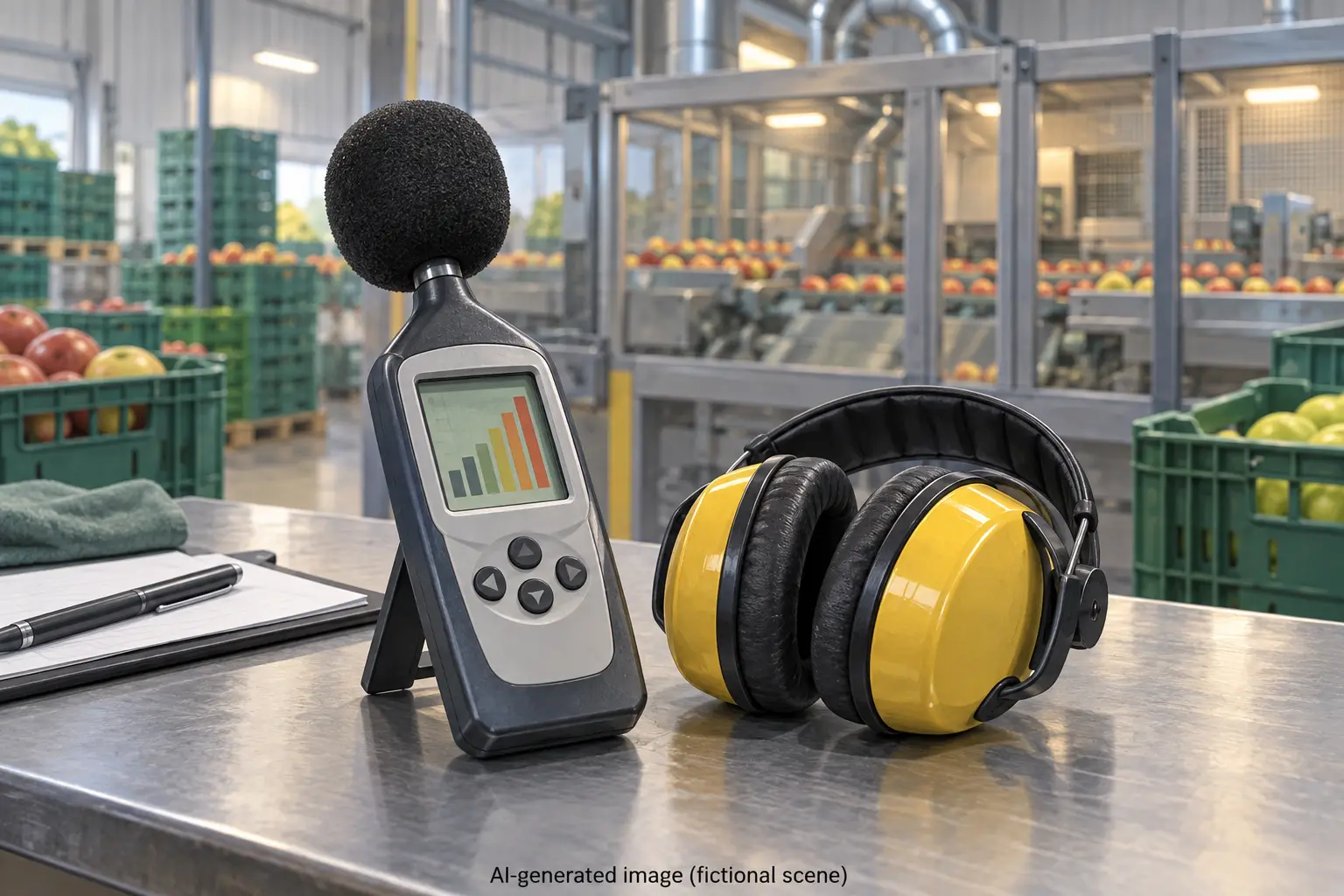
Featured image: AI-generated illustration of a fictional sound-level meter and hearing protection in a packing shed; the display is not a real measurement.
About the author
Hari Yellina is Chief Executive Officer at Orchard Tech. View his profile and more articles.