
Cherry Harvest Quality: What Picking Crews Need to Know Before the First Bin
• Hari Yellina
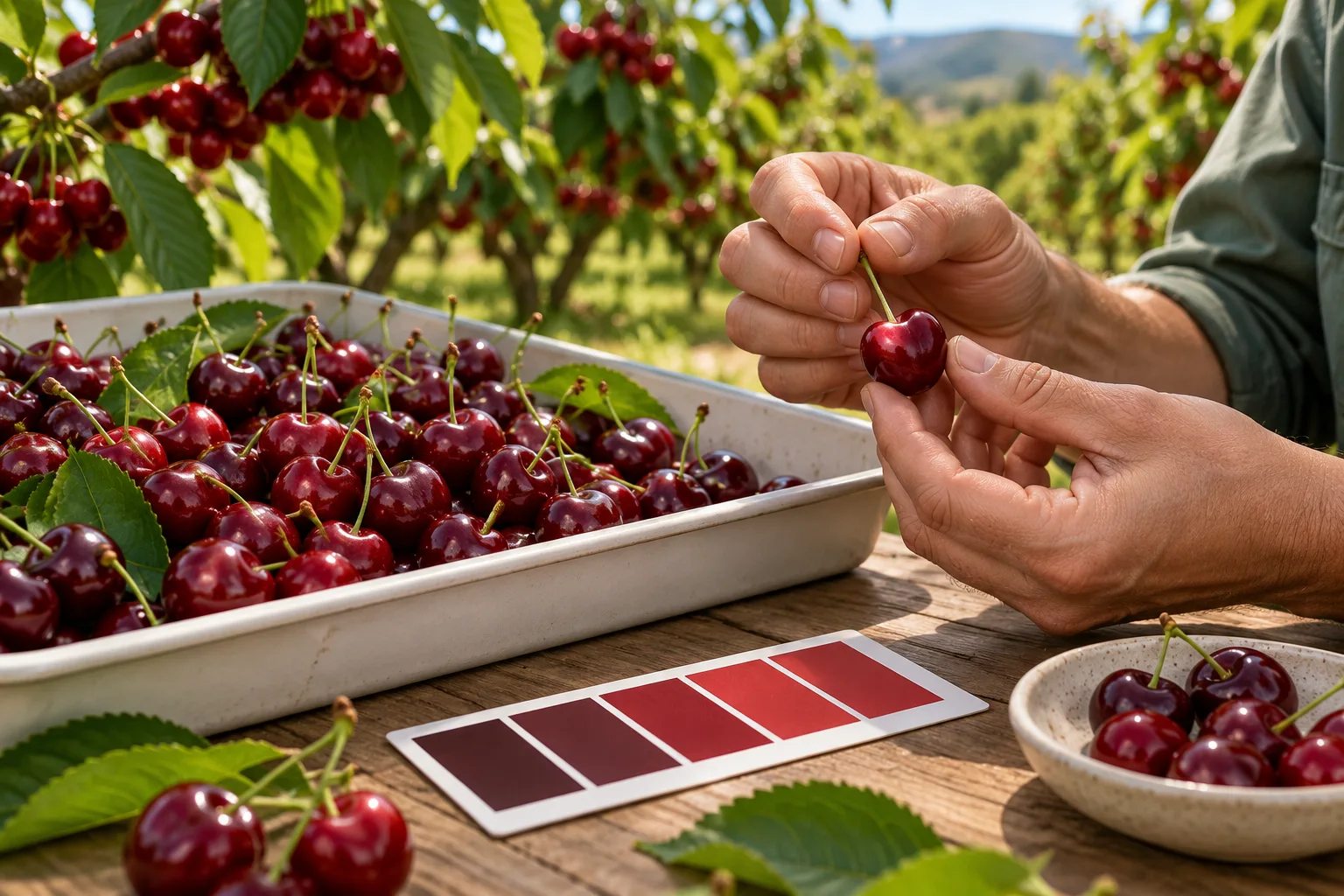
The first tray of cherries can reveal a misunderstanding that affects the rest of the day. One picker may be selecting by colour, another by size, while the supervisor assumes both have understood the same instruction. A short, practical quality briefing helps expose those differences before the first bin is filled.
Use the grower’s current specification
In March 2026, Hort Innovation announced a three-year project to develop a national cherry quality standard. It is a development project, not evidence that a new mandatory national picking standard already applies.
Crews still need the specification for the particular block, variety and market. Ask the grower or quality manager to approve the examples used in the briefing. Avoid importing a colour rule or size threshold from another orchard because it worked there last season.
Show the decision with actual fruit
Prepare a small demonstration tray containing fruit the grower has identified as acceptable, unacceptable and uncertain. Explain the reason for each decision. Show where rejected fruit goes and who answers a question when the next piece does not resemble the example.
Then ask workers to sort a fresh sample and explain their choices. This is a proposed training exercise, not an official grading test. Its purpose is to find unclear instructions while there is still time to correct them. Use language support where needed and repeat the demonstration when the specification changes.
Include the journey from tree to collection point
Hort Innovation’s review of international cherry handling practices highlights the importance of harvest handling, postharvest handling and storage. Damage may only become apparent later, so a clean-looking tray at the tree does not tell the whole quality story.
Demonstrate the approved picking and transfer method using the equipment the crew will actually use. Explain fill limits, where containers wait and how the collection team identifies fruit from each block. The grower or packhouse should set the cooling and transfer requirements; a generic article cannot supply a universal temperature or waiting time.
Make feedback specific enough to act on
Consider this hypothetical example: the packhouse reports excess damaged fruit from a morning lot. Instead of telling every picker to “be more careful”, the supervisor checks the lot identity, observes transfers and compares the condition at collection and arrival. That creates a useful question about the process without deciding in advance who caused the damage.
Agree on a simple feedback message: what was found, which lot it concerns, what needs checking and when the supervisor will report back. Keep one authorised version of any revised instruction so different crews do not receive conflicting advice.
Quality training belongs alongside the wider farm induction. Give supervisors enough time to demonstrate, observe and answer questions before production gathers pace.
About the author
Hari Yellina is Chief Executive Officer at Orchard Tech. His articles cover agricultural workforce planning and practical workplace responsibilities.
Sources checked 26 October 2026. General information; apply current requirements to the actual workplace and circumstances. Featured image: AI-generated illustration of a fictional scene.
Related Articles

Europe Ideal for Fresh Lychee Trade but Logistics an Issue
Archive article. This article describes the period originally reported. It is not a current market, recruitment, health or regulatory update. For newer reading, visit the Orchard Tech Knowledge Centre and check the relevant official sources before acting. According to legend, the first lychee tree was planted over 200 years ago in the Thanh Ha District […]
Read More →
Banana Freckle Disease Continues to Spread in Australia
Archive article. This article describes the period originally reported. It is not a current market, recruitment, health or regulatory update. For newer reading, visit the Orchard Tech Knowledge Centre and check the relevant official sources before acting. Archive context. This is an early report of the 2022 Northern Territory detections, not a current case count. […]
Read More →