
From Picking Bag to Bin: Where Apple Bruising Happens
• Hari Yellina
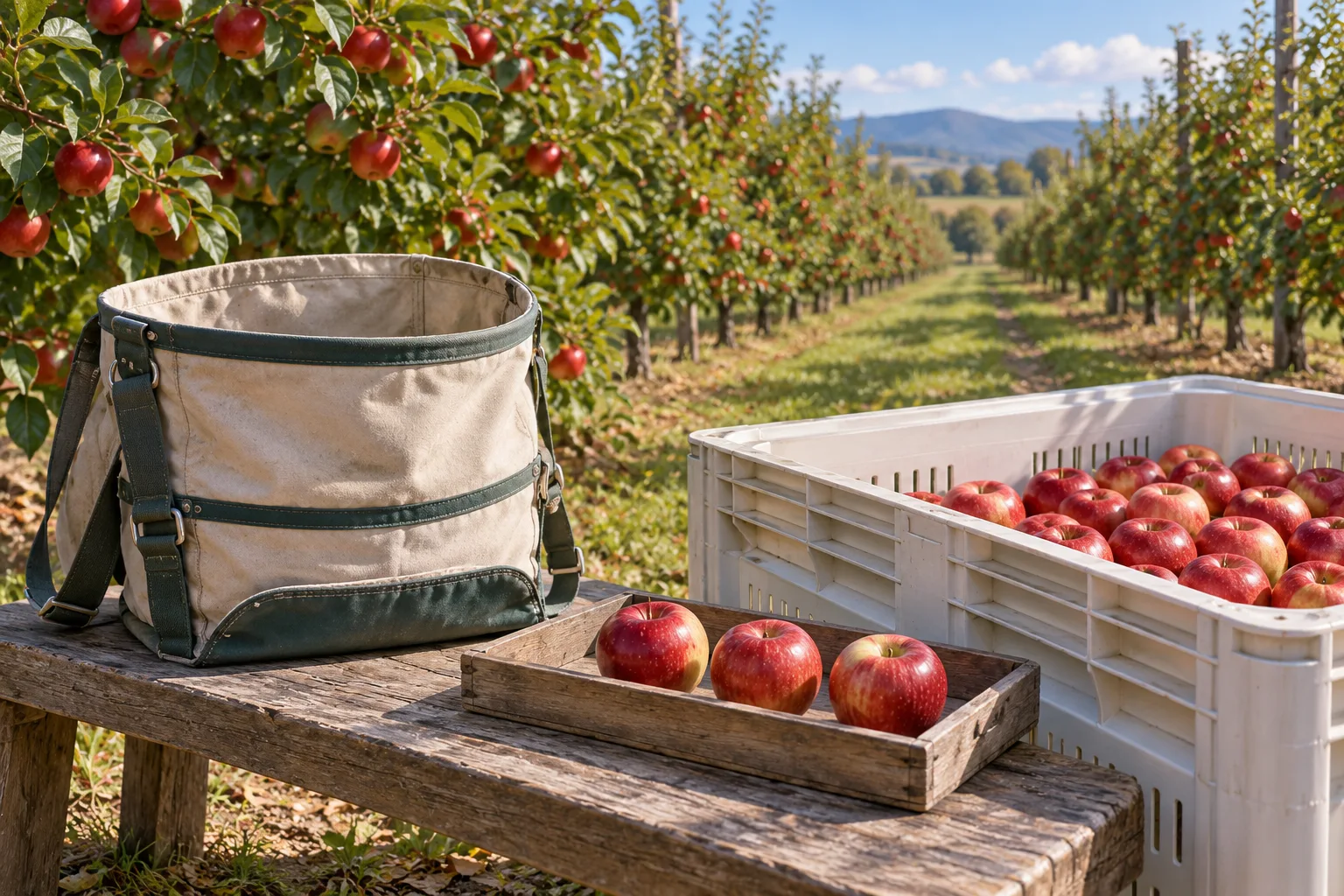
Bruising found at the packhouse can start at several points between the tree and the receiving area. Before attributing the problem to a picker, follow the fruit through the whole handling chain.
The useful question is where damage first appears, and what changes between one handover and the next.
Watch the bag-to-bin transfer
APAL’s harvest guidance identifies fruit-to-fruit contact during placement in picking bags and emptying into bins as sources of bruising and stem punctures. It also points to rough tracks and rough machinery handling as significant risks. Fruit maturity can affect susceptibility to damage.
Have the supervisor demonstrate the orchard’s approved method with the actual bag and bin. Observe a complete cycle, including how the worker approaches the bin and handles the bag as it empties. A demonstration at induction is a starting point; observing the method during normal work shows whether it remains practical.
Check the bin and the route
In Summer management for quality, APAL advises checking wooden bins for loose construction, nails and splinters, and highlights smooth tracks and gentle bin handling. These are parts of the same quality process as careful picking.
Walk the planned collection route before the first full bins move. Identify the places where a driver needs further instructions or where the route itself needs attention. Keep these checks within the farm’s traffic and machinery safety arrangements; a fruit inspection should never put someone beside moving equipment.
Tell collection and receiving teams how to report a damaged bin. A known defect needs a clear decision about removal from use or repair, rather than a message passed informally to the next driver.
Use a small, traceable quality check
A proposed check is to follow a small number of clearly identified lots through normal operations. Agree with the quality manager when to inspect the fruit, what to record and how to keep samples comparable. Bruising may become easier to see later, so timing matters.
Record the block, variety, picking period, bin identity, inspection point and observed damage. Keep the record focused on the process. Photographs can help the quality discussion if they show the fruit clearly and are linked to the correct lot.
Investigate the change, then test the correction
In a hypothetical example, a sample looks acceptable at collection but shows more damage after transport. That finding directs attention to the movement and receiving stages; it does not by itself prove which action caused the problem. Observe those stages, make a justified change and compare the next suitable sample.
Give the resulting feedback to everyone involved, including pickers and drivers. “This bin edge needs repair” or “this section of the route needs attention” is more useful than a general instruction to hurry less.
Keep fruit quality and worker safety together. Our manual-handling guide and forklift and pedestrian route guide address the people moving the fruit.
About the author
Hari Yellina is Chief Executive Officer at Orchard Tech. His articles cover agricultural workforce planning and practical workplace responsibilities.
Sources checked 26 October 2026. General information; apply current requirements to the actual workplace and circumstances. Featured image: AI-generated illustration of a fictional scene.
Related Articles
Europe Ideal for Fresh Lychee Trade but Logistics an Issue
Archive article. This article describes the period originally reported. It is not a current market, recruitment, health or regulatory update. For newer reading, visit the Orchard Tech Knowledge Centre and check the relevant official sources before acting. According to legend, the first lychee tree was planted over 200 years ago in the Thanh Ha District […]
Read More →
Banana Freckle Disease Continues to Spread in Australia
Archive article. This article describes the period originally reported. It is not a current market, recruitment, health or regulatory update. For newer reading, visit the Orchard Tech Knowledge Centre and check the relevant official sources before acting. Archive context. This is an early report of the 2022 Northern Territory detections, not a current case count. […]
Read More →