Labour Hire Safety Responsibilities in Victoria: Provider and Host Duties
• Hari Yellina
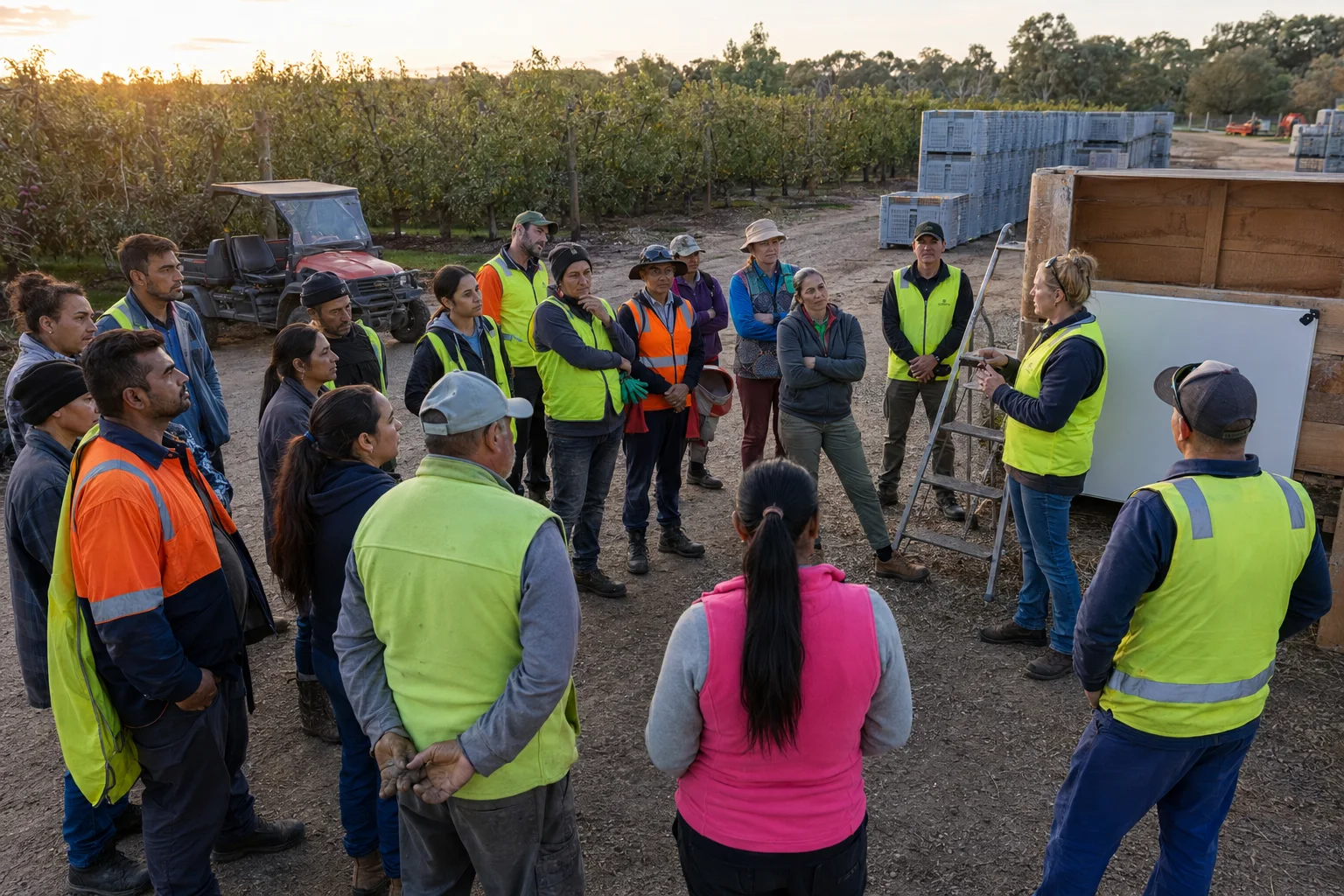
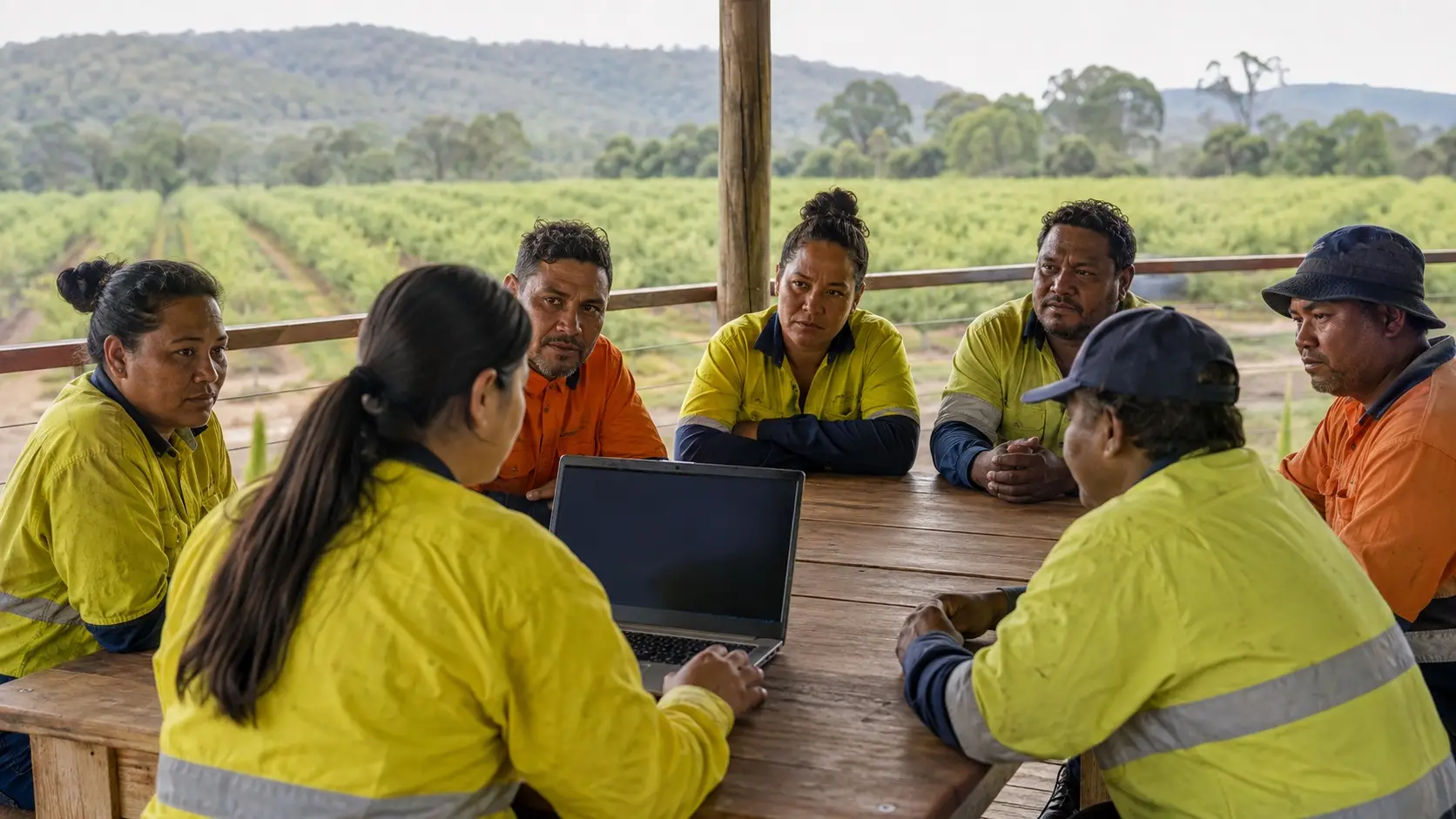
Illustrative AI-generated photograph. The people and workplace shown are not specific Orchard Tech workers, clients or sites.
Last reviewed: 4 September 2026. This article provides general Victorian occupational health and safety information. It is not legal advice and does not replace a site-specific risk assessment or WorkSafe guidance.
Labour hire safety responsibilities in Victoria are shared. The labour hire provider employs the worker, while the host usually directs the day-to-day work and controls the workplace. Victorian law treats the host as an employer of the labour hire worker for occupational health and safety purposes, but that does not remove the provider’s duties.
The practical rule is simple: the provider and host must consult, cooperate and coordinate, so far as is reasonably practicable, before placement and throughout the work. They must also consult with workers about health and safety. A contract can allocate tasks, but it cannot contract out of legal duties.
Why shared safety duties matter
Gaps appear when each party assumes the other has dealt with a risk. The provider may assume the host has checked a worker’s competency. The host may assume the provider has explained a chemical hazard or supplied PPE. The worker can then arrive without the information, training, equipment or supervision needed for the task.
WorkSafe Victoria says consultation and coordination should begin before a worker is placed. It should continue for the whole placement and be revisited if the job, location, equipment, roster or workplace conditions change.
What the labour hire provider should bring to the arrangement
The provider needs enough information to decide whether the placement is suitable and safe. Before placement, this commonly includes:
- understanding the host, the worksite and the proposed tasks;
- visiting and assessing the workplace with a knowledgeable host representative;
- identifying hazards, controls and actions that must be completed before work starts;
- matching the worker’s experience, qualifications, licences and capabilities to the role;
- addressing any skill or knowledge gaps through suitable information, instruction or training;
- giving the worker a reliable provider contact and a way to raise concerns;
- monitoring the placement and the worker’s health and safety; and
- keeping appropriate health and safety information and records.
WorkSafe recommends that a trained and competent provider representative carry out the workplace risk assessment with someone from the host who knows the job and site. A generic questionnaire completed remotely may miss the equipment, terrain, traffic or production pressures that shape the real risk.
What the host should bring to the arrangement
The host generally has the strongest direct knowledge of the site and control over daily operations. WorkSafe’s guidance for labour hire hosts includes:
- defining the job, tasks and work location accurately;
- identifying hazards and implementing risk controls;
- providing a safe workplace and safe means of entry and exit;
- providing site-specific induction, instruction, training and supervision;
- checking the worker can perform the task safely;
- providing necessary equipment and PPE as agreed;
- introducing workers to safety contacts and health and safety representatives;
- explaining emergency, hazard and incident-reporting arrangements;
- consulting with labour hire workers about matters that affect their health or safety; and
- not changing the role or location without consulting the provider and worker.
The host should give the provider reasonable access to the workplace and relevant safety information so the provider can meet its own duties.
What the provider and host need to decide together
Shared duties work best when practical responsibilities are written down. Before the first shift, agree:
| Safety question | What should be agreed |
|---|---|
| Who completes the site assessment? | The competent people attending, what they will inspect, and how actions will be closed. |
| Who provides induction and task training? | The content, language or communication support, competency check and record. |
| Who supplies PPE and equipment? | The required standard, issue, fit, maintenance, replacement and any prohibition on charging workers. |
| Who supervises the work? | The named supervisor, suitable supervision level and who covers absences or other shifts. |
| How are hazards reported? | The immediate site contact, provider contact, response time and formal recording process. |
| What happens after an incident? | First aid and emergency action, scene control, notification assessment, investigation, worker support and corrective actions. |
| What triggers a review? | Changes to tasks, plant, chemicals, location, weather, hours, supervision or worker capability. |
This allocation avoids duplication while making sure nothing is omitted. Each party still remains responsible for meeting its own legal duties.
A practical pre-placement safety sequence
1. Describe the real job
Break the role into tasks rather than relying on a broad title such as “farm hand” or “process worker”. Identify the plant, manual handling, chemicals, vehicles, work at height, weather exposure, fatigue and other foreseeable hazards.
2. Walk through the workplace together
The provider and a host representative who understands the work should inspect the actual site. Speak with people who perform the task and with the relevant health and safety representative where applicable.
3. Record controls and unresolved actions
State what must be fixed before placement, who owns the action and when it is due. WorkSafe says a provider should work with the host to establish an effective system, tightly manage the placement, or not place workers if acceptable safety arrangements cannot be established.
4. Match the worker to the role
Check the worker’s licences, experience and ability against the actual tasks. If there is a gap, decide whether suitable training and supervision can close it before the worker performs the task.
5. Deliver an understandable induction
Cover the work area, hazards, controls, emergency arrangements, amenities, reporting contacts, prohibited tasks and stop-work expectations. Information should be understandable to the worker, including in another language where appropriate. A signed attendance record supports the process but is not proof that the worker understood or can perform the task safely.
6. Check the first shift
Confirm the work matches the agreed role, the supervisor is present, required controls are operating and the worker knows how to contact both parties. Early follow-up is especially important where the worker is new to the site, task or industry.
7. Monitor and review
Consult workers and respond to hazards, near misses, fatigue, injuries and changes. Do not wait for the end of a placement to discover that the job has changed.
Examples in Victorian horticulture
Machinery or vehicle changes
If a worker was placed for picking and packing but is asked to operate a forklift, tractor or elevated work platform, pause the change. The host and provider need to confirm the role, licences, competency, training, supervision and controls before the new task starts.
Weather and ground conditions
Heat, smoke, wind, rain or waterlogged ground can change the risk of an orchard task. Review the controls, communication, breaks, hydration, traffic routes and whether work should continue. A plan written at the start of the season may not be suitable after conditions change.
Chemical work
Do not assume a general farm induction prepares a person to mix, apply or work around hazardous chemicals. The parties need to confirm the task, relevant training or authorisation, product information, PPE, exclusion periods, hygiene and supervision before exposure.
Hazard alerts are an early warning, not the final safety record
A worker’s phone photo or short message can help alert a manager to a broken branch, damaged equipment, standing water or another hazard. It should trigger the site’s immediate response and the organisation’s normal hazard, incident and investigation processes. It does not replace emergency contact, a notifiable-incident assessment, the hazard register or formal corrective-action records.
Workers should be told to call 000 for an immediate threat to life and to follow the site’s emergency procedure.
Frequently asked questions
Is the host responsible for labour hire worker safety in Victoria?
Yes, but not alone. The host is taken to be an employer of the labour hire worker for OHS purposes. The labour hire provider also has duties. Both must consult, cooperate and coordinate, so far as is reasonably practicable.
Can a contract make one party responsible for all safety?
No. A contract can sensibly allocate practical activities, but it cannot exclude either party’s legal duties.
When should the provider visit the workplace?
WorkSafe guidance says a trained and competent provider representative should visit and assess the workplace before sending a worker there, accompanied by a host representative who knows the job and site.
Who reports a notifiable incident to WorkSafe?
The legal duty remains with the employer or self-employed person who has management and control of the workplace where the incident occurred. WorkSafe says this is likely to be the host in many labour hire arrangements, but the parties should confirm the process and cooperate immediately. Check the facts and current notification requirements for the incident.
Discuss a labour hire placement with Orchard Tech
For a workforce enquiry, provide the worksite, tasks, timing, worker numbers, required skills or licences and known hazards. Orchard Tech will review the information and discuss whether it can assist. The host and provider each retain their legal responsibilities.
Tell us about your workforce requirements
Primary sources checked 4 September 2026: WorkSafe Victoria, Labour hire hosts; WorkSafe Victoria, Duty on labour hire providers and host employers to consult, cooperate and coordinate; WorkSafe Victoria, Labour hire provider duties before a labour hire worker is placed; Labour Hire Authority, Host.