Visa Delays Put Harvest Plans Under Pressure: How Growers Can Prepare
• Hari Yellina
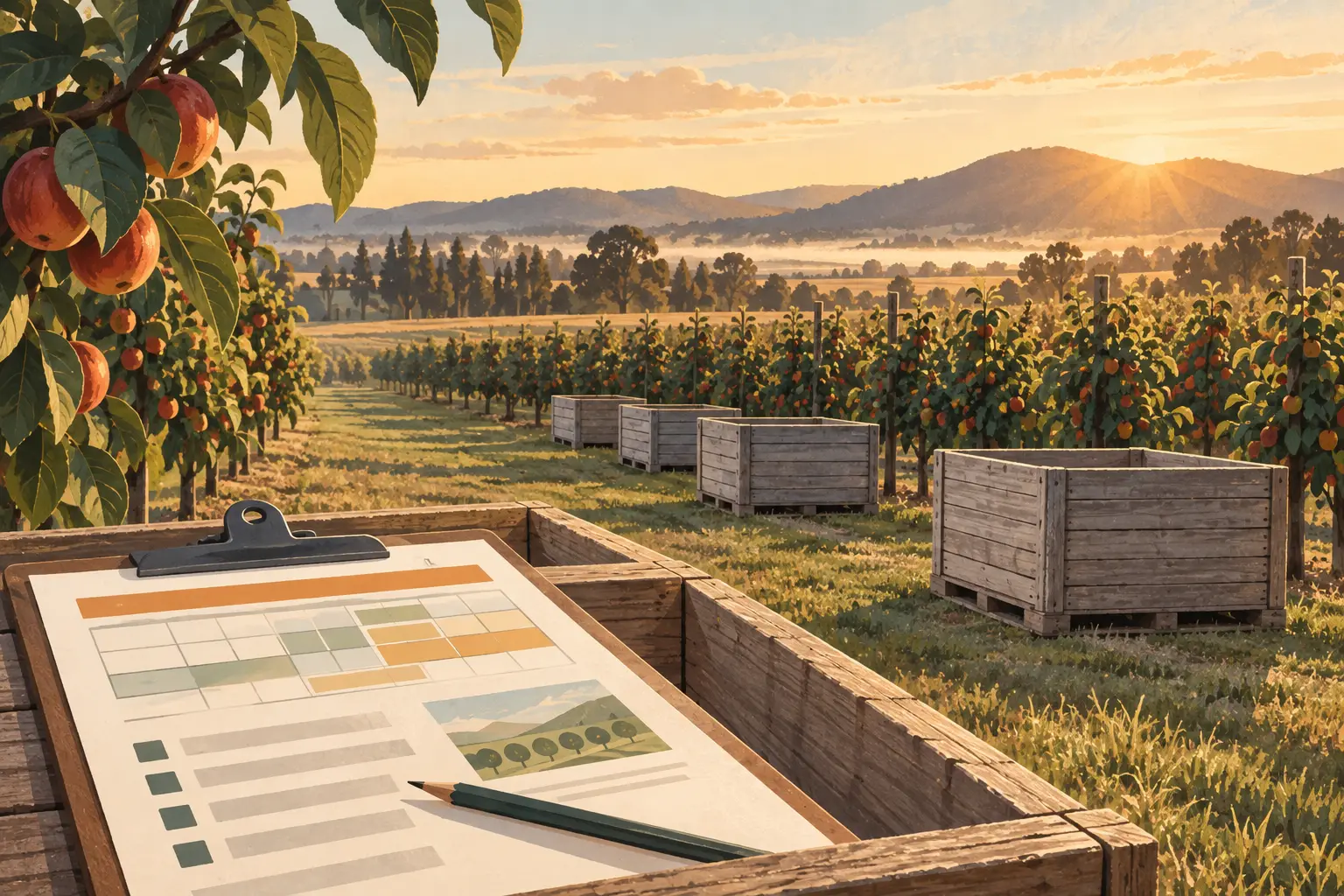
AI-generated illustration. Fictional scene; no actual workers or worksite are shown.
Australia | Sources checked 15 September 2026
Australian growers approaching harvest face an uncomfortable gap between the workers they hope will arrive and the people they can confidently put on a roster.
ABC Rural reported on 14 September that farmers and harvest contractors were concerned about visa delays ahead of seasonal work. Victorian contractor Matt Bourke told the broadcaster he had planned to recruit 30 staff, including overseas workers, but was still waiting on working holiday visa approvals. His experience illustrates the uncertainty facing individual businesses; it does not establish the size of a national labour shortfall. Read the ABC report.
For an orchard, the practical question is immediate: how much of the harvest plan depends on people whose arrival is still uncertain?
Two different pressures on recruitment
Home Affairs lists application pauses for many countries in the first Work and Holiday visa stream, subclass 462. Check the current country status before relying on a prospective new application.
Processing is a separate issue. On its first subclass 462 visa page, updated 11 September 2026, Home Affairs says it is prioritising onshore Working Holiday Maker applications and some offshore decisions may take several months. It advises applicants to avoid flight bookings and travel, work or study commitments before a grant. Home Affairs processing advice.
An application lodged successfully is therefore still an uncertain input to a harvest schedule. Our working holiday visa pause explainer separates application restrictions from checks on an existing worker’s conditions.
Build the roster around evidence
A useful planning sheet separates people who are available locally, people with granted visas but unconfirmed arrival arrangements, and people still awaiting a visa decision. Record the expected start and finish dates alongside the evidence supporting them.
Check current visa conditions through Visa Entitlement Verification Online (VEVO). Registered employers can make these checks with the visa holder’s permission. Then confirm availability directly: permission to work does not tell a supervisor whether someone has transport to the farm or has accepted another job.
Consider a hypothetical orchard needing 20 pickers at the start of a block. Twelve are available locally, while eight are overseas awaiting decisions. Planning against all 20 hides an eight-person exposure. Showing the two groups separately makes it easier to decide when to seek additional workers or revise the picking sequence.
Check the jobs that could hold up the whole crew
Headcount alone can conceal a critical vacancy. A full picking crew may still be difficult to deploy if the required supervisor or appropriately trained equipment operator is unavailable.
List each essential role, its required skills, the person expected to fill it and the fallback arrangement. Set a review date early enough to act. Avoid assigning an arbitrary deadline to Home Affairs; the deadline belongs to the farm’s own decision about when its backup plan must begin.
When discussing labour supply, ask which workers are confirmed, what remains conditional and who will communicate a change. Keep accommodation, transport and first-shift arrangements in the same conversation.
Leave room for a proper start
Last-minute recruitment also needs time for induction. Returning workers may know the crop but still need an explanation of changed routes, equipment or supervision. Orchard Tech’s farm induction guide provides practical prompts for Victorian hosts.
Use the next workforce review to identify the earliest exposed harvest date, the roles affected and the person responsible for following up. That gives the business a concrete decision to make while visa outcomes remain uncertain.
Workforce planning analysis based on sources checked 15 September 2026. The staffing example is hypothetical.
About the author
Hari Yellina is Chief Executive Officer at Orchard Tech. View his profile and more articles.