From Harvest Bin to Dispatch: Can Your Crew Trace the Produce?
• Hari Yellina
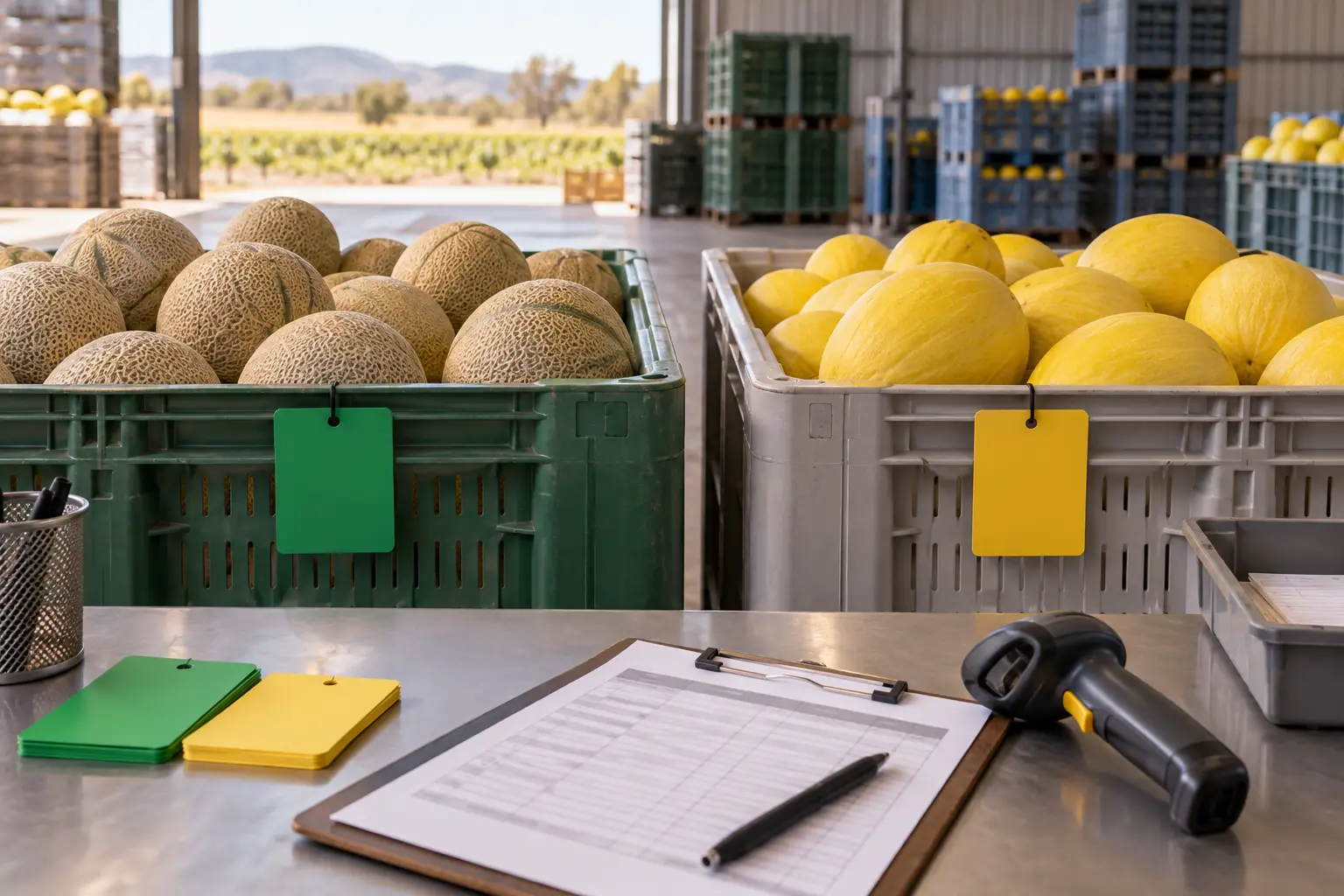
Featured image: AI-generated fictional illustration of melon lot identification.
A bin arrives at the shed with a clear tag. During a busy changeover, the tag is removed, the produce is combined with another delivery and the dispatch sheet records only the total quantity. The team still knows what the produce is, but the connection to its origin has weakened.
Produce traceability depends on the handover as much as the label. Picking and packing crews need to understand how to keep the connection intact when bins move, lots are combined and a different shift takes over.
Which national standards are relevant?
The primary production and processing standards addressed by FSANZ’s horticulture traceability guidance cover berries, leafy vegetables and melons. Producers need to identify who received their produce and where it went. Processors need to identify suppliers and recipients; the berry requirements also address the growing location.
Processing can include activities such as washing, sorting, packing and storing. Check the relevant commodity standard and your state or territory regulator’s requirements for the actual operation. This article does not extend those particular standards to every fruit, nut or vegetable.
FSANZ recommends information such as supplier and customer details, produce descriptions, dates, lot identification and quantities to support effective traceability. The practical block and handover method below is an operational recommendation, rather than a claim that every suggested field is a universal legal minimum.
Follow one fictional melon lot
Imagine melons from Block A harvested on Monday into six bins. The farm assigns a lot code, A-MON-01, and records the code against the harvest date and block. At receiving, the shed confirms six bins and records the same code.
Two bins from Block B arrive later. If the shed packs the produce separately, the records should keep each source connected to its packed output. If produce from both lots is combined, the packed lot needs a recorded connection to both inputs. Creating a fresh packing code without that connection breaks the story at the point where it matters.
At dispatch, the record links the packed lot to its recipient, date and quantity. These codes are invented examples and are not official formats.
Make the handover easy to perform
- At picking: identify who assigns the lot and checks the tag before the bin leaves the block.
- At receiving: reconcile the incoming identifier and quantity with the receiving record.
- At packing: preserve source connections through repacking, mixing and changes of label.
- At dispatch: connect outgoing produce to the recipient and shipment details.
- At shift change: identify unfinished lots and any unresolved discrepancies.
Give the crew one worked example using the farm’s actual forms. Show where to find the identifier, where to record it and who to contact if it is missing. Demonstrating the process is more useful than simply telling new workers to maintain traceability.
What should happen to an unidentified bin?
Prepare a procedure for unclear or missing identification. The crew should flag the bin and refer it to the responsible supervisor under the site’s food-safety process, rather than guess a code or silently merge it with known produce. Record how the uncertainty was resolved.
A colour can help the team recognise a lot, but colour alone becomes ambiguous when several blocks, dates or shifts use the same colour. Keep the recorded identifier as the connection between the physical produce and its records.
Try a handover exercise before the busy period
Choose one dispatched lot and ask a team member to reconstruct its inputs and recipient from the records. Then choose an incoming lot and identify every packed output and destination linked to it. Record the gaps the exercise finds and assign someone to correct the process. This is a recommended internal exercise, not a stated statutory completion deadline.
Build it into the farm induction for people who handle tags and records. Traceability works when the next person can follow the lot without relying on the previous shift’s memory.
Research checked 2 October 2026. The melon scenario is fictional. Confirm commodity and local regulatory requirements for your business.
About the author
Hari Yellina is Chief Executive Officer at Orchard Tech. View his profile and more articles.