
Almonds and Health Benefits in a Nutshell
Updated • Hari Yellina
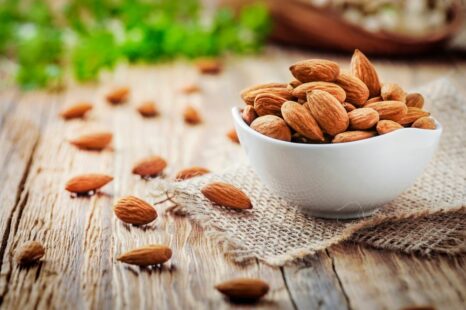
Almonds have been suggested to reduce heart disease risk by lowering total and LDL cholesterol and exerting anti-inflammatory and antioxidant effects. Plant sterols as found in almonds may interfere with the absorption of cholesterol and bile acid, and the high amount of unsaturated fat in almonds favours an improved lipid profile, especially when this food replaces other foods high in saturated fat and refined carbohydrate. Almonds also contain phytonutrients that support the growth of beneficial gut microbes. Controlled trials have shown that general nut intake can decrease inflammation, promote healthy blood vessels, and reduce insulin resistance.
Interestingly, despite nuts being calorie-dense, research does not support a link between nut intake and weight gain. In fact, they have been associated with less weight gain and a lower risk of obesity, possibly because the fat and fibre content help to improve feelings of satisfaction and fullness. There is limited evidence examining the intake of almonds in large populations. Smaller controlled trials have looked specifically at almonds, but larger observational studies tend to examine nuts in general, because consumption of individual nuts is relatively low in the population. Observational studies looking at intakes of nuts have found a significantly lower risk of heart disease in those eating nuts at least four times a week.
The 2017 study Nut Consumption and Risk of Cardiovascular Disease followed three large US cohorts and found associations between more frequent nut consumption and lower cardiovascular and coronary-heart-disease risk. It analysed peanuts, tree nuts as a group and walnuts; the reported category results should not be presented as almond-specific effects. A separate Swedish cohort study, Nut consumption and incidence of seven cardiovascular diseases, examined associations with several cardiovascular outcomes. These were observational studies, so they cannot establish that eating nuts caused the differences in risk. This article is general information, not personalised dietary or medical advice.
Related Articles


Chestnut Production in Australia
Australia is a country that has a wide variety of nuts that are produced and then exported. Out of these nuts, chestnuts are a type that is favoured by the Australian citizens. Moreover, these nuts are produced in the south of Australia. The majority of the production occurs in Victoria. It is important to note […]
Read More →
Australia and the Nut Industry: An Overview (2020)
Nuts and seeds are an excellent source of protein, minerals and vitamins. Hence, the Australian Dietary Guidelines recommend that all individuals should include nuts in their everyday diet. Moreover, Australia is a country that focuses on its import and export of nuts. In fact, as of June 2020, approximately 230,225 tonnes of in-shell nuts were […]
Read More →