
Blueberry Rust in Tasmania: Current Status and Management
Updated • Hari Yellina
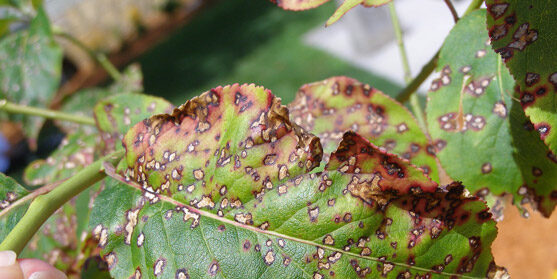
Last verified: 29 August 2026. Blueberry rust is established and widespread in Tasmania. It is no longer classed as a List A disease or covered by the former Tasmanian containment plan, but it remains an important crop disease that requires monitoring, hygiene and market-access planning.
Calling blueberry rust “uncontrollable” is inaccurate. The change in regulatory status did not mean growers should ignore the disease or that every blueberry property is infected. It reflected Biosecurity Tasmania’s conclusion that the former containment approach was no longer effective or justified after the disease became widespread. Growers can still reduce the risk of introducing and spreading blueberry rust on a property and must meet any conditions imposed by a destination market.
The current Tasmania position
Biosecurity Tasmania’s current blueberry rust page says the disease is no longer a List A disease and is not covered by a containment plan. This is a Tasmania-specific status. It must not be presented as a statement about every Australian state, territory, destination market or plant commodity.
The underlying Blueberry Rust Technical Review, finalised in July 2022, found the pathogen widespread and established in Tasmania. The review recommended immediate deregulation after the number and distribution of detections increased sharply in the 2021–22 season and the previous containment arrangements no longer delivered a market-access benefit proportionate to their burden.
How the position changed
Blueberry rust was detected in Tasmania in 2014 and, after an emergency response and surveillance, was considered eradicated in July 2016. It was detected again in a large north-west commercial orchard in August 2016. A formal containment plan began in 2017 after technical advice concluded that eradication was not feasible.
The containment plan was intended to slow spread and preserve access to markets that regulated the disease while industry adapted. By the 2021–22 season, detections had increased and occurred across more regions. The 2022 technical review concluded that blueberry rust had lost its contained status and recommended deregulation. That history explains the policy change; it does not support an alarmist claim that farm management is pointless.
Recognise possible blueberry rust
Blueberry rust is caused by the fungal pathogen Thekopsora minima. Severe infections can cause extensive defoliation and may affect fruit yield and quality. Biosecurity Tasmania lists these signs:
- small yellow or chlorotic spots on the upper surface of young leaves
- spots that enlarge and turn rust or brown as infection progresses
- yellow-orange powdery pustules on the underside of affected leaves
- similar pustules that may occur on blueberry fruit
- premature leaf drop and defoliation.
In the field, leaf symptoms may appear by mid-season at any plant growth stage, while fruit symptoms may appear by late season. Similar-looking symptoms can have other causes, so photographs alone should not be treated as a confirmed diagnosis. Record the block, cultivar, date and distribution of symptoms and obtain appropriate technical or diagnostic advice.
How blueberry rust spreads
Airborne spores spread mainly on wind. Spores can also be carried when people and clothing contact plants, and the technical review notes that wildlife movement can contribute. These pathways make eradication difficult after a disease is established, but they also identify practical points where farms can reduce avoidable spread.
When suspicious symptoms are found, limit unnecessary movement through the affected area while advice is sought. Avoid moving workers, tools, vehicles or plant material from a suspect block into unaffected areas without applying the property’s hygiene procedure. Do not make a public disease declaration or market-access decision from an unconfirmed visual inspection.
Farm biosecurity checklist
Biosecurity Tasmania describes farm biosecurity as a shared responsibility for everyone who visits or works on a property. A practical blueberry-farm plan should include:
- Training: show workers, contractors and relevant visitors the current symptom guide and make identification information easy to access on site.
- Controlled access: limit unnecessary entry, restrict non-business vehicles and use clear visitor, contractor and supplier hygiene instructions.
- People movement: where practical, allocate particular staff to work with host material and plan the order of work to reduce movement from suspect or affected blocks into other areas.
- Equipment and vehicles: apply the property’s cleaning and disinfection procedure to equipment and vehicles that leave and return, and between areas where cross-contamination is a concern.
- Plant material: source plants from known professional growers with appropriate accreditation and inspect incoming blueberry host material before introducing it to the property.
- Records: keep planting-stock sources, visitor and vehicle movements, block inspections, symptoms, photographs, advice received and actions taken together so the business can trace an issue.
These controls help manage blueberry rust and other pests and diseases; they do not prove that a property or consignment meets a particular market protocol. A farm should document what actually occurred rather than relying on a generic checklist signed in advance.
Management and chemical-use caution
This article does not provide a spray program, product recommendation or dose. Disease management needs to fit the property, cultivar, production system, disease pressure, intended market and current legal directions. Obtain advice from a suitably qualified adviser and verify any agricultural chemical in the APVMA’s PubCRIS and Permits databases, then follow the current Australian label and any applicable permit.
Do not assume that deregulation removed all commercial conditions, that an organic system has no options, or that a treatment used for domestic production automatically satisfies an interstate protocol. Market accreditation and disease management are related but separate decisions.
Market access: check before harvest and dispatch
Biosecurity Tasmania says Western Australia and Victoria deregulated blueberry rust, but South Australia does not accept untreated Tasmanian blueberries under the former Pest Free Places of Production arrangement. Businesses seeking access to South Australia must be accredited under TAS BBR02—Trade Agreement: Pre-harvest Treatment and Inspection of Blueberries for Blueberry Rust. Biosecurity Tasmania describes it as a spray-based program with organic options.
That summary is not an accreditation instruction. Before committing fruit to a buyer or dispatching a consignment, obtain the current TAS BBR02 requirements from the Biosecurity Tasmania Market Access team at biosecurity.marketaccess@nre.tas.gov.au. Confirm the destination, commodity, business accreditation, treatment and inspection evidence, certification and any receiving-jurisdiction changes in writing. Do not extrapolate the South Australian pathway to another market.
Who to contact
- Market access and TAS BBR02: biosecurity.marketaccess@nre.tas.gov.au.
- Biosecurity Tasmania: use the department’s current contact page for plant-biosecurity, diagnostic and general enquiries.
- Crop management: consult a suitably qualified plant pathologist or agronomist who can assess the property and current production system.
A worker or grower may submit a workplace or site concern through Orchard Tech’s Get in Touch page. For plant-disease diagnosis, market accreditation or chemical-use decisions, use the official authorities and suitably qualified advisers identified above.
Publisher: Orchard Tech. Primary authorities reviewed: Biosecurity Tasmania’s current blueberry rust page and July 2022 technical review. Review by: 30 November 2026, or immediately after a change to Tasmania’s disease status, TAS BBR02 or another destination market’s requirements.
Related Articles
Pacific Australia Labour Mobility (PALM) Scheme
Last reviewed: 29 August 2026. The Pacific Australia Labour Mobility (PALM) scheme enables eligible Australian businesses to recruit workers from participating Pacific island countries and Timor-Leste when suitable local workers are unavailable. PALM is a government-managed, employer-sponsored employment program. It is not an open job board or a visa that a worker obtains by applying […]
Read More →