
PALM Incident Reporting Changes from 11 September 2026: Employer Checklist
Updated • Hari Yellina
Reviewed 6 September 2026. A new incident-reporting process is coming to the PALM Approved Employer Portal on 11 September 2026. For farm employers, the practical task is to make sure the person receiving a worker’s alert can quickly reach the person responsible for notifying DEWR.
The change concerns how employers submit information. It is not an announcement that reporting deadlines have been extended, or that an internal hazard form replaces an employer’s reporting obligations.
What changes on 11 September?
DEWR’s PALM scheme newsletter of 31 August 2026 says new incidents submitted through the Approved Employer (AE) Portal will use a guided, step-by-step tool. Employers will make an initial notification within the existing deed and guidelines timeframes, then update the incident with additional information that was not available initially.
That distinction matters during a busy shift. A manager may know something has happened before every supporting document is available. The new process allows information to develop in stages; it does not mean waiting for a complete investigation before making the required notification.
A preparation checklist for farm employers
The following is Orchard Tech’s suggested preparation checklist, not an additional government reporting requirement:
- Name the reporting owner and a backup. Decide who checks the relevant category and deadline, who submits, and who covers leave or after-hours situations.
- Check access before it is needed. Confirm authorised staff can sign into the AE Portal using their own approved access.
- Separate known facts from unanswered questions. Keep a short timeline of what happened, when the employer became aware and what immediate action was taken. Mark uncertain information clearly.
- Keep one follow-up record. Record the portal reference and the person responsible for adding outstanding information. Avoid scattered copies with different versions of events.
- Brief host supervisors. Explain whom to call and how to escalate a concern. Workers should not need to understand the government’s portal to ask for help.
Worker alerts and formal incident reports are different
A worker might use the Orchard Tech Worker Portal to flag a broken branch, a slippery area or another concern. That helps bring the matter to the company’s attention. It does not itself notify DEWR or a workplace safety regulator, and it is not proof that the issue has been investigated or resolved.
For an emergency, call 000. Do not wait for an online form to be read. Managers should separately assess the incident, arrange support and determine which formal notifications are required.
Where to check deadlines and rollout guidance
Use the current PALM Approved Employer Guidelines and your executed deed for the applicable reporting requirements. Chapter 13 covers incident reporting; different categories have different requirements. Our PALM incident-reporting overview provides background, while this article addresses the September rollout.
The newsletter announced demonstrations during the week commencing 7 September. Its registration deadline was 4 September, so employers who missed it should ask PALMITSystems@dewr.gov.au about late access or a recording. Follow DEWR’s rollout guidance for the final on-screen steps rather than relying on an older screenshot.
Sources: DEWR, PALM scheme update, 31 August 2026, incident-reporting announcement; current PALM Approved Employer Guidelines, linked above. This is general operational information, not a substitute for the deed, current departmental directions or advice about a particular incident.
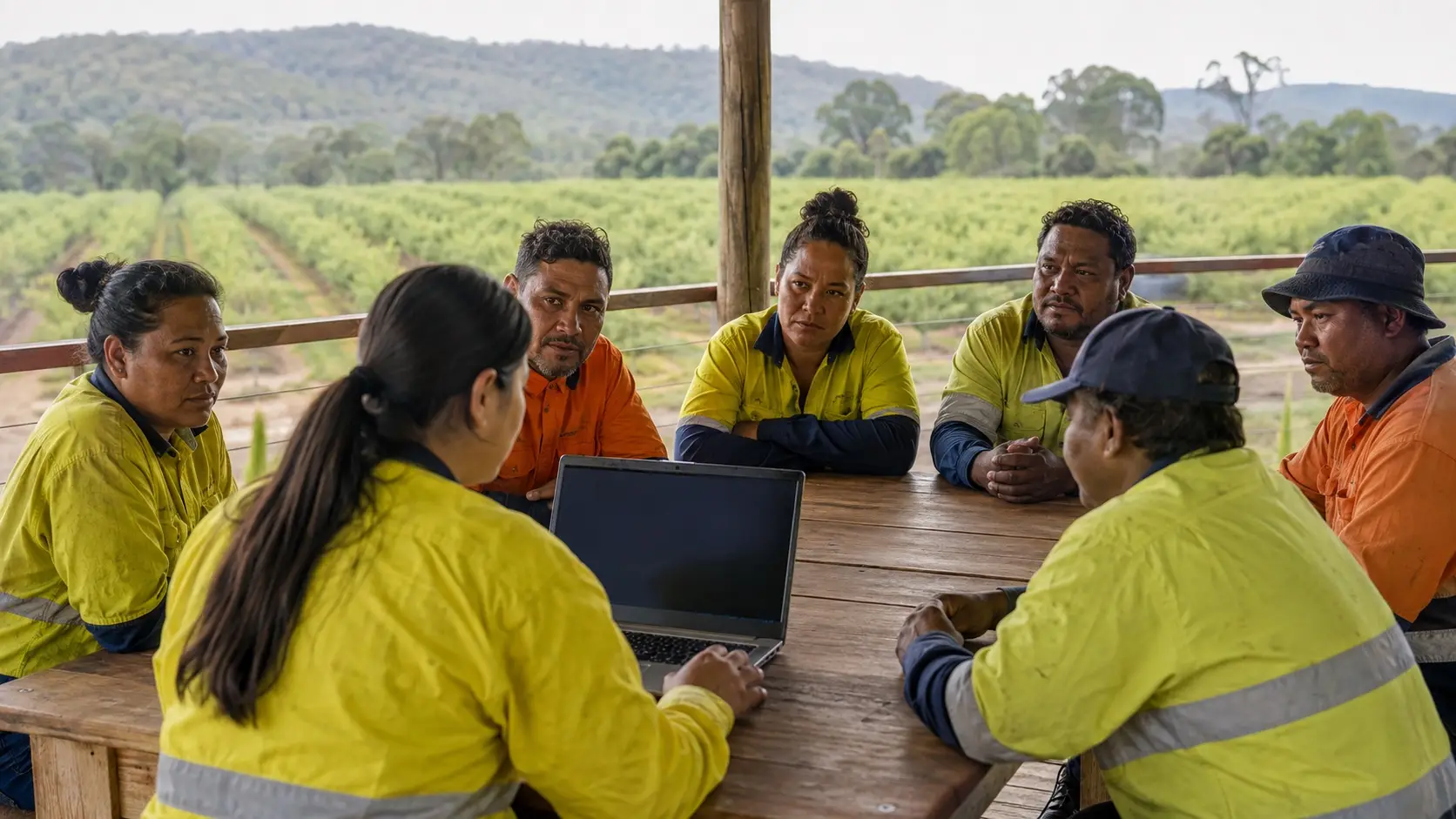
Featured image: AI-generated editorial illustration. It does not show actual Orchard Tech staff, workers or an incident.
About the author
Hari Yellina is Chief Executive Officer at Orchard Tech. View his profile and more articles.