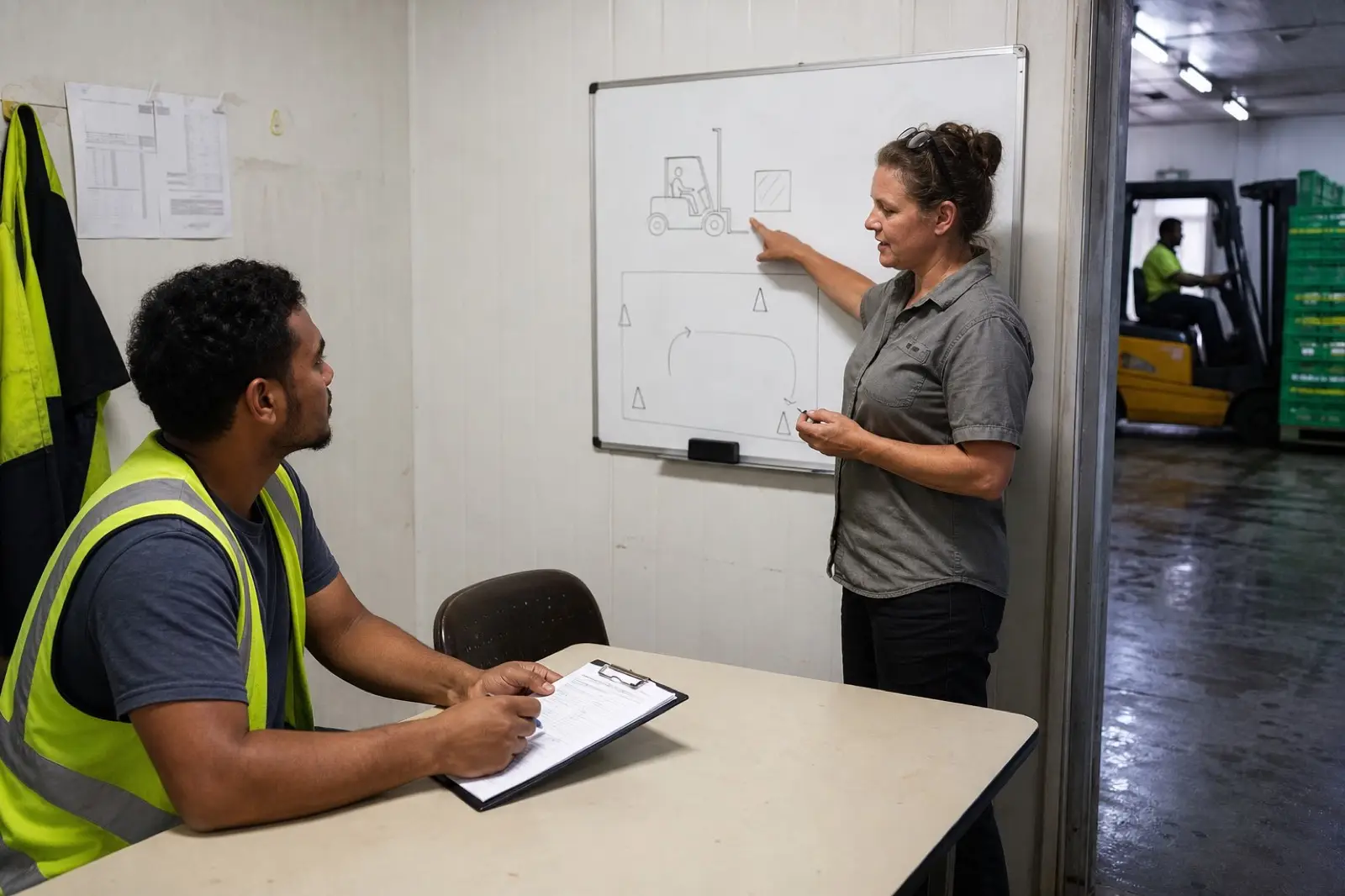
Illustrative photograph. Not a specific Orchard Tech workplace or a named PALM worker.
Last reviewed: 29 August 2026. This page is general information, not legal advice. Funding caps and cost shares change. Use the live Skills Development Program page and your PALMIS application outcome.
The PALM scheme Skills Development Program pays toward training for PALM scheme workers (and, the program page says, workers from Vietnam under the related labour mobility arrangement) while they are employed in Australia. All PALM scheme employers can apply, including direct employers and host employers who engage workers through a labour hire provider. The employer applies on behalf of the workers, chooses the provider, pays upfront, then claims reimbursement if DEWR approves.
The four tiers (as published)
- Tier 1 — Preparation: pre-departure and arrival briefings. Delivered by sending countries and employers. No DEWR funding.
- Tier 2 — Employability and life skills: financial literacy, health and wellbeing, communication and similar. DEWR pays 100% of eligible costs, up to $600 per worker per year.
- Tier 3 — Job skills: equipment, machinery, workplace safety, food handling and other job-specific skills. Employer 40%, DEWR 60%, DEWR share capped at $600 per worker per year.
- Tier 4 — Formal qualifications: nationally recognised qualifications up to Certificate III. Employer 50%, DEWR 50%, DEWR share capped at $1,000 per worker per year / per qualification. The program page says this training should relate to the business’s employment requirements and should not cut a worker’s average minimum hours.
The employer resources page also records that DEWR strengthened Tier 3 support by lifting the annual cap from $300 to $600 and DEWR’s share from 40% to 60%. That matches the Tier 3 figures now on the program page. If you already had a Tier 3 application approved with a training date after 1 April 2026, DEWR said the PALM Capability team would contact you. Questions: PALMCapability@dewr.gov.au.
What you can fund
DEWR will consider recognised RTO training, non-accredited training, and tailored training written for the business (assessed as Tier 2 or 3). All proposed training has to be in the application. Employers source the provider. Do not start a course and assume the reimbursement will follow.
Why this is a compliance topic
Training does not replace award pay, minimum hours, or welfare meetings. If a course takes a worker off the job, you still have to meet the deed’s hours and pay rules. Keep enrolment records, invoices and attendance with the worker’s file. For horticulture hosts in Victoria, labour hire licensing conditions sit beside PALM — they do not fund the course for you.
Sources checked 29 August 2026: PALM scheme Skills Development Program page (tiers, cost shares and caps); PALM scheme employer resources (Tier 3 cap and cost-share announcement).