Are NSW WHS Codes of Practice Compulsory? A Practical Guide for Farms and Labour Hire
• Hari Yellina

Reviewed 7 September 2026 | New South Wales, with a Victorian comparison
A harvest crew arrives, the supervisor runs through the day’s jobs and the machinery is ready. Somewhere in the office, there is a folder of safety procedures. The important question is not whether that folder exists. It is whether the arrangements outside actually protect the people doing the work.
For businesses operating in NSW, approved WHS codes of practice now have a stronger legal footing. Since 1 July 2026, businesses must comply with an approved code or manage the relevant hazards another way that provides an equivalent or higher standard of health and safety. The change is already in force, not an upcoming consultation. SafeWork NSW confirms the commencement date.
Are NSW codes of practice compulsory?
There is a duty to meet the applicable code’s standard, but there is still room for a different method that protects people equally well or better. Section 26A of the Work Health and Safety Act 2011 (NSW) sets out those two routes. It applies to a person conducting a business or undertaking, commonly shortened to PCBU.
That makes two familiar shortcuts unsafe: treating an approved code as something the business can simply ignore, or assuming that every example in every code must be copied regardless of the work. Start with the codes relevant to the hazards, then establish how the workplace meets their standards. An alternative is not a waiver from duties imposed by the Act or regulations.
What is a code—and which ones matter on a farm?
An approved code gives practical detail about managing particular workplace risks. It is not the same thing as an internal company policy or a generic checklist downloaded from the internet. Use the current NSW-approved version, rather than assuming an old interstate document is interchangeable.
The SafeWork NSW code library includes codes covering plant, hazardous manual tasks, agricultural and veterinary chemicals, falls, fatigue, first aid, worker accommodation and consultation. The relevant combination will depend on the tasks and circumstances. A picking crew, a spray operator and a packing-shed team do not necessarily need identical controls.
SafeWork also distinguishes the language within codes: “must” generally signals a legal requirement; “should” identifies the code’s expected standard, subject to the equal-or-better alternative; “may” describes an option. Read the provision in context rather than treating these words as interchangeable.
Why this matters in labour-hire arrangements
When workers are supplied to a host farm, safety arrangements need to join up. A general agency induction cannot explain every traffic route, emergency assembly point or machine at a particular property. Equally, a host should not assume that a worker’s previous experience proves they understand today’s equipment.
SafeWork NSW’s host-employer guidance calls for workplace-specific induction, suitable instruction and supervision, and cooperation with the labour-hire agency. It also highlights checking understanding and consulting before changes to a worker’s tasks or location.
A useful conversation before a placement is: What will this person actually do? What could hurt them? Which controls will be in place when they arrive? Who will show them, and who will check? Naming people responsible for actions helps prevent gaps; it does not transfer away either business’s legal duties.
A practical example: preparing for orchard spraying
This is an illustrative planning example, not a complete spraying procedure or a report of an Orchard Tech incident.
Imagine a NSW orchard preparing to use a different sprayer. The operator has chemical-use training, but has not used that machine at that property. Simply filing the certificate and asking for an induction signature leaves important questions unanswered.
A task-specific review could examine the equipment instructions, chemical label and safety data sheet, exposure controls, nearby workers, storage arrangements and what to do if something goes wrong. The host and provider should establish what additional familiarisation and supervision the operator needs. Chemical use can also involve requirements outside WHS law, which need a separate check.
If a proposed method differs from the applicable code, describe the difference precisely and assess the protection it provides. “We have always done it this way” is not an explanation of equivalent safety. Nor does a completed form establish that a control works.
A six-step review for growers and labour-hire providers
The following is Orchard Tech’s suggested working checklist—not a prescribed government form or a claim that completing it proves compliance.
- Describe the real job. Include normal work, cleaning, adjustments and foreseeable interruptions. Ask workers which parts are difficult or routinely change.
- Match hazards to current codes. Record the relevant code titles, versions and sections. Avoid filling a register with unrelated documents that nobody uses.
- Compare the standard with the workplace. Walk the task with the supervisor. Separate controls already operating from purchases, training or repairs that are merely planned.
- Examine any alternative. Write down the hazard, the code’s approach, the proposed substitute and the reasons it provides equal or better protection. Obtain competent technical advice where that comparison needs specialist knowledge.
- Allocate and explain the actions. Give each gap an owner and a due date. Agree what must happen before the affected work proceeds. Explain changed arrangements in language workers understand.
- Check after implementation. Observe the task, ask workers for feedback and revisit controls when equipment, roles or conditions change. Keep evidence of what was checked and what still needs attention.
This approach reflects an important principle in SafeWork’s risk-control guidance: safety decisions must address the actual hazards and available controls. The code is a reference point, not a reason to overlook a risk it does not cover.
What records are worth keeping?
A short, usable record is better than a large folder nobody can explain. For each review, consider keeping the task and location, applicable code sections, observations, worker input, control decisions, action owners and follow-up results. Where an alternative is used, retain the supporting comparison and any technical advice.
Training records should distinguish attendance from demonstrated understanding. A signature can show that a document was acknowledged; it does not, by itself, demonstrate competence to operate a machine. Records support the work—they cannot replace supervision, maintenance or a functioning control.
Is the rule the same in Victoria?
No. Do not apply the NSW amendment as though it changed Victorian law. Victoria has its own OHS framework and uses compliance codes. WorkSafe Victoria explains that following a compliance code meets the duty to the extent covered by the code. A different approach can still comply with the OHS Act or regulations; departure from the code alone does not establish a breach.
For businesses working on both sides of the Murray, identify the jurisdiction and applicable requirements for each workplace. A shared company system can be useful, but its state-specific references and task controls need to be correct.
Start with the next placement, not another unused policy
Choose an upcoming task and work through the gaps with the people who will do and supervise it. That is a more useful first step than relabelling an old folder “2026 compliant”. For broader preparation, see our harvest workforce checklist; its Victorian context is identified separately.
Growers planning their workforce can contact Orchard Tech to discuss the roles, tasks and site information needed for a placement. This article provides general information, not legal advice or certification that a particular workplace complies. Check current requirements and obtain advice suited to your circumstances.
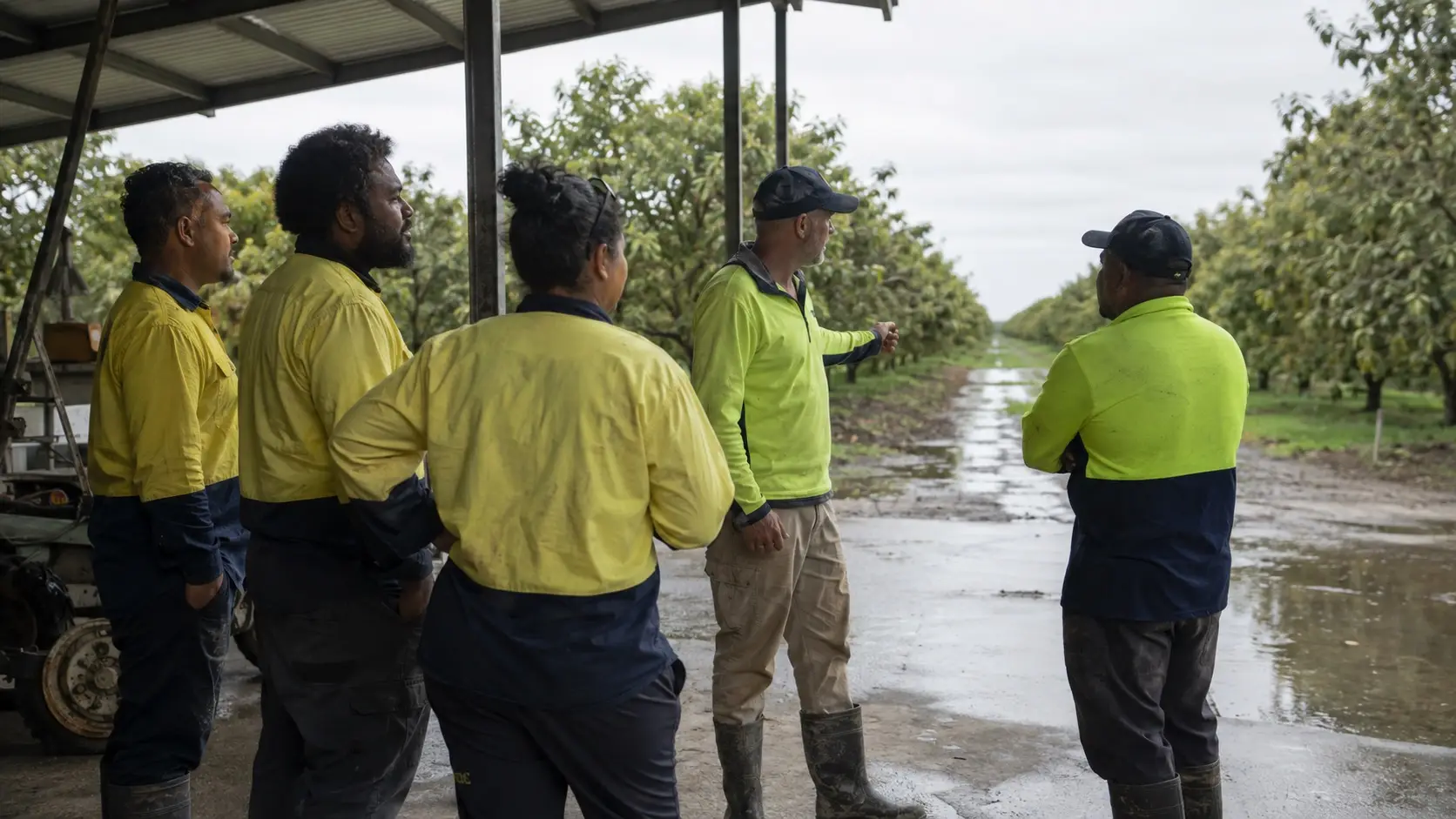
Sources: NSW WHS Act, section 26A; SafeWork NSW legislation, codes, risk-control and host-employer guidance; WorkSafe Victoria compliance-code guidance, linked above. Featured image: AI-generated editorial illustration with fictional people and a fictional setting—not actual Orchard Tech staff, clients or a verified worksite.
Related Articles


Victoria’s Labour Hire Law Changes in 2026: What Providers and Host Employers Need to Know Before October
Before October, trace the businesses between the worker and the farm gate. A practical guide to Victoria’s labour hire supply-chain changes, with checks for hosts and providers.
Read More →