Orchard Ladders: Check the Task Before Choosing the Equipment
• Hari Yellina
A ladder that worked in one orchard row may be a poor choice for the next task. The fruit may be higher, the ground softer or the work long enough that repeated climbing becomes part of the problem. Start by deciding how the work can be done safely, before assigning a ladder to each worker.
This guide is for Victorian growers, supervisors and labour hire teams planning picking, pruning and other orchard tasks at height.
Choose the access method before checking the ladder
WorkSafe Victoria’s portable ladder guidance says employers should first consider work from ground level and apply the fall-prevention hierarchy. A ladder needs to be suitable for the task, its duration and its setup. Risks below two metres still need to be managed.
For each task, write down what the worker must reach, how long the work takes and what they need to carry or operate. That description makes it easier to compare ground-based methods and suitable work platforms. A familiar ladder should not become the automatic answer to every access problem.
WorkSafe’s fruit and nut growing guidance recommends appropriate agricultural elevated work platforms, or ladders where those platforms are not reasonably practicable. Whichever equipment is selected, its use, inspection and maintenance must suit the manufacturer’s specifications.
Check the row as well as the equipment
The same industry guidance highlights holes and uneven ground that can make a ladder unstable. It also recommends examining ladders before use and after a drop or impact that may have damaged them.
Build the check into the allocation of work. A supervisor can identify the row, the access method selected, the equipment checked and any area that remains unavailable. If the ground or the task changes, revisit that decision before sending the crew onwards.
Hypothetical example: yesterday’s picking plan is copied to a block with deep wheel ruts. A worker reports that the planned ladder position is unstable. The supervisor pauses that part of the allocation and reassesses the access method. The record should show the revised arrangement, rather than merely a tick beside “ladder checked”.
Demonstrate the task workers will actually perform
WorkSafe identifies training in setup, safe reach and climbing as part of orchard ladder safety. Its advice includes keeping the body within a safe reach area, one person on a ladder, avoiding the top two rungs and maintaining three points of contact when climbing.
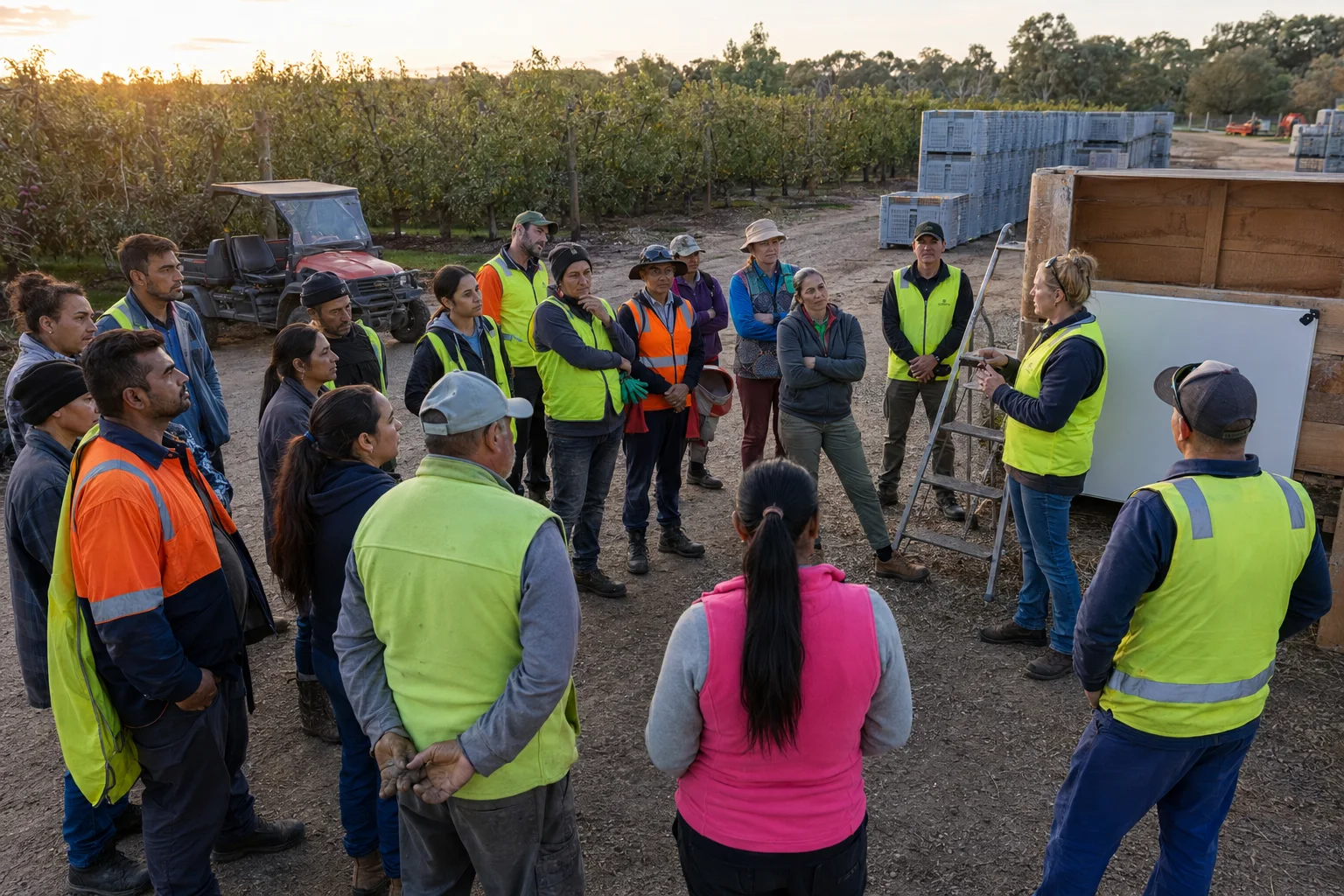
Use the selected equipment and the relevant manufacturer’s instructions for the demonstration. Ask workers to show the setup and explain when they would stop and seek help. Include how fruit, tools or other loads will be handled without compromising the access method. Provide instructions in a form and language workers understand.
Make reporting a defect useful
Tell the crew who receives a defect report and how replacement equipment or a different task will be arranged. Give equipment a simple identifier so a report reaches the correct item. Keep suspect equipment out of use until it has been assessed and dealt with under the site’s procedure.
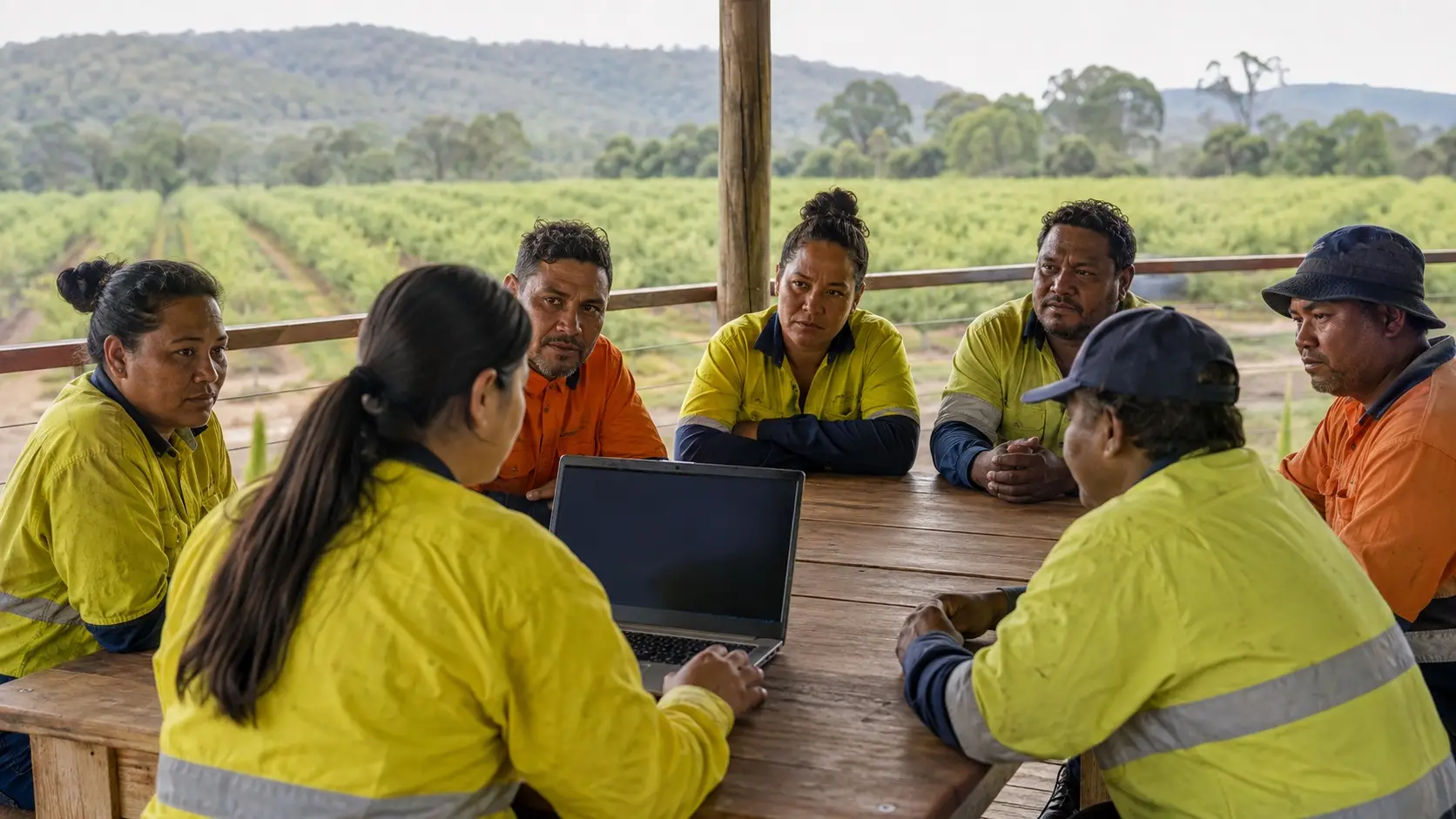
For a labour hire crew, the host and provider should align the actual task, training and supervision before the shift. Add the equipment arrangements to the site induction, and consider carrying and reaching demands alongside the manual handling task review.
Scope: Victorian workplace planning guidance. Official sources checked on 10 October 2026. This article does not approve a particular ladder, platform or work-at-height system.
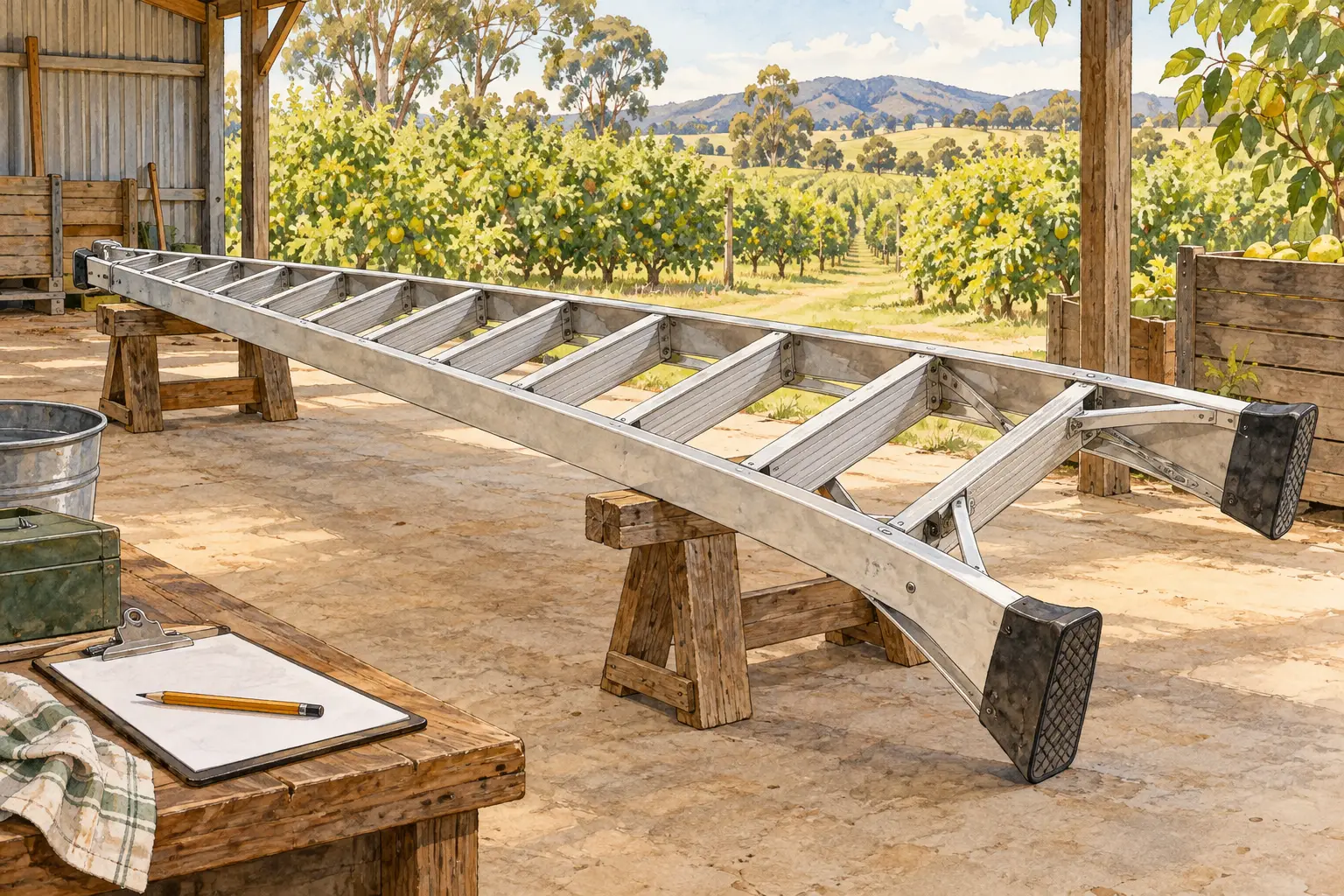
Featured image: AI-generated illustration of fictional equipment being prepared for inspection.
About the author
Hari Yellina is Chief Executive Officer at Orchard Tech. View his profile and more articles.