An Orchard Heat Plan Needs Decisions Before the Hot Shift
• Hari Yellina
Source checked: 18 September 2026. Victoria. General information; assess the circumstances of the actual work.
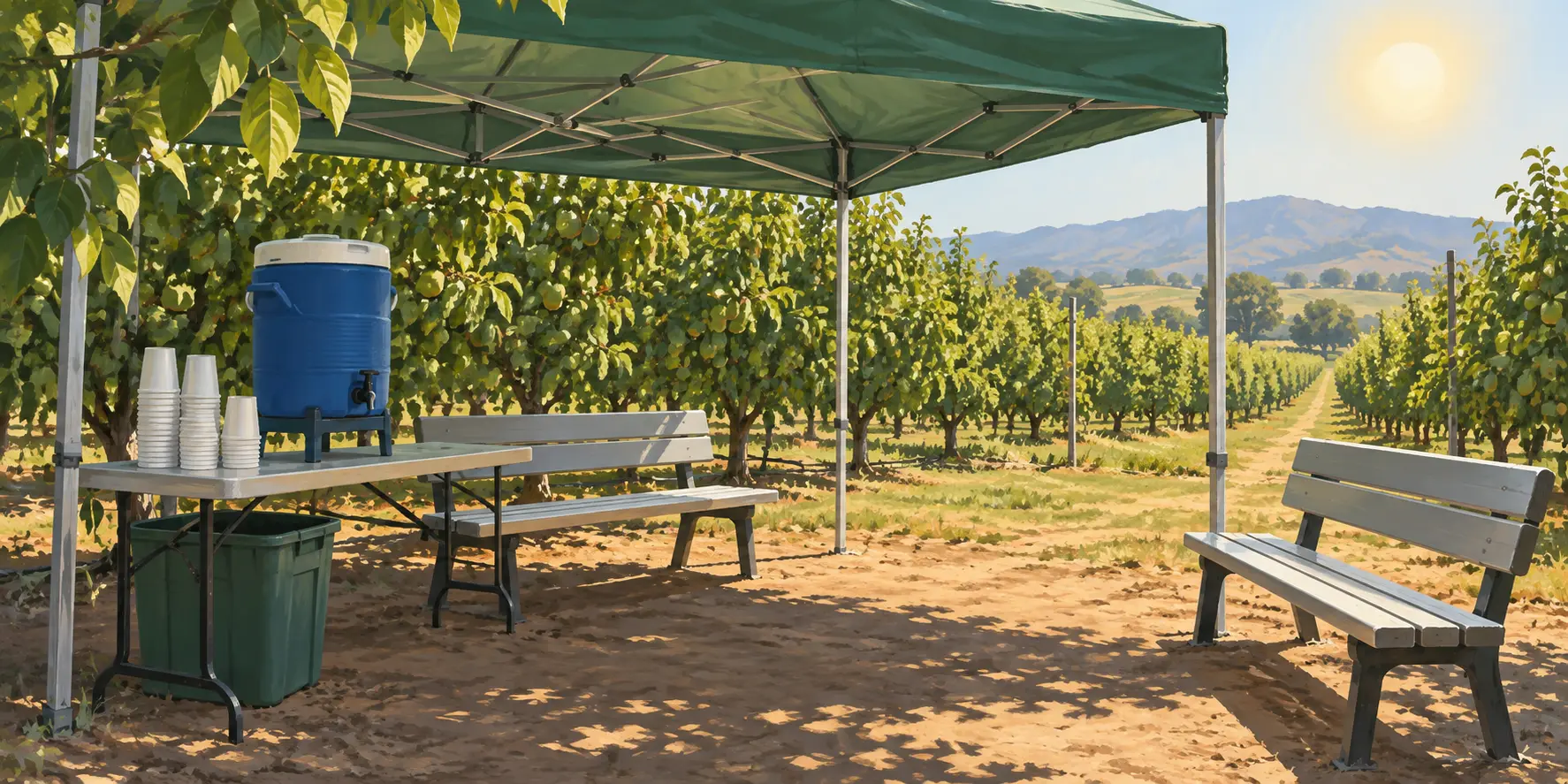
A water container at the shed is of little practical use if a crew has moved to a distant block and nobody is responsible for replenishing it. Heat planning works when the shift supervisor knows what can change, who makes that decision and where the crew can recover.
Avoid relying on one temperature
WorkSafe Victoria says the Occupational Health and Safety Act 2004 and OHS Regulations 2017 do not set a single maximum temperature for stopping work. A workplace may have its own policy. The absence of a universal number does not mean a hot task should continue unchanged. WorkSafe’s guidance includes moving demanding work to cooler periods, reducing exposure time, providing extra cool-area breaks and using mechanical aids.
Translate the plan into a block-by-block briefing
Before dispatch, identify the work area, accessible cool drinking water, a suitable cool rest location and the person responsible for supplies. Consider how distance from the shed changes access. Specify who reviews the workload as conditions change and how workers contact that person. Where labour hire is involved, share the day’s arrangements with the provider so that instructions are consistent.
A hypothetical change during the shift
A crew moves further from the original shelter after completing the first block. The plan should trigger another check of water and rest access before the next task starts. Keeping the original break location on a form does not make it usable. Repositioning facilities, changing the sequence or reducing the task may be necessary after assessing the actual conditions.
Rehearse the escalation
Ensure the crew knows how to report feeling unwell and how to reach the first aider or emergency response contact. Use the site’s emergency procedure and appropriate medical assistance; this article is not a first-aid protocol. At the end of a hot shift, note any supply or access failure and assign a correction before the next start.
Official guidance and related reading
WorkSafe Victoria guidance. For the wider planning process, see Orchard Tech’s harvest workforce checklist.
About the author
Hari Yellina is Chief Executive Officer at Orchard Tech. His articles cover agricultural workforce planning, labour hire and practical workplace responsibilities.
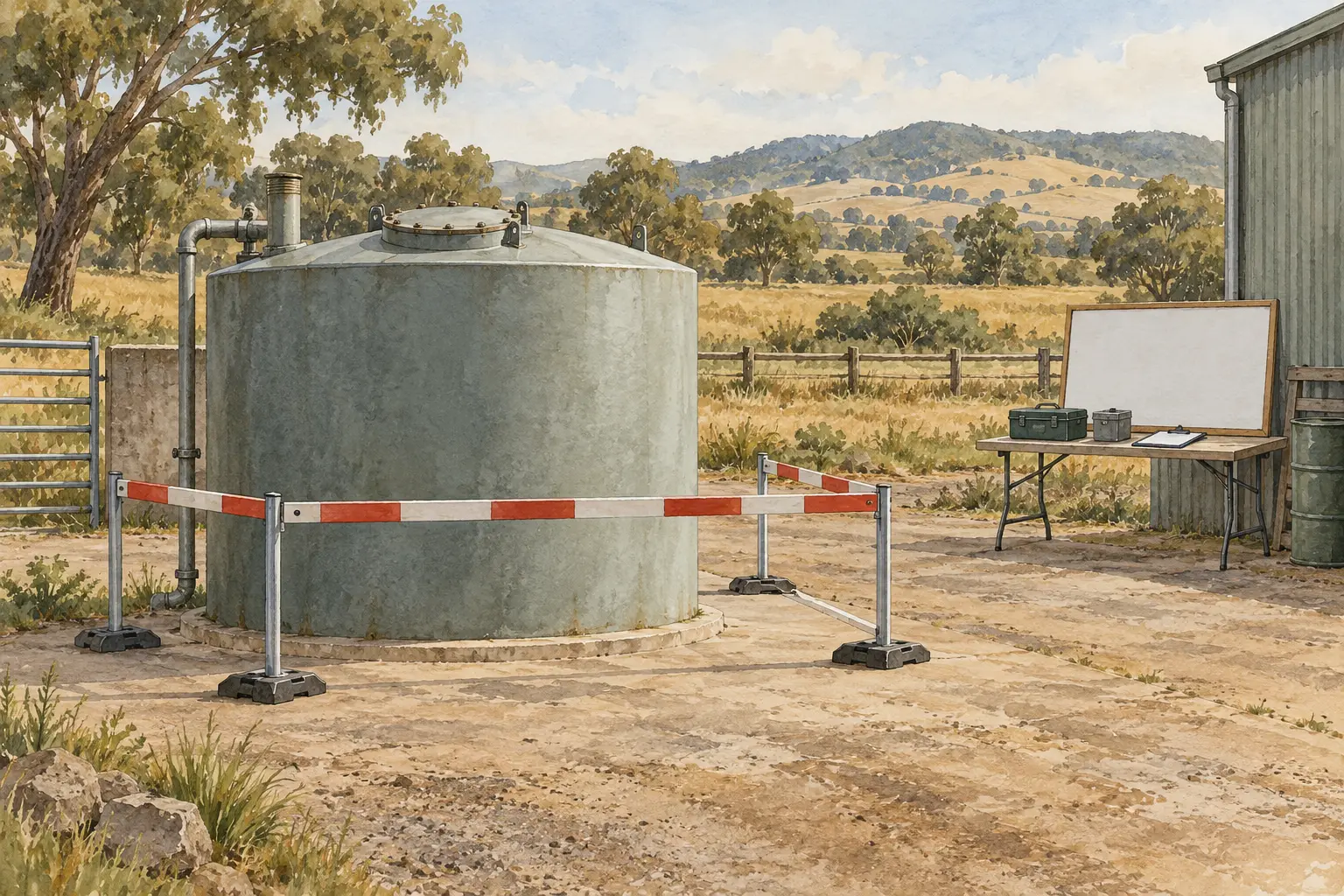
Featured image: AI-generated illustration of an invented scene; it does not depict an Orchard Tech site or employee.