New Farm, Same Experience: When a Picker Must Move Beyond Level 1
• Hari Yellina
A picker can be new to your farm without being new to horticulture. Treating every new starter as Level 1 risks overlooking experience they have already gained with another employer.
Under the Horticulture Award, the classification decision needs to consider duties and industry experience. A new crop, location or recruitment form does not automatically restart the entry-level period.
What counts towards the three months?
The Fair Work Ombudsman’s guidance on Level 1 progression explains that an employee progresses beyond Level 1 after no more than three months of experience in the horticulture industry. The experience does not have to come from one employer, crop or task.
The guidance uses calendar months, with no set number of hours required to make up a month of experience. It also explains that employees do not have to keep records of hours worked to prove that experience. Periods spent travelling between jobs should not simply be counted as time working in the industry.
Ask better questions at recruitment
A useful experience conversation starts before the rate is entered into payroll. Ask which horticulture jobs the person has done, roughly when they worked, what their duties involved and whether there were breaks between those jobs.
Use the answers to make a short timeline. The following is a suggested intake note, not a Fair Work form:
- Previous horticulture work and approximate dates.
- Tasks performed and any relevant responsibilities.
- Periods away from industry work.
- Classification assessed, reason and person responsible for the decision.
- Any remaining question and the date it will be resolved.
Supporting documents can help clarify a timeline, but do not turn an administrative preference into a rule that everyone without old timesheets starts at Level 1. Discuss uncertain information promptly and seek Fair Work guidance where needed.
A change of farm does not erase experience
In a hypothetical recruitment example, a worker describes five months of vegetable picking before applying for an orchard role. The recruiter should assess that industry experience and the new duties before selecting a classification. “First day at our orchard” is not a sufficient reason to use the entry level.
Level 2 is also not an automatic ceiling. Check the duties against the Horticulture Award classification descriptions in Schedule A; more demanding duties or responsibilities may require a higher classification.
Close the gap between recruitment and payroll
The person gathering the work history may not be the person setting the pay rate. Send a clear classification decision to payroll, including any future progression date that genuinely applies. Explain the classification to the worker and give them a way to raise a correction.
For workers who are legitimately entering at Level 1, put the review into the payroll calendar when they start. Do not rely on a supervisor remembering it during harvest.
Our fruit-picker pay guide provides broader context. Confirm current rates and employment conditions using Fair Work’s pay and piece-rate guidance after the correct award and classification have been established.
About the author
Hari Yellina is Chief Executive Officer at Orchard Tech. His articles cover agricultural workforce planning and practical workplace responsibilities.
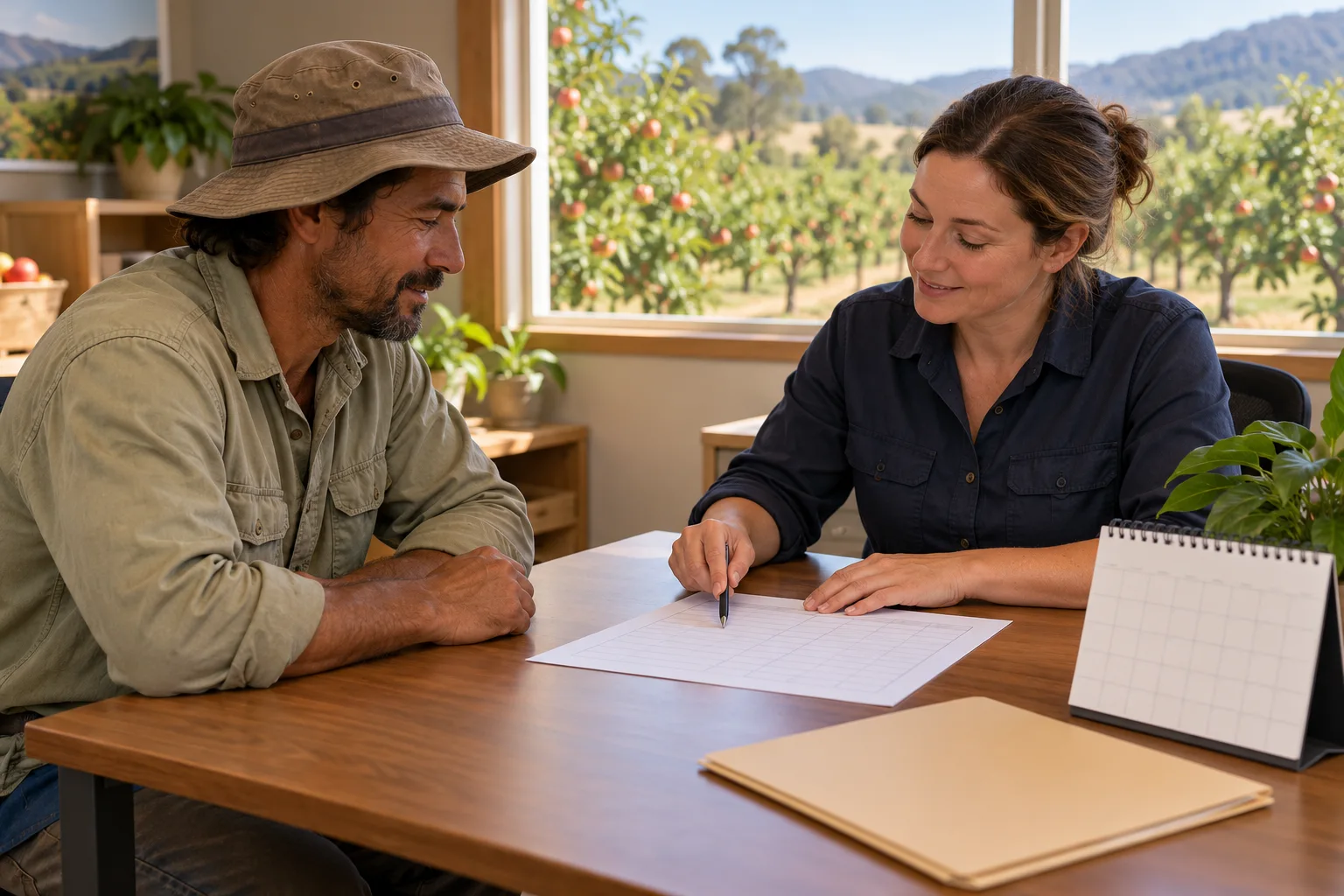
Sources checked 26 October 2026. General information; apply current requirements to the actual workplace and circumstances. Featured image: AI-generated illustration of a fictional scene.