Smoke Over the Orchard: When Should Outdoor Work Change?
• Hari Yellina

Smoke can affect an orchard even when a bushfire is far from the property. The crew may have a safe route home and still be exposed while picking, carrying or working around the yard. A smoke plan needs to address the work being done that day.
Use air-quality information and the task together
WorkSafe Victoria’s outdoor-work guidance recommends checking EPA AirWatch and assessing smoke exposure alongside the physical demands of the work. Avoiding outdoor work when air quality is poor, very poor or hazardous is the most effective way to reduce exposure.
The same WorkSafe page includes an activity table distinguishing light, moderate and heavy work, with separate advice for people more sensitive to smoke. Apply it to the actual task and worker circumstances: strenuous picking is different from seated work. Consider pregnancy and existing heart or lung conditions, including asthma, when planning controls. The table supports the risk assessment; it does not establish that a particular job is safe to continue.
Do not use the appearance of the sky as the only test. Give one person responsibility for checking current information and communicating changes. Record the location and time of the check so an old screenshot does not become the basis for a later decision.
Decide the alternatives before the morning briefing
Prepare a short list of work that could be postponed, relocated or changed. Any indoor alternative needs its own assessment: a shed with open doors and smoke entering it may not provide cleaner air.
A practical planning sheet could list each crew, its task, the person making the decision, an assessed alternative and the next review point. Include how changes reach workers already in a distant block. A message sent to a group chat is useful only if someone confirms that the affected crew received it.
For labour hire arrangements, the host and provider should agree how decisions and worker concerns are passed between them. Avoid leaving workers to reconcile different instructions from two supervisors.
Do not build the plan around masks alone
WorkSafe places respiratory protection below more effective controls. Ordinary paper masks and bandanas are inadequate for bushfire smoke. Suitable respirators need correct selection, fit and use; facial hair can interfere with the seal. Issuing a mask does not establish that the work is safe.
Make it easy for workers to raise symptoms or concerns privately, and review first-aid and emergency arrangements. For an emergency, call Triple Zero (000). Do not ask a worker to finish a row before responding to an urgent health concern.
Practise one realistic change of plan
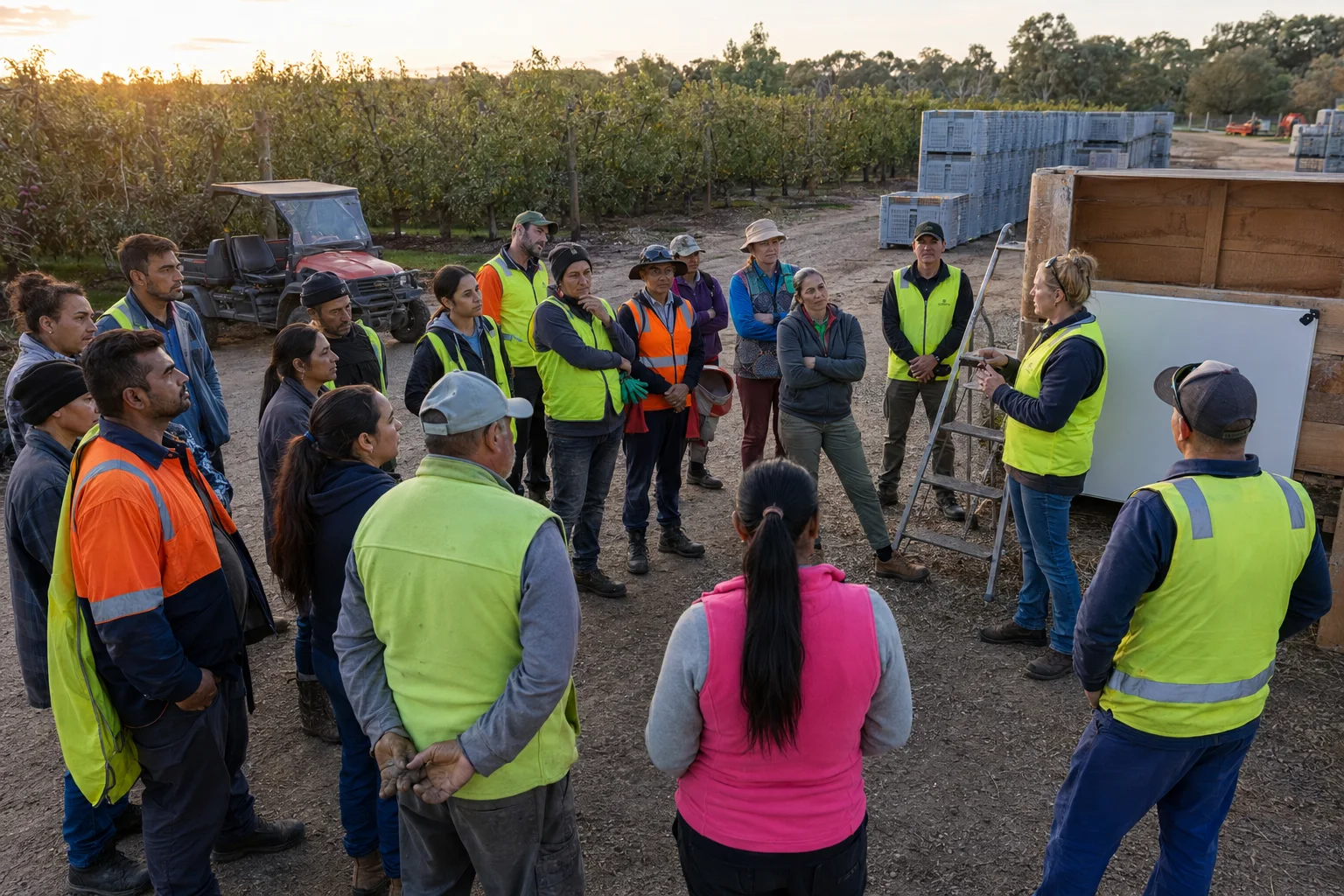
Consider a hypothetical shift where conditions worsen after the crew has started. Who checks the updated advice? Who tells the picking and transport teams? Where does the crew wait while the next step is arranged? How will everyone know whether work is resuming or the shift arrangements are changing?
Walking through those questions in advance can reveal a missing contact, an unsuitable waiting area or transport that has been booked too late. Record the fixes and test the communication again.
Keep smoke decisions connected to the separate farm crew bushfire departure plan. Smoke exposure controls do not replace emergency warnings or an instruction to leave.
About the author
Hari Yellina is Chief Executive Officer at Orchard Tech. His articles cover agricultural workforce planning and practical workplace responsibilities.
Sources checked 26 October 2026. General information; apply current requirements to the actual workplace and circumstances. Featured image: AI-generated illustration of a fictional scene.